IN Brief:
- Separate Giraffe 1X radars used independent AQlock timing sources during the UK trial.
- Controlled timing errors were introduced to reproduce GNSS spoofing and denial conditions.
- The network maintained a coherent air picture and recovered rapidly after synchronisation was restored.
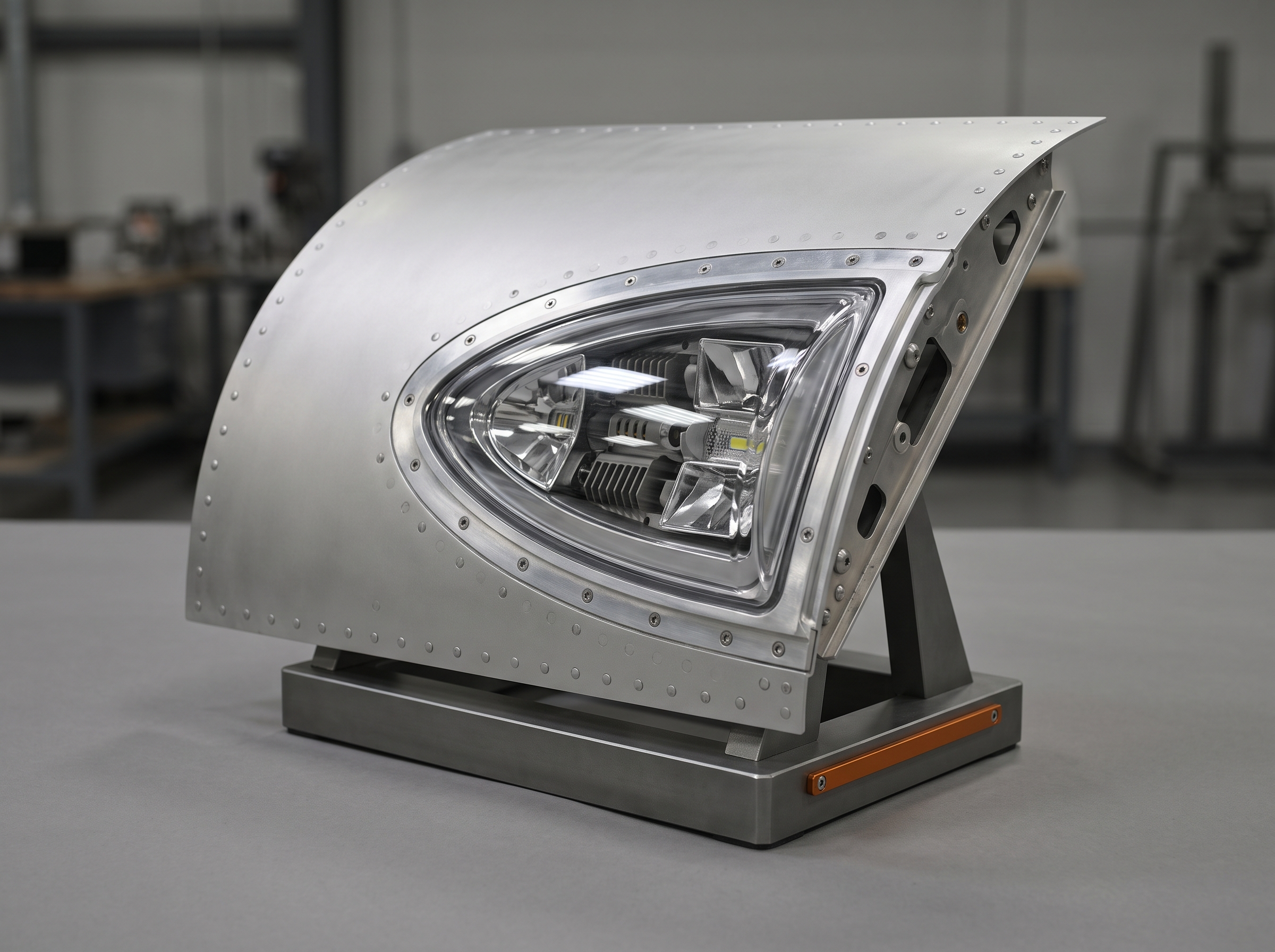
Saab UK, Aquark Technologies, the Royal Navy, and QinetiQ have demonstrated a distributed radar network operating without satellite-derived timing, using independent quantum timing sources to keep separate Giraffe 1X sensors synchronised. The UK trial also introduced controlled timing errors to reproduce GNSS spoofing and denial, allowing the team to examine how the combined air picture degraded and recovered as synchronisation changed.
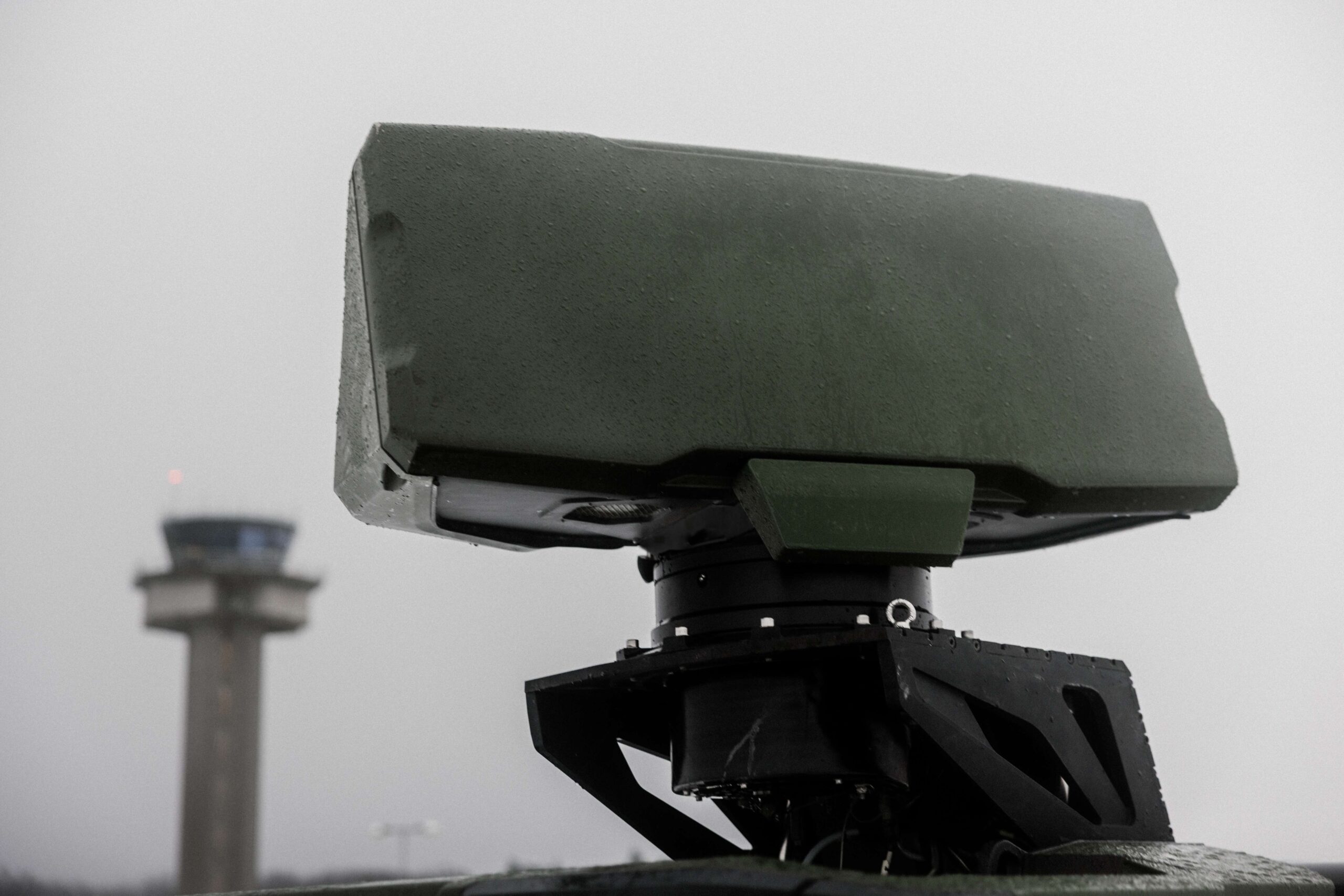
Saab integrated its Giraffe 1X radar with Aquark’s AQlock technology for the demonstration, which involved the Royal Navy’s Disruptive Capabilities and Technologies Office and QinetiQ. Multiple radars tracked live targets from separate locations while operating from independent timing sources rather than a shared GPS reference.
Distributed radar networks depend on precise timing because measurements taken by separate sensors have to be correlated into a common track picture. A radar can continue detecting targets while its external timing source is degraded, yet small discrepancies between sensors can still affect the accuracy of the fused picture if the network loses confidence in when individual measurements were made.
Global Navigation Satellite Systems provide an exceptionally convenient timing reference, but the same external signals can be jammed, spoofed, or disrupted in a contested electromagnetic environment. That vulnerability has made resilient position, navigation, and timing technology an increasingly important part of sensor and command-system design.
During the trial, the Giraffe 1X radars continued generating a single coherent air picture using their independent AQlock sources. The team then introduced controlled errors to measure the effect of timing disruption. Saab reported predictable degradation as synchronisation was disturbed and rapid recovery when correct synchronisation was re-established.
The behaviour during disruption is particularly useful from a systems-engineering perspective. Military networks cannot be designed around a neat division between fully available and completely failed services. Operators need to understand whether a network recognises deteriorating timing quality, how that affects confidence in its tracks, and how quickly it can recover after a trusted reference is restored.
Quantum timing addresses the problem by providing an accurate local reference that can be maintained without continuous dependence on an external satellite signal. The technology does not make GNSS unnecessary; it provides another route for keeping systems synchronised during periods when GNSS is unavailable or cannot be trusted.
The practical constraints will sit around the physics. Defence equipment has to meet requirements for size, weight, electrical consumption, environmental tolerance, maintenance, cost, and integration with existing networks. A laboratory-grade timing source that is exceptionally accurate but difficult to deploy would solve a narrower problem than one that can be packaged into operational sensor systems.
Giraffe 1X is a compact three-dimensional radar used for short-range surveillance and counter-uncrewed-aircraft applications. Operating several sensors as a network can extend coverage and improve track continuity, but it also turns synchronisation into a system-level performance characteristic alongside detection range, update rate, communications capacity, and electronic protection.
The UK demonstration consequently examined an enabling technology rather than a new radar mode in isolation. If independent timing sources allow sensors to remain coherent while satellite services are disrupted, existing radar networks gain another method of preserving their combined picture without having to replace the sensors themselves.
Electronic warfare is making that distinction increasingly relevant. Jamming and spoofing do not have to destroy a radar to reduce the usefulness of its output; attacking supporting services such as timing, navigation, or communications can be enough to complicate the wider network. Protecting those dependencies therefore becomes part of radar resilience even when the antenna and transmitter continue functioning normally.
Saab has not announced a production contract or fielding schedule for AQlock-equipped Giraffe systems, and the trial should not be read as evidence that distributed radar networks can dispense with GNSS under every operating condition. It demonstrates a particular configuration under representative spoofing and denial scenarios.
The next steps are likely to be less eye-catching than the quantum label. Repeated testing, environmental qualification, integration standards, fault monitoring, and supportability will determine whether the timing technology can move from a successful demonstration into deployable equipment. The trial has established the operational premise; the remaining work is to prove that the timing source can survive the engineering disciplines surrounding an actual military radar network.