IN Brief:
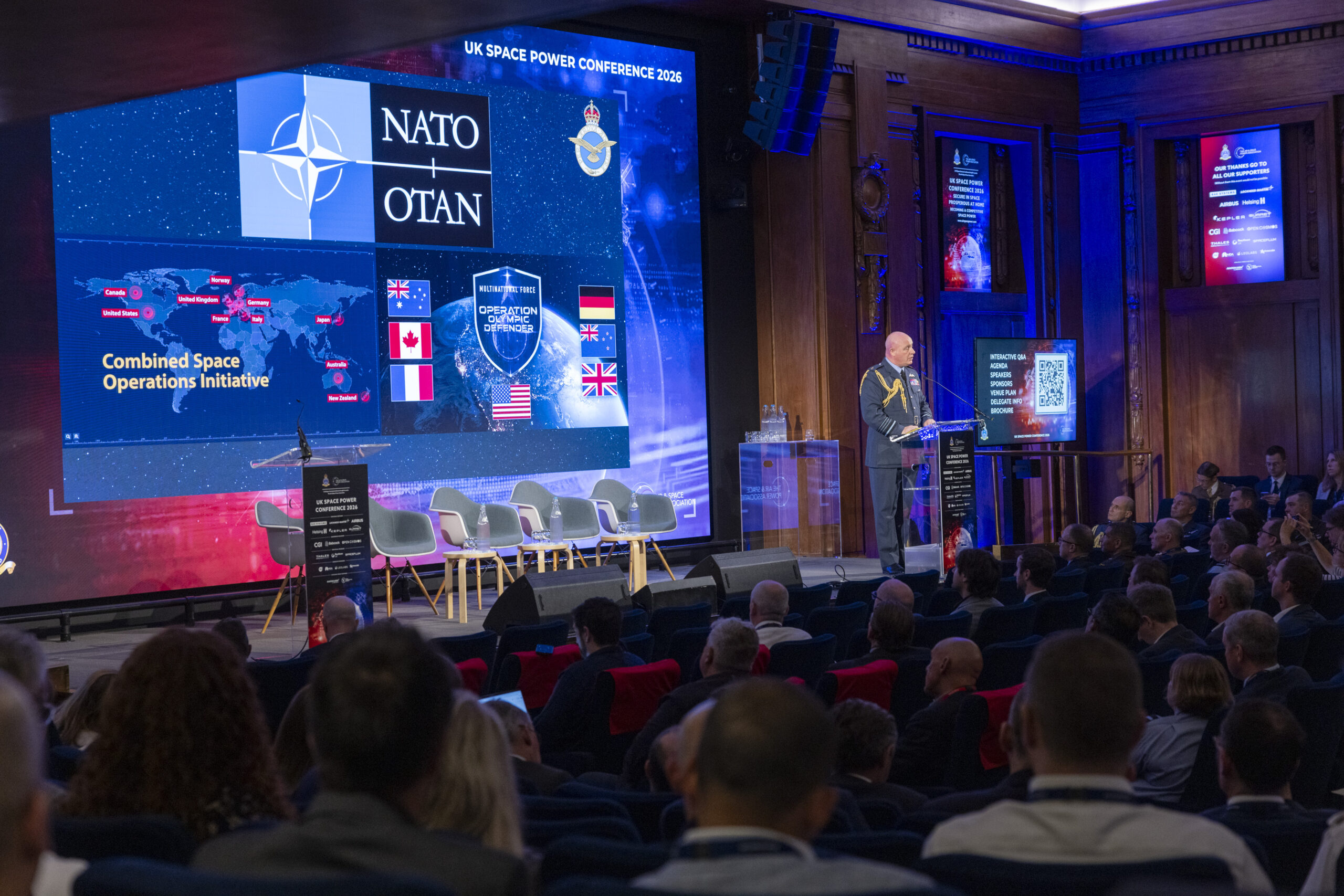
- No. III Space Effects Squadron is the RAF’s first unit dedicated to delivering control-of-space operations.
- It joins existing space operations and warning units within UK Space Command.
- The squadron implements part of the 2026 UK Space Strategy as Britain expands defence activity across space monitoring, communications, and resilience.
The Royal Air Force has formed No. III Space Effects Squadron, the UK’s first dedicated military unit tasked with disrupting, degrading, and denying hostile activity that threatens British interests in space.
The squadron sits within UK Space Command and will operate alongside No. 1 Space Operations Squadron and No. 2 Space Warning Squadron. Together, the units cover operational support, space warning and monitoring, and the new control-of-space mission set out in the UK’s 2026 space strategy.
Britain’s armed forces rely on satellites for communications, navigation, timing, intelligence, missile warning, and command functions, while civilian infrastructure uses many of the same space-based services. Protecting military access therefore requires more than monitoring objects in orbit or maintaining awareness of debris and satellite movements.
The RAF describes No. III Squadron’s mission in active terms: to disrupt, degrade, and deny hostile activity while defending UK interests and preserving freedom to operate. The service has not published a detailed inventory of systems assigned to the unit, reflecting the sensitivity of counter-space capabilities, but the organisational change establishes a permanent formation responsible for delivering effects rather than monitoring alone.
The squadron follows publication of the UK Space Strategy, which brings £7.8 billion of government space investment and activity into one framework through 2030. Defence, national security, civil resilience, and economic development all feature in the programme.
Control-of-space operations depend on several technical layers working together. A military organisation cannot respond effectively to hostile activity without first detecting, characterising, and attributing it. Space-domain awareness provides part of that picture, while secure communications, processing, and command systems allow information to reach operators and decision makers.
Potential responses can involve electronic, cyber, and other technical means depending on the threat, legal authority, and available capability. That creates an industrial requirement extending across sensors, signal processing, secure software, electronic warfare, satellite communications, ground infrastructure, and specialist test systems.
No. III Squadron becomes an operational customer for those technologies rather than a manufacturing organisation itself. Its formation gives the supply base a clearer military structure around which future equipment, software, training, and support requirements can be developed.
Daniel Turgel, Co-head of White & Case’s Global Technology Industry Group, said: “We are living in an era of heightened geopolitical tension, where the nature of security threats is rapidly evolving. Space has become the latest frontier, with satellites playing a crucial role in communications and national infrastructure.”
He pointed to the Blackett Review estimate that a failure of navigation satellite services could cost the UK economy around £1 billion a day. The figure illustrates the overlap between civilian resilience and military space activity: positioning and timing services support financial networks, energy infrastructure, telecommunications, transport, and emergency services as well as deployed forces and weapons systems.
The new unit also clarifies the division of operational responsibilities inside UK Space Command. No. 1 Space Operations Squadron supports military space operations, while No. 2 Space Warning Squadron concentrates on warning and monitoring activity. No. III Space Effects Squadron introduces an organisation whose stated purpose includes acting against hostile activity.
Other parts of the UK architecture are expanding alongside it. Government investment covers the National Space Operations Centre, satellite communications, space-domain awareness, launch infrastructure, and technologies intended to improve resilience. Military communications work also continues through SKYNET and additional commercial and low-Earth-orbit services.
Those systems will increasingly have to operate as an integrated architecture rather than separate programmes. Detecting interference is of limited value without reliable communications and command processes, while an operational response depends on accurate attribution and systems able to function when normal space-based services are degraded.
No. III Space Effects Squadron does not reveal how Britain intends to respond to every type of hostile activity, nor does its creation by itself deliver the equipment needed for the mission. It does establish the operational organisation around which that capability can develop.
The next indicators will be exercises, system acquisitions, allied integration, and the technologies assigned to the squadron as the RAF translates the Control of Space Requirement into an operational capability.