IN Brief:
- Renault Group and Thales will develop and industrialise large-scale Toutatis loitering munition production.
- Planned output could reach 1,000 units per month from the first production year.
- The partnership brings automotive production discipline into a fast-growing precision-effects supply chain.
Renault Group and Thales have agreed to jointly develop and industrialise large-scale production of the Toutatis loitering munition, bringing automotive manufacturing discipline into one of Europe’s fastest-growing defence technology areas.
Production could begin as early as 2027, with planned capacity of up to 1,000 units per month from the first year. Renault will bring industrial engineering, factory capacity, and production management to a system designed by Thales, extending cooperation between the two companies beyond their work on the 4 TROOP tactical vehicle.
Toutatis is a short-range loitering munition for high-intensity conflict. It can be used by dismounted soldiers and launched from several platform types, including combat vehicles, aircraft, and naval platforms. The system is designed to resist electromagnetic jamming, operate with a mission-configurable warhead, support swarm use, and keep human operators in the decision chain.
The production plan places Toutatis within a wider European shift from low-volume specialist systems toward munitions that can be built at useful scale. Loitering munitions sit between guided missiles, drones, artillery, and one-way attack systems. They need enough guidance, communications resilience, range, and warhead effect to be militarily useful, while remaining affordable enough to be bought and expended in large numbers.
Renault’s involvement changes the manufacturing conversation. Automotive production is built around component reduction, repeatable assembly, supplier discipline, takt time, quality control, cost pressure, and process improvement. Those methods cannot be transferred into defence without adjustment, since warheads, guidance electronics, secure communications, export controls, and military qualification create stricter constraints. Even so, the core manufacturing logic fits a munition category defined by volume and attrition.
Wider details around the programme point to plastic injection moulding and a significant reduction in component count. Those choices are consistent with design-for-manufacture principles, where every unnecessary part increases cost, assembly time, supplier exposure, and inspection burden. In an expendable or semi-expendable system, complexity must be tightly controlled.
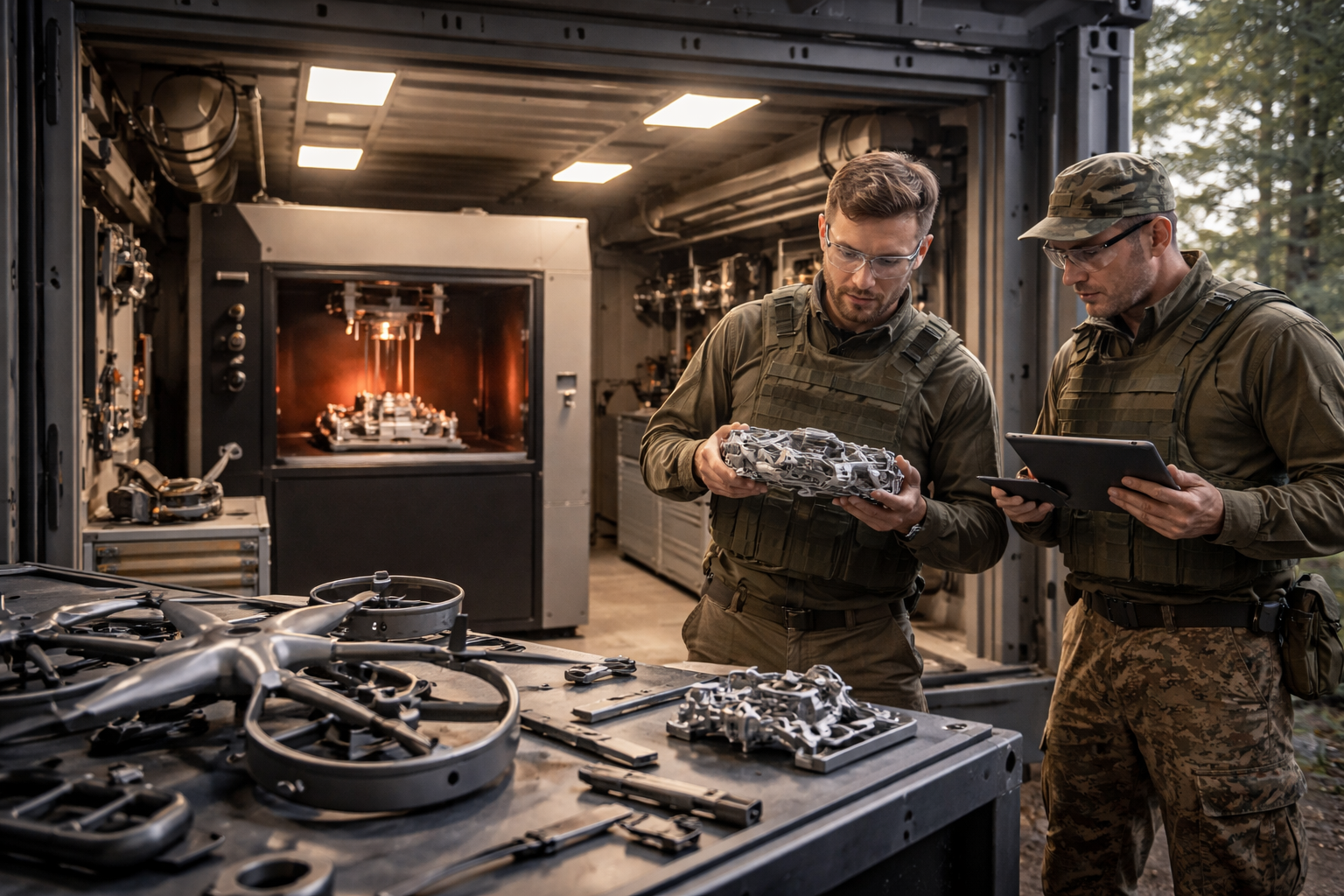
European defence production has been under pressure since Russia’s full-scale invasion of Ukraine exposed ammunition shortages, slow surge capacity, and the difficulty of sustaining modern consumption rates. Loitering munitions have become one answer to that problem, offering precision effects at lower cost than high-end missiles. The same production logic can be seen in other European work to localise and scale loitering munition systems, including SkyStriker and containerised FV-014 concepts.
Toutatis will still face a difficult supply-chain environment. Monthly output of 1,000 units requires dependable access to motors, batteries, airframe materials, sensors, processors, datalinks, warhead components, control surfaces, launch equipment, test systems, and packaging. Battlefield feedback can also drive rapid design changes, creating a constant tension between configuration stability and operational adaptation.
Software and electronic warfare resilience will be central. A loitering munition built for modern conflict must tolerate jamming, spoofing, degraded navigation, contested communications, and counter-UAS systems. That adds production requirements around protected navigation, datalinks, antennas, electronic components, mission planning, and system testing. A cheap airframe with fragile electronics will not survive serious operational use.
Renault’s manufacturing base may help address cost and volume, but the defence-specific production layers remain demanding. Energetic materials must be handled safely, guidance systems require calibration, warhead options create configuration variants, and export customers may need different software or operational settings. The industrial task is to combine automotive repeatability with defence assurance.
The export dimension could also shape the programme. France may not absorb the full production volume alone, and international demand for loitering munitions is rising as militaries seek affordable precision firepower. A French system backed by an automotive manufacturing partner could appeal to customers looking for European supply, scalable output, and alternatives to US, Israeli, Turkish, or Ukrainian designs.
Toutatis shows how Europe’s defence base is changing under pressure. Civilian industrial capacity is being pulled into military production, not as a slogan but as a practical response to cost, volume, and supply-chain limits. The companies that can combine defence-grade performance with automotive-style production discipline will be better placed in a market where precision effects must be produced quickly, cheaply, and in quantity.