IN Brief:
- Saab and Polish manufacturer Dezamet signed a MAPAM mortar ammunition production and sales licensing agreement on 20 November.
- The technology was developed by Saab Bofors Dynamics Switzerland and includes 60mm and 81mm MAPAM configurations.
- The agreement fulfils an initial Polish industrial cooperation commitment associated with the Orka submarine programme; follow-on orders remain outstanding.
Saab has signed a production and sales licensing agreement with Dezamet, part of Poland’s PGZ defence group, for MAPAM mortar ammunition. Announced on 20 November, the agreement transfers a Swedish-owned technology developed by Saab Bofors Dynamics Switzerland into a Polish production partnership. Saab identifies it as the first fulfilled commitment within an industrial cooperation package linked to Poland’s Orka submarine programme. The licensing agreement does not disclose an initial purchase order or quantity of rounds.
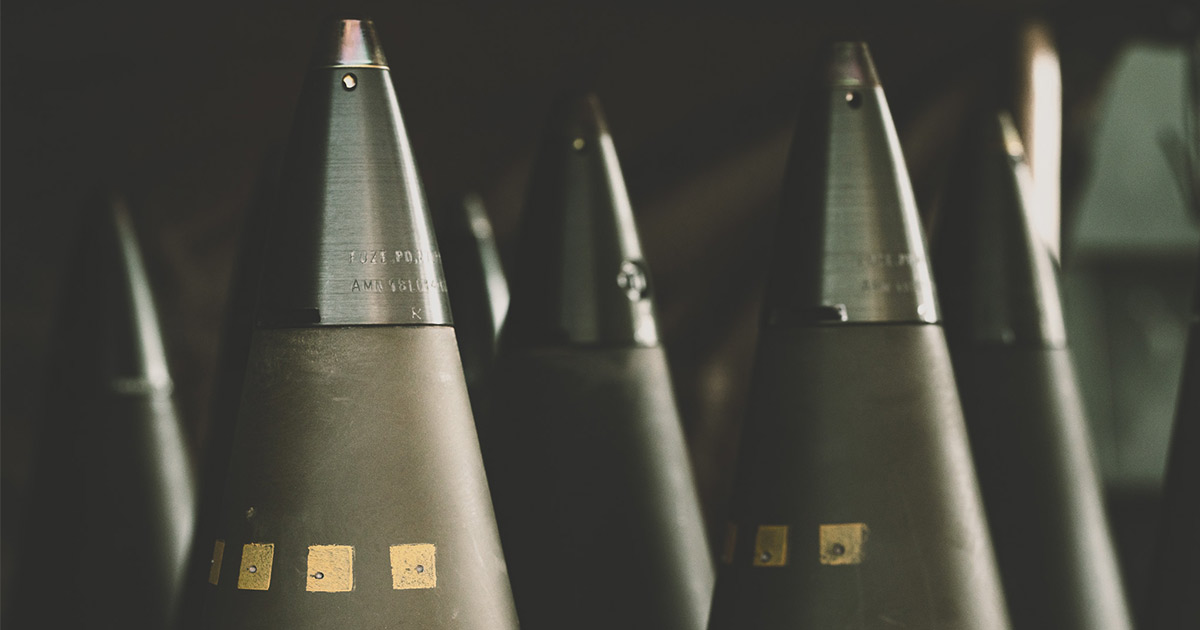
MAPAM is a family of mortar ammunition developed by Saab Bofors Dynamics Switzerland for anti-personnel and anti-materiel applications. Saab’s product information lists 60mm and 81mm variants and describes the use of controlled fragmentation to produce more consistent effects. It also identifies insensitive munition characteristics for the ammunition family, relevant to safe handling and storage. Those are manufacturer descriptions; the November announcement supplies no comparative acceptance-test results for ammunition produced in Poland, nor does it specify which calibres the initial production arrangement will cover.
Dezamet will be able to manufacture and sell MAPAM rounds under the agreed licensing conditions, drawing on Saab’s design and technical knowledge. The document does not provide a production start date, factory investment figure, annual capacity, or first customer. Before sustained deliveries can begin, production output must satisfy the technical requirements and acceptance standards applying to the licensed ammunition. The agreement establishes the industrial route, while actual capacity will depend on the production equipment, input materials, and qualification arrangements used by the manufacturer.
Mortar ammunition manufacturing depends on dimensional control, material consistency, inspection procedures, and traceability between production batches. Licensed fragmentation characteristics must be reproduced consistently and demonstrated through applicable acceptance tests. Saab has not identified which stages Dezamet will perform in-house, which components may initially come from external suppliers, or how the partners will divide qualification responsibility. Those details will affect the timetable and practical manufacturing scope once production is prepared.
Domestic production offers Poland greater influence over scheduling, batch availability, and some aspects of support than relying wholly on imported finished rounds. Its independence will still depend on which components, energetic materials, equipment, and technical services are sourced abroad. The companies have not supplied an domestic content figure or a list of subcontractors. The local licence should therefore be read as a defined production commitment rather than proof that every part of the ammunition supply chain has already moved to Poland.
The licence is tied to commitments associated with Poland’s Orka submarine procurement, even though the MAPAM product is ammunition for land forces. Saab says the agreement delivers the first commitment in an industrial cooperation and investment package agreed with Poland’s Ministry of Economic Development and Technology. Industrial participation attached to a naval programme can involve other defence sectors where production expertise and national capacity are being developed. The agreement establishes the mortar ammunition element; the remaining commitments have not been described as complete.
Saab and PGZ had already announced wider naval cooperation in 2026, including potential work on submarine maintenance, repair, and overhaul. The later agreement with Dezamet turns one part of those discussions into a named licence covering manufacture and sales. It does not confirm a new submarine construction contract, and it does not determine the status of the other industrial opportunities raised during the earlier cooperation talks. The two announcements should remain distinct when assessing their contractual effect.
Saab’s MAPAM product literature places emphasis on the effects of controlled fragmentation and on insensitive munition characteristics for relevant configurations. The 60mm version addresses the smaller-calibre segment, while the 81mm round is intended for a different mortar class and operational range. Those stated product characteristics explain why manufacturing knowledge and process control are part of the transfer. They do not establish that both configurations will be produced in Poland immediately, because the company has not published the specific licensed production mix.
Orders remain the next commercial condition for Polish MAPAM output. Claudio Penna, managing director of Saab Switzerland, said in the 20 November announcement that the partners looked forward to securing customers so that the programme could advance. The remark confirms that the licence was not accompanied by a published first production order. Saab has not specified an initial buyer, order value, production ramp-up schedule, or delivery deadline.
Dezamet will have to integrate licensed documentation, equipment, inspection procedures, and production planning into an ammunition manufacturing system that can deliver repeatable, accepted rounds. Qualification and batch assurance depend on controlling material specifications and demonstrating consistent manufactured results, regardless of whether every component is produced in-house. Saab and Dezamet have not published an investment or commissioning schedule for the line. Those unresolved points determine when the legal right to manufacture becomes an operating industrial capacity.
The licensing agreement establishes Saab and Dezamet’s roles in manufacturing MAPAM in Poland and fulfils a named commitment within the Orka-linked industrial package. Its subsequent milestones will be qualification of production, customer orders, and deliveries. No number of Polish-made rounds entering service, annual output target, or procurement value has yet been confirmed.