IN Brief:
- Thales and Kalyani Strategic Systems have agreed an Indian production, integration, and testing capability for guided and unguided 70mm rockets.
- The first fully assembled rocket produced in India is targeted for early 2027.
- Technology transfer and local manufacture could give India a broader production and export role within Thales' established 70mm rocket supply chain.
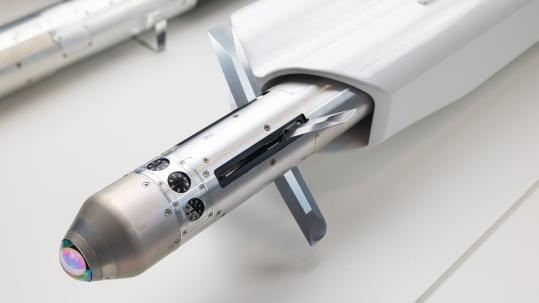
Thales and Kalyani Strategic Systems Limited have agreed to establish an Indian industrial capability for 70mm rocket systems, covering local production, integration, testing, and distribution of guided and unguided variants. The Strategic Alliance Agreement sets an early-2027 target for the first fully assembled rocket to be produced in India, giving the programme a defined manufacturing milestone.
The agreement combines rocket technology developed by Thales in Belgium with Kalyani Strategic Systems’ manufacturing and system-integration capability in India. Thales will contribute its experience with 2.75in/70mm rockets and launchers, while Kalyani will use local manufacturing and testing facilities to support production and integration of components from Thales’ qualified supply chain.
Technology transfer sits at the centre of the arrangement, alongside local manufacture and distribution of associated equipment. Establishing a sovereign ammunition capability requires more than final assembly: component qualification, energetic-material handling, inspection, traceability, acceptance testing, and configuration control all have to be transferred into a production system capable of delivering repeatable output.
India is already an operator of Thales’ 70mm rocket family. The systems are used by the Indian Armed Forces, including on rotary-wing platforms such as the Advanced Light Helicopter weapon-system variant and the Light Combat Helicopter. The wider product family includes conventional and precision-guided ammunition, allowing common launcher architectures to support different effects without requiring an entirely separate installation for every weapon type.
Thales says its 70mm solutions are used by 70 armed forces across 55 countries and are designed for air, land, and maritime applications. The company has also developed variants for counter-uncrewed-aircraft missions, where smaller guided rockets can offer a different cost and magazine-depth proposition from larger air-defence missiles when the target does not justify a more expensive interceptor.
The manufacturing model is therefore as important as the ammunition specification. Local production can increase domestic control over availability, replenishment, and later configuration changes, but only if transferred processes meet the same quality standards as the established production base. Thales has already expanded 70mm rocket output in Belgium, including additional guided-rocket capacity, so the Indian alliance would add another production node to an established weapon family.
Ankur Kanaglekar, Vice-President – India at Thales, said: “By combining our combat-proven 70mm rocket expertise from Belgium with KSSL’s engineering and manufacturing strengths, we are co-creating capabilities that will enhance India’s operational readiness and advance its vision of self-reliance in critical defence technologies.”
The early-2027 target leaves a relatively short period in which to convert technology-transfer arrangements into qualified production activity. Components manufactured locally will need controlled drawings, approved materials, calibrated processes, documented inspection, and acceptance criteria, while imported content will have to pass through a supply chain able to support the planned production rate.
Kalyani brings a broader defence-manufacturing base to that work. Parent company Bharat Forge has expanded across artillery, protected vehicles, small arms, ammunition, underwater systems, and energetics, giving its defence subsidiary experience in industrialising military products rather than acting solely as a sales or integration channel. The group’s planned energetics facility in Andhra Pradesh also adds capacity relevant to ammunition production.
Export ambitions add another layer of complexity. Both companies describe India as a potential manufacturing hub for international requirements, which means finished systems may have to satisfy the quality, documentation, configuration, and acceptance standards of several customer nations. Scale can strengthen the economics of localisation, but different guidance options, launchers, fuzes, and platform integrations can quickly create multiple configurations that require disciplined control.
The agreement also exposes the practical difference between localisation announcements and industrial capability. A signed alliance defines the workshare and intended direction; qualified tooling, trained personnel, approved suppliers, completed test articles, and accepted production weapons determine whether that intent has become a functioning manufacturing system.
The first fully assembled Indian rocket will therefore be the more useful programme marker. If the early-2027 timetable is met, the alliance will have progressed from contractual framework to physical output within months, establishing the basis for a production operation that Thales and Kalyani intend to serve both Indian and overseas requirements.