IN Brief:
- Thales and Hanwha Aerospace are working to integrate Chunmoo guided munitions with the X-Fire launcher.
- The pairing could give NATO users a mobile precision-fires option across short, medium, and deeper ranges.
- The programme reflects Europe’s demand for launcher flexibility, allied missile supply, and faster production routes.
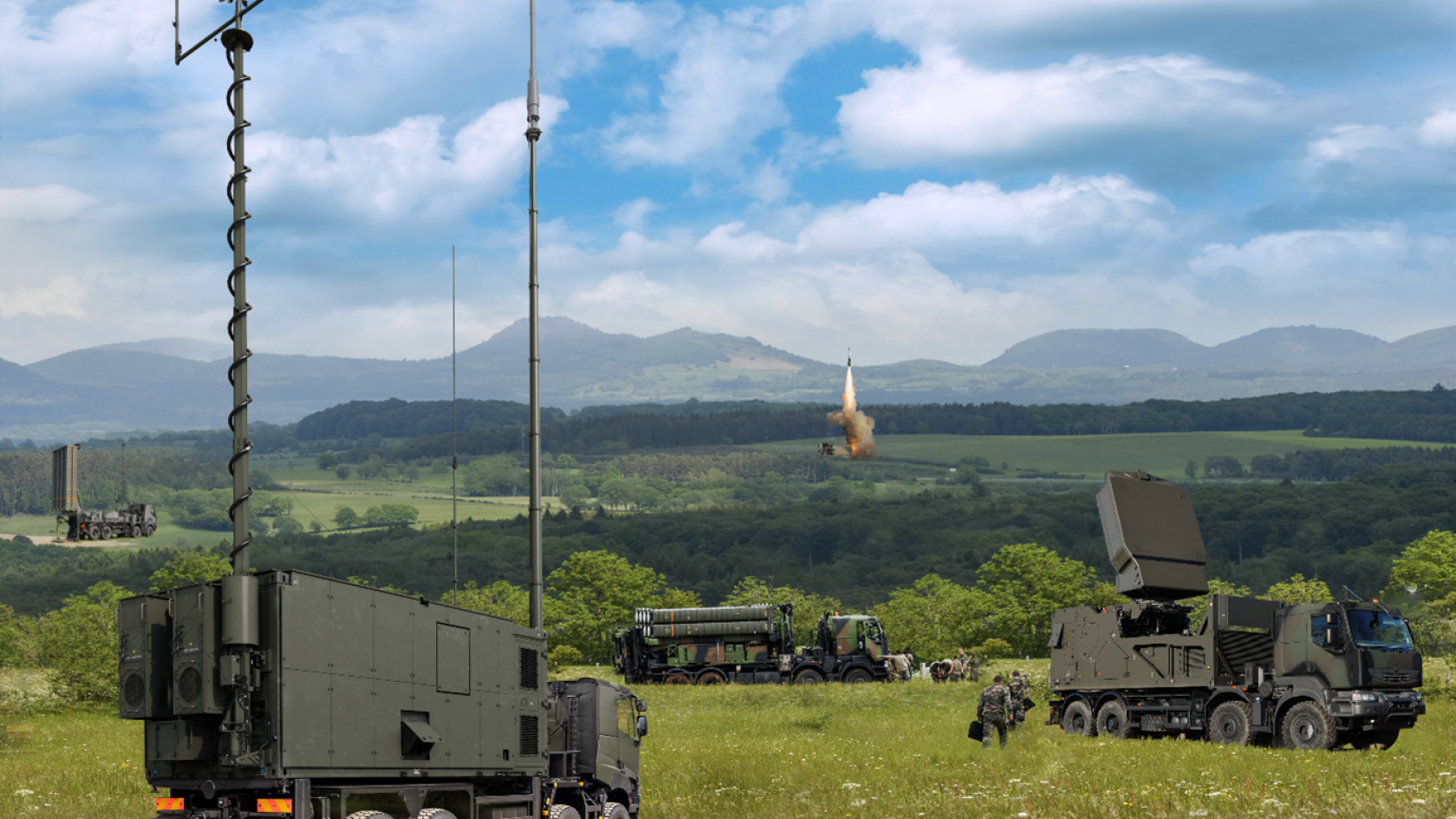
Thales and Hanwha Aerospace are working to align South Korea’s Chunmoo guided rockets and missiles with the French X-Fire launcher, adding another industrial route into Europe’s expanding long-range fires market.
The agreement covers integration work that would make Hanwha’s Chunmoo munition family compatible with X-Fire, a modular launcher concept developed by Thales with Soframe and mounted on a high-mobility truck platform. The associated munition options include guided rockets and longer-range tactical missiles, giving the system a potential range ladder from battlefield fires into deeper interdiction missions.
European demand for long-range fires has moved from specialist requirement to central procurement concern. Ukraine has shown how quickly artillery, rockets, missiles, and launchers are consumed in high-intensity operations, while NATO planners are increasingly focused on striking logistics nodes, command posts, air-defence sites, artillery concentrations, and staging areas without relying solely on crewed aircraft. The shortfall is industrial as much as operational: missile canisters, reload vehicles, fire-control software, energetic materials, launch vehicles, and qualified assembly capacity all have to expand together.
X-Fire is being developed as a modular launcher rather than a closed national weapon system. That approach fits a market where buyers want munitions flexibility without waiting for every element of a fully sovereign deep-fires architecture to mature. The engineering burden is still demanding. Canister geometry, launch dynamics, electrical interfaces, fire-control logic, target data handling, safety envelopes, and maintenance tooling all have to be qualified before a launcher-missile pairing becomes a credible fielded capability.
Hanwha brings a different manufacturing proposition into the European deep-fires equation. South Korea’s defence industry has strengthened its export position by combining mature systems with production tempo, particularly in artillery, armoured vehicles, and land munitions. Chunmoo sits naturally in that environment. For European customers facing full order books among existing suppliers, Korean missile capacity offers a practical answer to the stockpile and delivery-speed problem.
The X-Fire pairing also reflects Europe’s attempt to widen its deep-fires supplier base while keeping control of launch platforms, command architecture, and sustainment. Imported munitions can accelerate fielding, but domestic launcher integration, local support, software authority, and stockpile management remain politically and operationally sensitive. Buyers are looking for systems that can be delivered, trained, stored, maintained, and replenished, not just weapons with attractive brochure ranges.
That same procurement pressure is visible in UK long-range strike work, where Project Brakestop is pushing low-cost systems toward a 500km-plus requirement. X-Fire and Chunmoo sit in the same wider shift: governments want range, but they also want a production route that does not depend on tiny inventories, long lead times, or fragile subcomponent supply.
The integration challenge is substantial. A launcher designed around multiple munitions must manage recoil, launch plume behaviour, electromagnetic compatibility, software safety, target-data exchange, and platform survivability. Every munition adds operational flexibility, while also adding configuration-control work across training, spares, manuals, test equipment, and certification. The factory may deliver the launcher, but the system is only complete when the digital and mechanical interfaces have been disciplined enough for field use.
Stockpile economics will decide the long-term value of the concept. A launcher capable of firing 290km-class missiles changes force planning only when enough rounds can be produced and stored. That pulls in rocket motors, warheads, guidance electronics, energetic materials, packaging, storage infrastructure, and final assembly capacity. Europe’s ammunition bottlenecks have already shown that design knowledge is rarely the only constraint. Qualified production capacity is often the harder problem.
The Thales-Hanwha work points toward a mixed industrial model for NATO deep fires: European launch vehicles, allied munitions, multinational stockpile planning, and support systems designed from the start for export and coalition use. It may lack the neatness of a fully national solution, but it offers a faster route to usable range. In a market now defined by inventory depth, that may count for more than industrial purity.