IN Brief:
- Graeme Downie MP has called for more Type 31 frigates and greater use of Rosyth and east coast assets.
- The proposal links frigate numbers to UK High North, GIUK gap, and subsea infrastructure protection requirements.
- Expanded orders would support production continuity at Rosyth and strengthen the UK’s surface shipbuilding pipeline.
A call for increased Type 31 frigate orders has renewed attention on UK surface fleet numbers, Rosyth shipbuilding capacity, and the infrastructure needed to support operations in the High North.
Graeme Downie, MP for Dunfermline and Dollar, has urged the government to consider ordering more Type 31 frigates and making greater use of east coast assets, including Rosyth and DM Crombie. His evidence to the Defence Committee links the ships to High North presence, GIUK gap access, subsea infrastructure protection, and UK response times in northern waters.
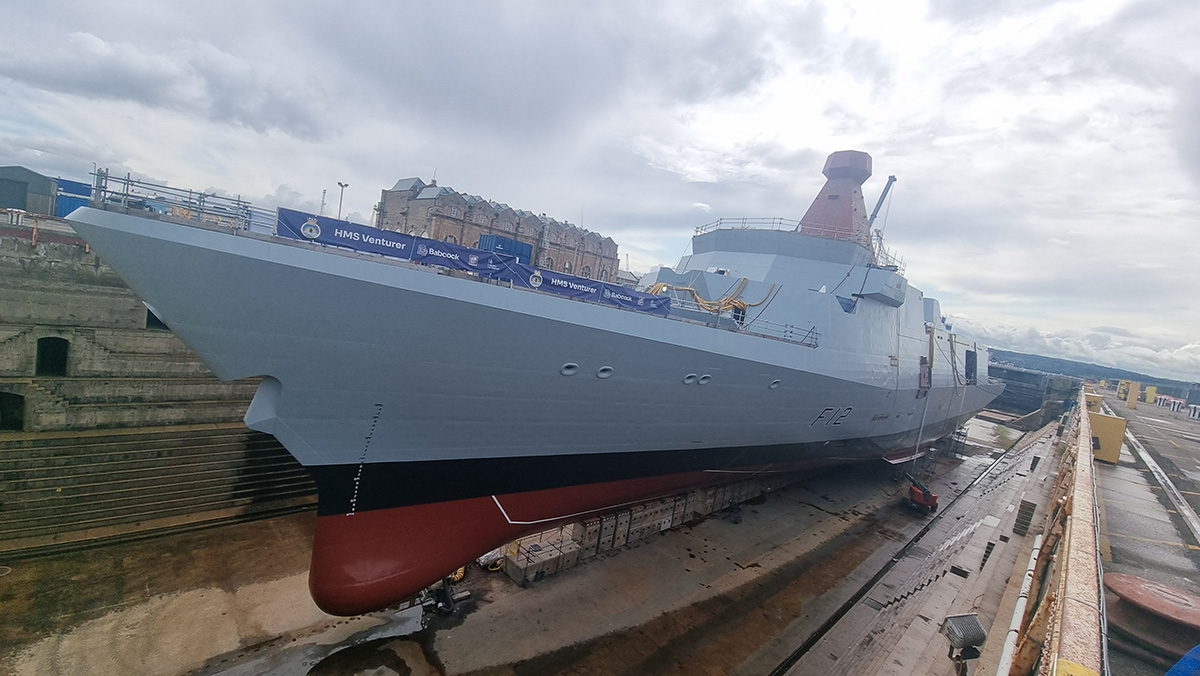
The Royal Navy currently has five Type 31 frigates on order. The ships are being built by Babcock at Rosyth and are intended to provide a flexible general-purpose frigate capability, with future adaptability central to the class.
Downie’s proposal links maritime presence directly to shipbuilding capacity. A larger role in northern waters requires not only additional hulls, but also the industrial and support infrastructure to keep those hulls available.
Rosyth continuity shapes the build case
Additional Type 31 orders would give the Rosyth production line a clearer long-term workload. Continuous ordering helps preserve skilled labour, supplier relationships, production tooling, and yard learning gained during the current programme.
Surface combatant construction depends on specialist welders, systems engineers, pipefitters, outfitters, naval architects, and combat systems teams. Gaps between orders make those skills harder to retain and increase the cost of restarting production momentum.
Fleet numbers rely on support capacity
A larger Type 31 fleet would also require stronger support infrastructure. Ships need bases, logistics, spares, maintenance windows, weapons handling, digital systems, and repair capacity if they are to sustain presence in northern waters.
The debate reaches beyond hull count. It touches the wider UK maritime industrial system — yards, depots, suppliers, training pipelines, and east coast logistics — at a point when naval commitments are expanding and the production base remains under close scrutiny.