IN Brief:
- Online Oceans has raised £4m to scale autonomous surface vessel production and fleet software.
- Scout is a compact solar-electric USV designed for persistent maritime monitoring.
- Defence applications include maritime domain awareness, subsea infrastructure protection, border security, and anti-submarine support.
Online Oceans has raised £4m to scale its autonomous surface vessel and fleet software work for defence and maritime security markets.
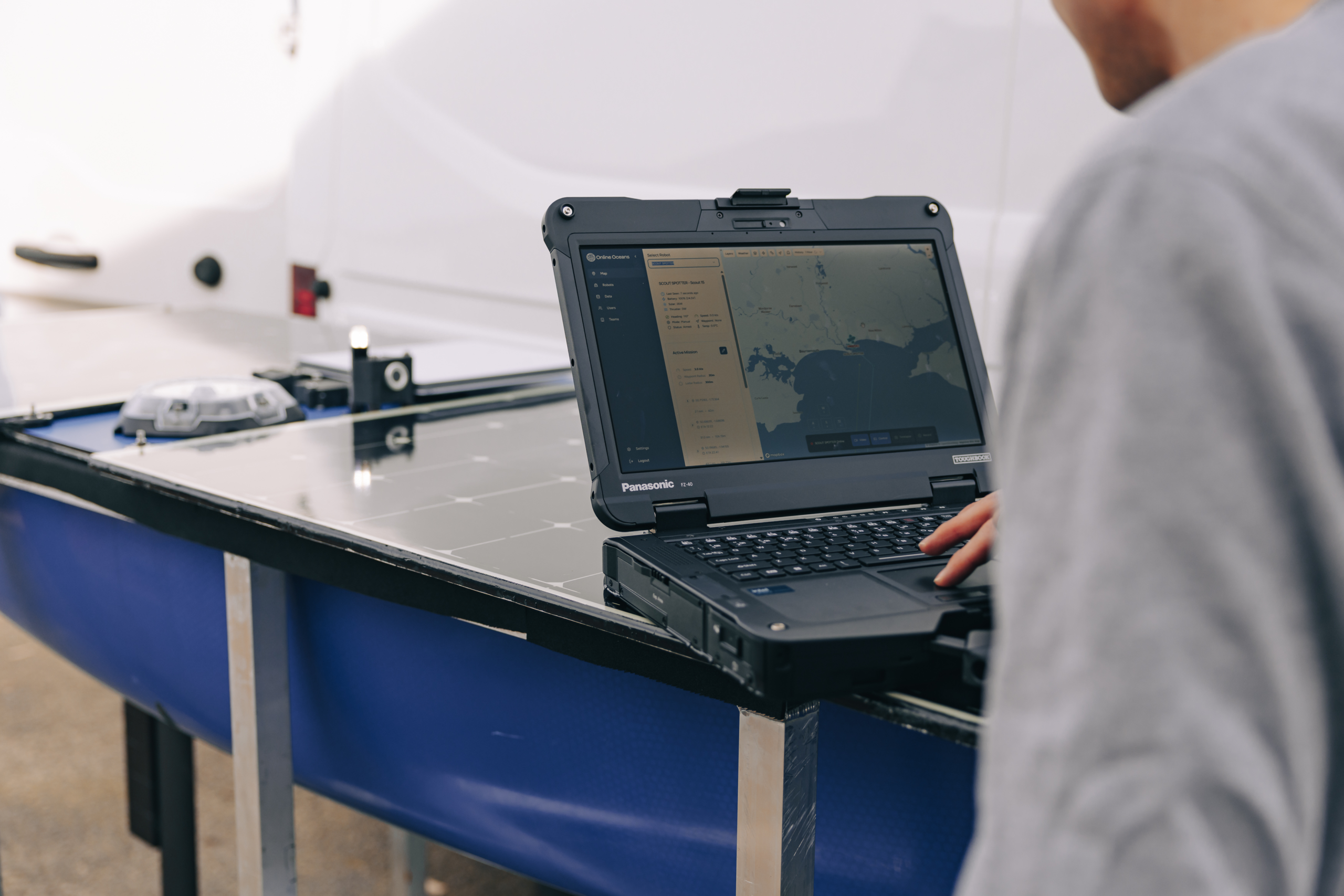
The UK company is building Scout, a compact solar-powered autonomous surface vessel, and Tether, a fleet command platform that allows operators to manage missions, monitor assets, and access data in real time.
Scout is aimed at persistent maritime coverage, with applications spanning defence, maritime domain awareness, subsea infrastructure protection, border security, counter-drug smuggling, and ocean data collection. Online Oceans’ model focuses on low unit cost, long endurance, and fleet-scale deployment rather than occasional high-cost missions.
The company has secured initial customers across defence, maritime domain awareness, and ocean data, and has begun early data sales. The new funding will support manufacturing scale-up, deployments, and commercial expansion.
Fleet economics shape the build model
Scout is a 2.4-metre, 80kg solar-electric autonomous surface vessel built for multi-month sensing. The platform is intended to deploy from shore, operate with satellite connectivity, and gather data over long periods without the operating cost of crewed vessels.
The manufacturing challenge is to produce units cheaply enough, robustly enough, and consistently enough for dense fleet deployment. Hull durability, solar power, satellite communications, sensors, anti-biofouling features, and field maintenance all affect whether the model can scale beyond small numbers of specialist vessels.
Persistent coverage depends on fleet software
Tether is central to the system because large numbers of small vessels require coordinated mission planning, status monitoring, routing, data access, and integration with wider maritime command systems.
The strongest applications sit in wide-area sensing and infrastructure monitoring, where crewed vessels remain too expensive for continuous presence. If Online Oceans can scale Scout production while keeping unit cost low, autonomous surface fleets could provide a practical layer between static sensors, patrol vessels, crewed aircraft, and larger uncrewed maritime systems.