IN Brief:
- C2 Robotics has commissioned its first Speartooth LUUV for US delivery.
- The vehicle is designed for ISR and strike roles in contested undersea environments.
- The export highlights rising allied demand for scalable, lower-cost uncrewed naval systems.
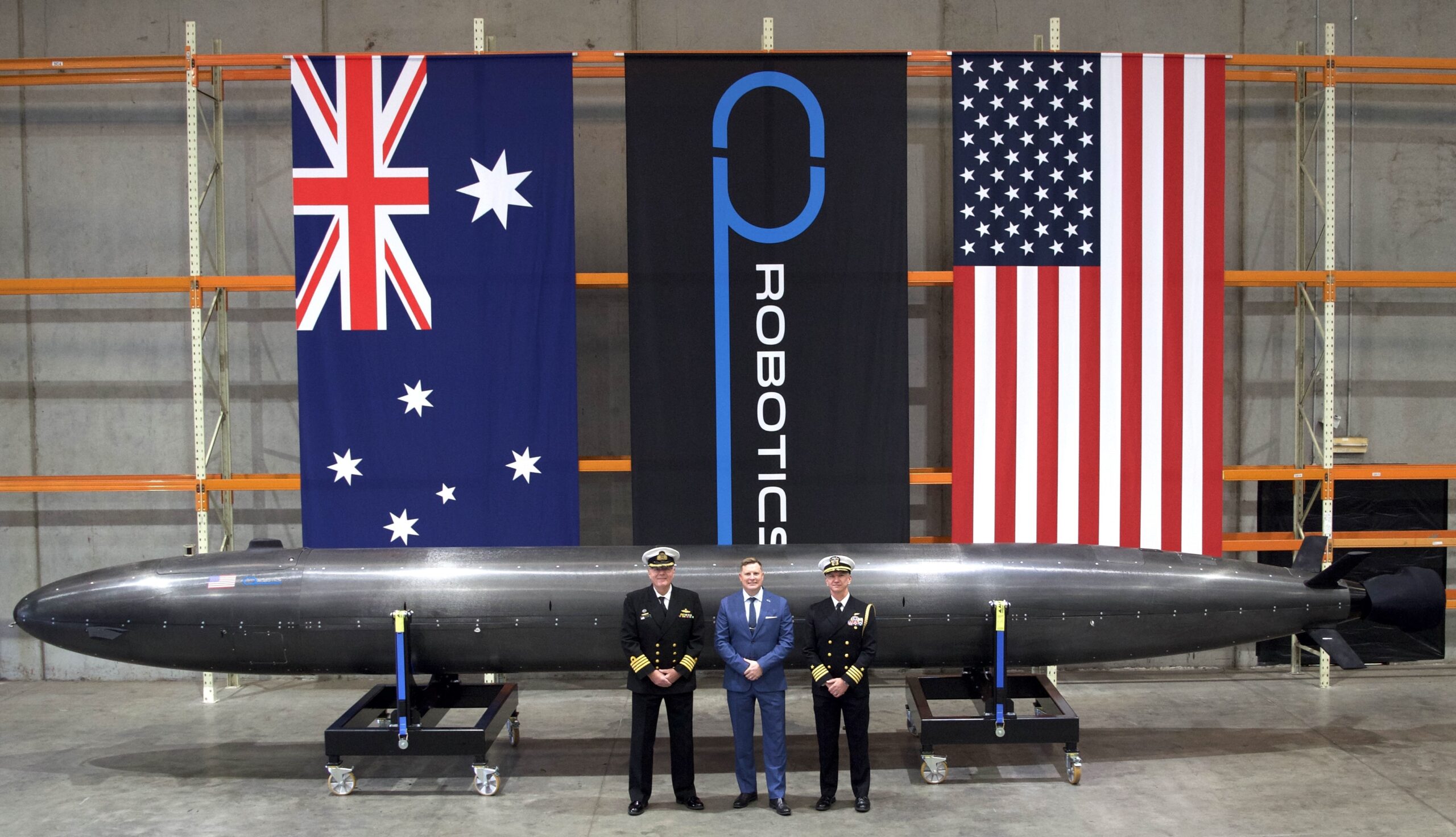
Australian defence robotics company C2 Robotics has commissioned and christened its first Speartooth Large Uncrewed Undersea Vehicle for delivery to the United States.
The ceremony marks Speartooth’s move from development into operational service and gives Australia a notable export foothold in the growing market for autonomous undersea systems. The christening was conducted in Canberra with US and Australian naval representatives in attendance.
Speartooth is designed as a scalable LUUV for intelligence, surveillance, reconnaissance, and strike missions. Its design philosophy is built around distributed undersea mass, using smaller and lower-cost platforms to extend naval reach in contested waters.
The vehicle’s export to the United States also reinforces the rapid development of allied autonomous maritime capability. Large uncrewed underwater vehicles can extend sensing, carry payloads, support denial operations, and operate in areas where crewed submarines are too scarce or too valuable to risk routinely.
Production below the submarine tier
The manufacturing model for LUUVs sits below traditional submarine production but still requires naval-grade reliability. Hull structures, pressure tolerance, propulsion, energy storage, navigation, autonomy, communications, and payload integration all need to survive extended undersea operations.
Scale depends on modularity. Battery sections, mission payloads, control systems, and communications packages need to be configurable without turning every vehicle into a bespoke engineering project. Standardising the platform while allowing mission variation gives the system a clearer route to repeatable export production.
Autonomy also changes the production burden. A LUUV has to manage navigation, endurance, fault response, and mission execution without continuous human control. That places software testing, sensor calibration, and environmental validation at the centre of the manufacturing process.
Speartooth’s US delivery shows how the undersea market is expanding beyond crewed submarines. The next production lane in naval warfare will be built around autonomous platforms that combine pressure-vessel engineering with software, payload modularity, energy density, and scalable assembly.