IN Brief:
- Lynred has launched DRACO MW SL, a cooled SXGA MWIR detector for land and counter-UAV systems.
- The detector offers 1280 x 1024 resolution, 7.5µm pixel pitch, T2SL technology, and 3.7–4.8µm spectral coverage.
- The PlugUp platform supports OEM camera integration, common architecture, and faster product development for defence sensors.
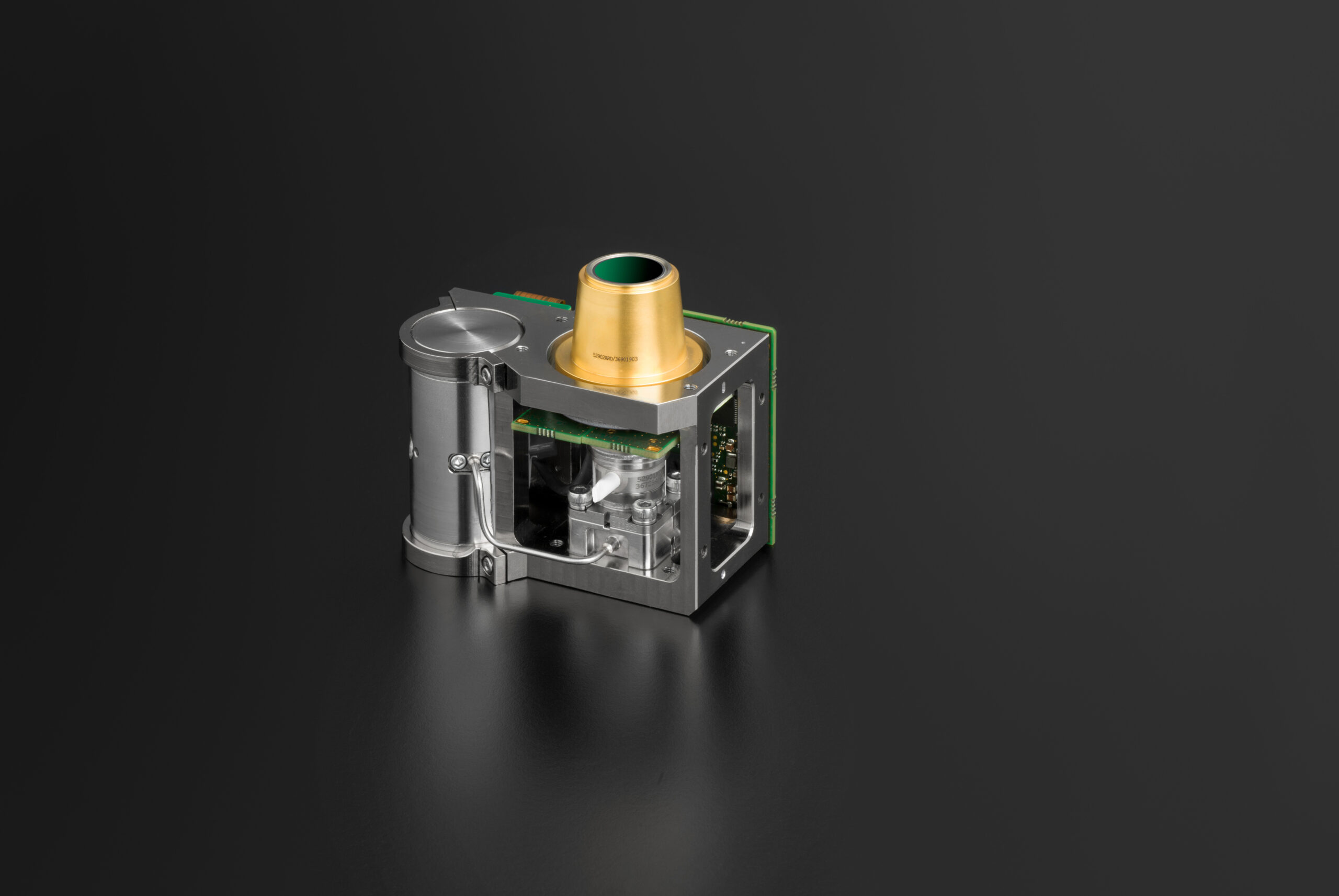
Lynred has launched DRACO MW SL, a cooled SXGA medium-wave infrared detector designed for land surveillance, vehicle optronics, and counter-UAV systems.
The detector combines 1280 x 1024 resolution, a 7.5µm pixel pitch, T2SL infrared technology, a 60Hz frame rate, and operation across the full MWIR spectral band from 3.7µm to 4.8µm. It operates at 130K and is designed for high image stability, enhanced sensitivity, long operating life, and compact integration.
Counter-UAV and land-surveillance systems are being asked to detect smaller targets at longer ranges while operating through smoke, haze, cold conditions, humidity, and darkness. Higher definition and a wider field of view help sensor systems monitor aerial and ground threats without losing the detail needed for recognition and identification.
DRACO MW SL is embedded in Lynred’s PlugUp platform, which standardises interfaces for cooled detectors and supports integration into OEM cameras. That common architecture reduces redesign burden for camera manufacturers and systems integrators. It also helps suppliers offer different performance levels across related products without rebuilding the entire camera system.
The detector joins a PlugUp family that already includes GALATEA SL, EOLE, SEEGNUS SL, and ARGO SL. For OEMs, this family approach supports variant management across vehicle cameras, fixed surveillance systems, gimbal payloads, portable sensors, and counter-UAS equipment. Each application has different range, power, cooling, cost, and packaging requirements, but common interfaces can shorten development cycles.
The launch arrives as counter-UAS systems move from niche capability into mainstream defence procurement. Mobile air-defence platforms, drone-detection networks, and integrated counter-UAS vehicles increasingly rely on thermal imaging to confirm, classify, and track threats. Radar may provide early detection, RF systems may identify control links, and acoustic sensors may cue attention, but EO/IR systems often provide the visual confirmation needed before defeat mechanisms are used.
Recent counter-UAS platform work has already shown how detection, command software, interceptors, jammers, and vehicle integration are converging into more complete systems. Mobile GBAD concepts with counter-UAS layers and UK drone test-and-scale infrastructure both point towards a market where sensor quality and integration speed will influence production as much as effector choice.
Cooled MWIR detectors are complex products. They require detector fabrication, cryocoolers, vacuum packaging, readout electronics, thermal control, environmental sealing, and long-life reliability. Lynred’s high-operating-temperature design and split linear cooler architecture reflect the push to reduce power consumption and improve lifetime while maintaining performance.
Manufacturing consistency is central. Defence sensor buyers need stable image performance across batches, predictable cooler life, and interfaces that integrators can trust. A detector that performs well in a laboratory still has to survive vibration, shock, temperature cycling, dust, humidity, and long operating hours on armoured vehicles or mobile air-defence systems.
The full MWIR band coverage is useful in photon-limited environments, including cold and humid conditions where narrower spectral solutions can struggle. For counter-UAV use, that could help operators maintain target contrast against difficult backgrounds, especially when small drones are viewed at distance.
DRACO MW SL therefore belongs in the production chain behind modern drone defence. Interceptors and jammers draw attention, but detection and identification decide whether the system can engage correctly. By giving OEMs a higher-definition cooled MWIR detector inside a standardised integration platform, Lynred is targeting one of the quieter but critical bottlenecks in counter-UAS manufacturing.