IN Brief:
- John Cockerill and Arquus have unveiled the Fenris 6×6 fire-support vehicle.
- The vehicle combines Arquus mobility with a Cockerill 3105 105mm turret and three-person crew configuration.
- Fenris reflects demand for medium-weight, deployable firepower that can be produced and sustained faster than heavy armour fleets.
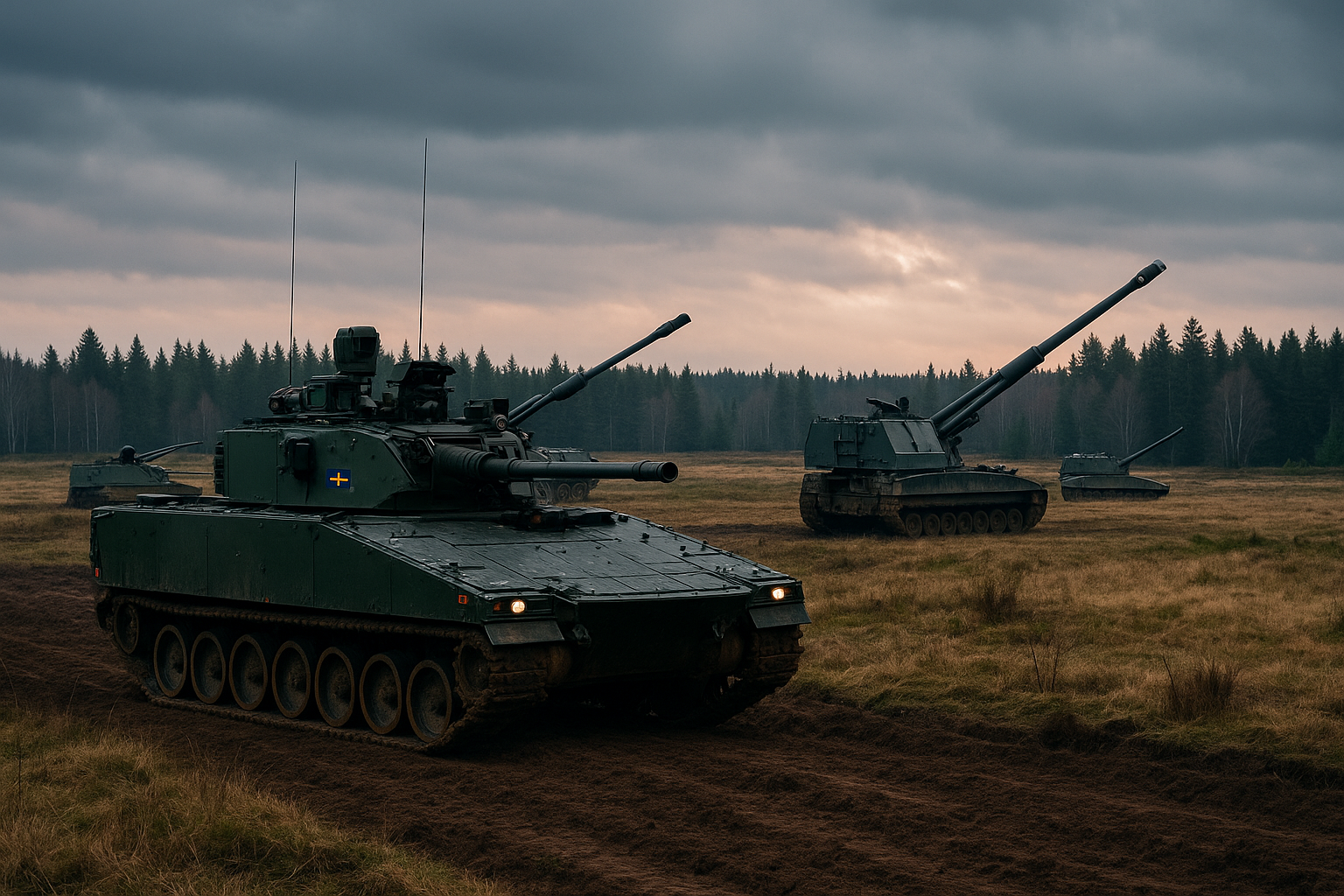
John Cockerill and Arquus have unveiled Fenris, a 6×6 wheeled fire-support vehicle built around the Cockerill 3105 105mm turret and a medium-weight chassis.
At around 26 tonnes, Fenris sits between reconnaissance vehicles and main battle tanks. It carries a crew of three and is designed to deliver direct fire while remaining easier to deploy, move, and support than heavy tracked armour.
The vehicle addresses a capability gap that has become more visible as European armies rethink firepower and mobility. Main battle tanks provide protection and lethality, but they are expensive, heavy, logistically demanding, and slow to regenerate. Light armoured vehicles are mobile and affordable, but they often lack the punch required against hardened positions or armoured threats.
Fenris is built around a partnership model. John Cockerill contributes turret and weapon-system expertise, while Arquus brings wheeled armoured-vehicle experience. That combination reduces some clean-sheet risk, though platform integration remains demanding. A 105mm weapon on a wheeled chassis requires careful control of recoil, stability, ammunition stowage, crew safety, power supply, fire control, optics, cooling, and maintainability.
The Cockerill 3105 turret gives the vehicle a mature firepower base. Its autoloader and ammunition capacity allow a smaller crew and a compact turret package, while the weapon offers more direct-fire effect than lighter cannon-armed vehicles. The chassis still has to provide enough mobility, protection, electrical growth, and tactical endurance for the vehicle to be useful in contested conditions.
Medium-weight fire support is gaining appeal because it can be fielded faster than heavy armour in some scenarios. Such vehicles cannot replace MBTs in the assault role, but they can support reconnaissance, rapid reinforcement, flank security, expeditionary deployments, and lower-intensity operations where tank logistics would be excessive.
The same pressure towards mobility, automation, and production pace is visible in the UK’s RCH 155 artillery order, where remote operation, wheeled mobility, and domestic production work sit at the centre of the capability. Fenris applies a similar logic to direct fire: reduce crew burden, improve deployability, and create a platform that can be built and supported without the industrial weight of a full MBT programme.
Protection will remain the trade-off. A wheeled fire-support vehicle cannot carry the same armour package as a heavy tank. That places more importance on sensors, situational awareness, defensive aids, signature management, tactics, and possible active-protection options. Survivability will depend on avoiding exposure as much as absorbing damage.
Export potential will depend on modularity and cost discipline. Many armies need more firepower, but not all can afford or support heavy tracked fleets. A vehicle that can accept national radios, battle-management systems, sights, protection packages, training systems, and support arrangements has a stronger path into varied markets.
Manufacturing teams will need to keep the platform from becoming overloaded with customer-specific changes. Medium-weight vehicles lose their advantage if every requirement adds weight, complexity, or bespoke integration. Standardised interfaces, controlled variants, and disciplined configuration management will help preserve production rhythm.
Fenris shows how European land-systems companies are responding to a crowded requirement set. Customers want firepower, mobility, protection, lower crew numbers, and faster delivery. The vehicle does not remove the compromises, but it packages them into a format that could meet demand for deployable direct fire without asking every customer to rebuild a heavy-armour fleet.