IN Brief:
- Malaysia has ordered 18 CAESAR self-propelled artillery systems from KNDS.
- The contract includes technology transfer and local assembly through Advanced Defense System Sdn Bhd.
- The programme links long-range fires modernisation with local integration, maintenance, and artillery sustainment capability.
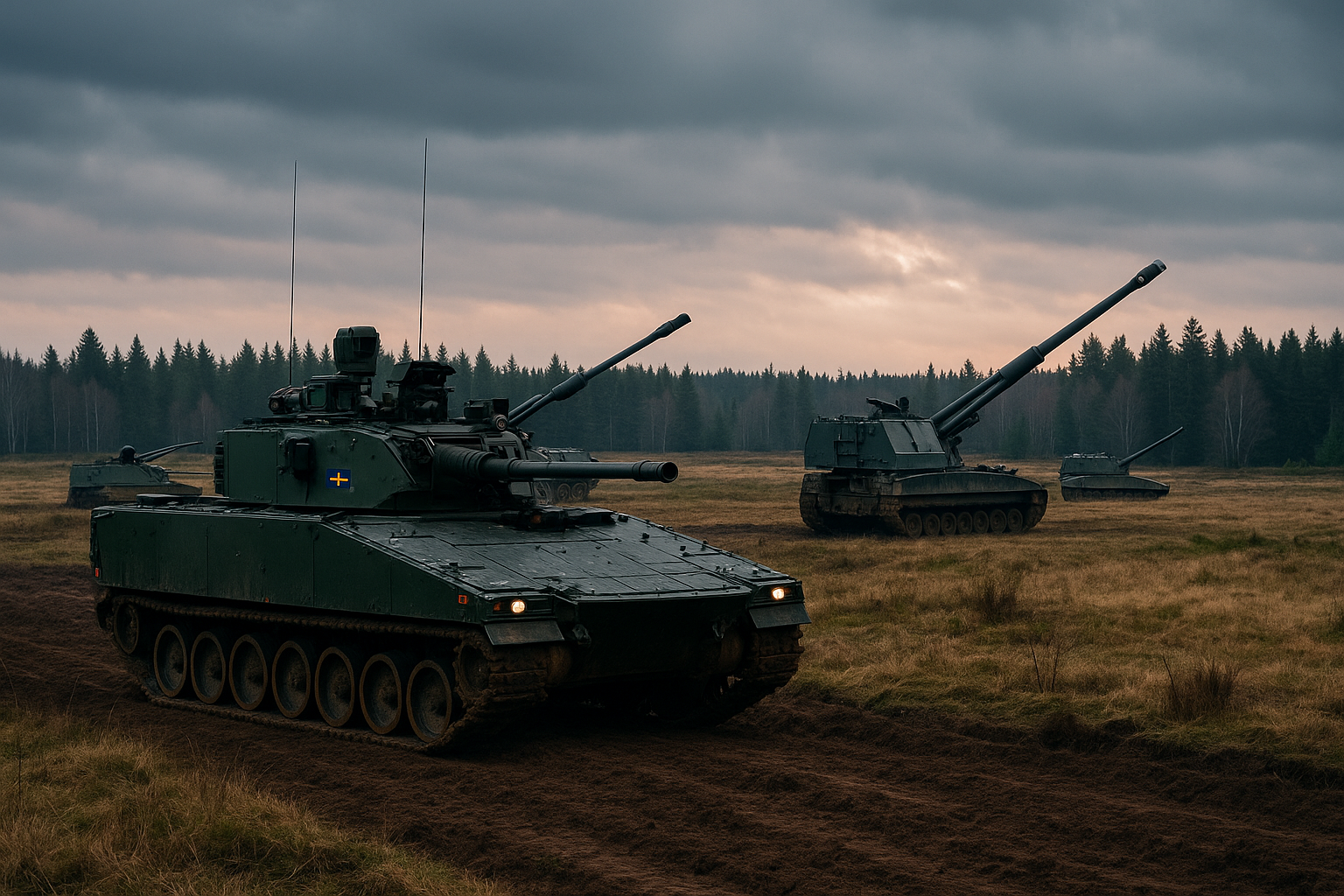
Malaysia has ordered 18 CAESAR self-propelled artillery systems from KNDS, giving the Malaysian Army a wheeled 155mm fires capability while adding a new localisation project for the country’s defence industry.
The order was formalised at Eurosatory by KNDS and its Malaysian partner Advanced Defense System Sdn Bhd. The contract includes a licence covering technology transfer and local assembly in Malaysia, extending an industrial relationship that previously included local assembly of 105LG lightweight towed artillery. Malaysia becomes the fifteenth CAESAR customer, joining a global user base with hundreds of systems ordered or delivered.
The 18-system package gives Malaysia more than a small evaluation fleet. It supports the creation of a meaningful wheeled artillery capability built around mobility, rapid displacement, and longer-range fire. CAESAR’s external simplicity as a truck-mounted gun does not reduce the industrial complexity underneath. A modern artillery system brings together vehicle integration, ordnance, recoil systems, hydraulics, fire-control software, navigation, communications, crew interfaces, ammunition handling, spares, and maintenance tooling.
Local assembly can capture valuable workshare, provided it is paired with inspection routines, documentation control, supply-chain traceability, and depot-level support. Malaysia’s industrial benefit will depend on how much practical capability remains after the initial batch is built. A localisation programme built only around final assembly has a shorter shelf life than one that develops maintenance, upgrade, calibration, and subsystem support.
Artillery sustainment is demanding because guns are high-stress mechanical systems. Barrel wear, recoil-system maintenance, alignment, calibration, electronic updates, vehicle fatigue, and ammunition compatibility all become long-term fleet issues. A local assembly route gives Malaysia a stronger base for those tasks than a pure import arrangement, but the engineering burden remains.
Modern fires are also becoming increasingly digital. Artillery fire-control integration and extended 155mm ammunition work show how platforms, sensors, software, propellant systems, and munitions are advancing together. A self-propelled gun can only deliver its full value when targeting data, communications, ammunition supply, and maintenance processes can support it.
For Malaysia, the CAESAR fleet will need to sit inside that wider fires ecosystem. Wheeled artillery offers mobility and a lower support burden than many tracked systems, but it still requires trained crews, disciplined resupply, protected dispersal, and reliable command links. Local industry has a role in keeping that system available, especially where vehicle maintenance, diagnostics, electronics support, and component replacement decide day-to-day readiness.
Technology transfer brings expectations as well as opportunity. Defence ministries increasingly use artillery purchases to develop jobs, technical capability, and sustainment autonomy. Localisation can become fragile if production volumes are too low, workshare remains shallow, or imported subsystems continue to control availability. Malaysia’s programme will be judged by how effectively ADS and its local suppliers convert assembly into retained capability.
The CAESAR order gives Malaysia a proven artillery system with an industrial route attached. Its longer-term value will come from whether local assembly becomes a platform for artillery support, ammunition integration, and future upgrade work across the country’s land-defence base.