IN Brief:
- SK Oceanplant has delivered ROKS Gyeongbuk, the second Ulsan-class Batch-III frigate, to the Republic of Korea Navy.
- The 3,600-tonne-class warship brings hybrid propulsion, anti-submarine capability, and a modern combat-system fit into Korean naval service.
- The delivery strengthens South Korea’s position as a high-tempo naval manufacturing and export competitor.
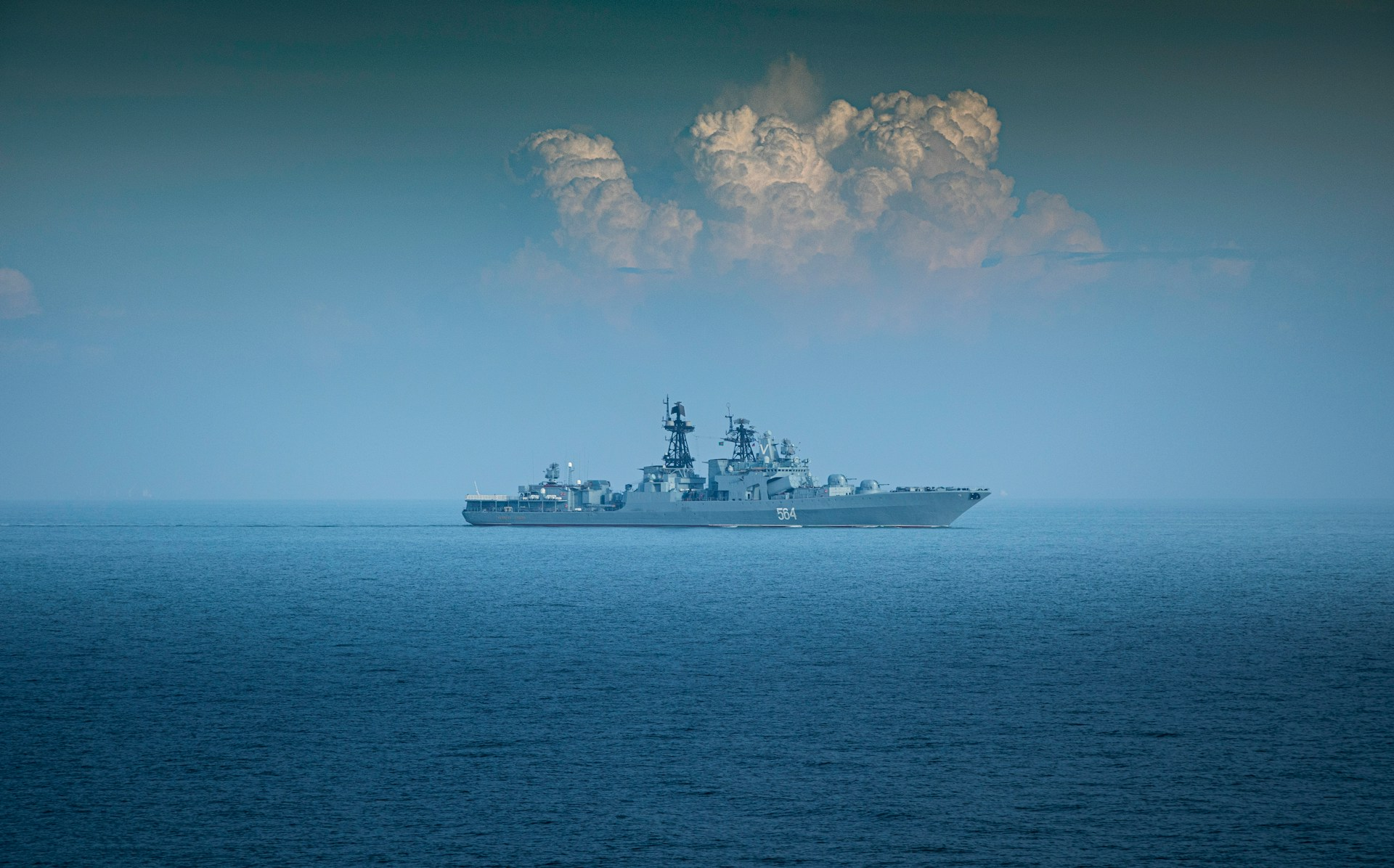
SK Oceanplant has delivered ROKS Gyeongbuk, the second Ulsan-class Batch-III frigate, to the Republic of Korea Navy, adding another production milestone to South Korea’s fast-maturing naval industrial base.
The 3,600-tonne-class warship was handed over at the company’s Goseong yard in South Gyeongsang Province after sea trials, firing checks, and final acceptance activity. The frigate will now move through crew work-up before entering operational service, joining a programme designed to refresh South Korea’s surface fleet with more capable, digitally integrated combatants.
Although built for a domestic requirement, the Ulsan Batch-III programme sits inside the same industrial ecosystem that has made South Korea a more formidable naval export competitor. Korean shipbuilders have moved beyond conventional commercial strength into a defence market where delivery tempo, system integration, and lifecycle support are increasingly decisive. A frigate order is no longer judged only by hull design or weapons fit; customers want evidence that a yard can deliver multiple ships, absorb configuration changes, and keep the production line moving.
ROKS Gyeongbuk is around 129 metres long, with a beam of roughly 15 metres and a top speed in the region of 30 knots. Its combat fit includes a 5-inch naval gun, guided missiles, anti-ship missile defence weapons, and long-range anti-submarine torpedoes, supported by a hybrid propulsion arrangement intended to improve operational flexibility and acoustic performance.
That capability mix reflects the changing demands placed on mid-sized surface combatants. Navies want frigates that are affordable enough to acquire in useful numbers, yet sophisticated enough to contribute to anti-submarine, air-defence, anti-surface, and maritime-security missions. The burden falls heavily on combat-system integration, propulsion alignment, shock hardening, electromagnetic compatibility, and acoustic control — areas where programme risk can accumulate quickly.
South Korea’s broader advantage lies in the depth of its shipbuilding base. Commercial shipbuilding scale has created yard infrastructure, production discipline, and a skilled workforce that can be adapted to naval work, even though warships impose higher demands on survivability, security, weapons integration, and through-life certification. That base is now visible in Korea’s expanding defence export profile, which already spans armoured vehicles, artillery, aircraft, and naval platforms.
The Gyeongbuk delivery also lands in a regional procurement environment where Indo-Pacific navies are moving beyond symbolic modernisation. Undersea threats, missile proliferation, grey-zone activity, and contested maritime approaches are driving sustained fleet renewal. For surface combatants, that means demand for sonar systems, vertical launch equipment, electronic warfare, secure communications, and combat-management software is rising alongside demand for hulls.
For European yards, South Korea’s progress adds another competitive pressure. Export buyers that once looked mainly to European or US shipbuilders now see Korean yards offering recent build references, strong industrial capacity, and clear government backing. The ability to deliver complex platforms consistently is becoming a strategic differentiator, particularly where customers are wary of long waits and fragile supply chains.
Naval manufacturing remains unforgiving. The easiest part of the business is producing an attractive frigate design; the harder work is sequencing steel, propulsion, cables, sensors, combat systems, weapons, trials, acceptance, training, and spares into a repeatable production process. South Korea is increasingly showing that it can manage that process at scale.
The next test for SK Oceanplant and the wider Korean naval sector will be whether domestic production rhythm converts into export confidence. If the Ulsan Batch-III programme continues to deliver without major disruption, it will strengthen Korea’s case in a market where naval buyers are looking for industrial reliability as much as combat capability.