IN Brief:
- RTX has secured a $399m framework agreement for future AIM-120 AMRAAM D4 and C9 variant work.
- Initial funding is being provided through Foreign Military Sales partners, reflecting allied dependence on the missile family.
- Future AMRAAM development sits inside a wider pressure to expand missile production, upgrade guidance, and replenish precision-weapons inventories.
RTX has secured a $399m framework agreement to support future development work on AIM-120 AMRAAM D4 and C9 missile variants, extending the life of one of the most widely integrated Western air-to-air and air-defence weapons.
The agreement covers research, system requirements review activity, preliminary design review work, proof of design, and manufacturing-related development. Initial funding of more than $100m is being provided through Foreign Military Sales partners, underlining how deeply allied airpower and ground-based air defence now depend on the AMRAAM family.
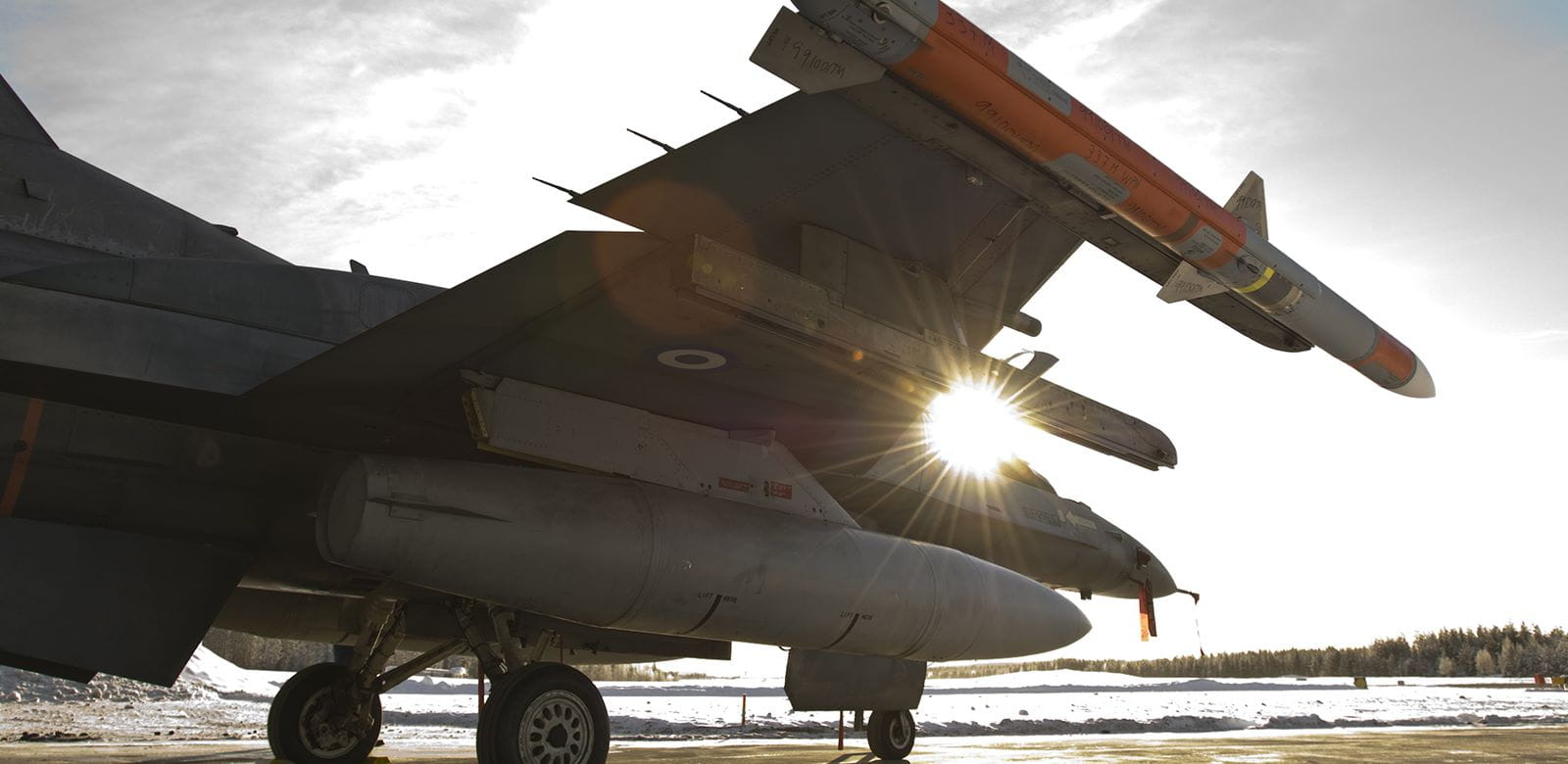
The AIM-120 sits across a broad platform base, including fourth- and fifth-generation combat aircraft and NASAMS ground-based air-defence systems. It has become an interoperability standard as much as a missile. Air forces, navies, and ground-based air-defence users have built tactics, training, launcher integration, stockpiles, and sustainment systems around it.
Future D4 and C9 work points toward the continuing evolution of that standard. The existing C-8 and D-3 variants represent different integration and performance routes, with the C family shaped partly by aircraft carriage constraints and the D family associated with longer reach and guidance improvements. The next design path will need to address range, seeker performance, electronic protection, software, propulsion constraints, manufacturability, and integration across a large allied user base.
The industrial pressure is acute. Missile demand has risen sharply as Western countries replenish inventories, supply Ukraine, and reassess stockpile depth after years of lean procurement. Air-defence missiles are being consumed in real conflict, while air forces continue to need weapons for deterrence, training, and readiness. A future-variant agreement lands in a market where engineering development and production capacity can no longer be treated as separate problems.
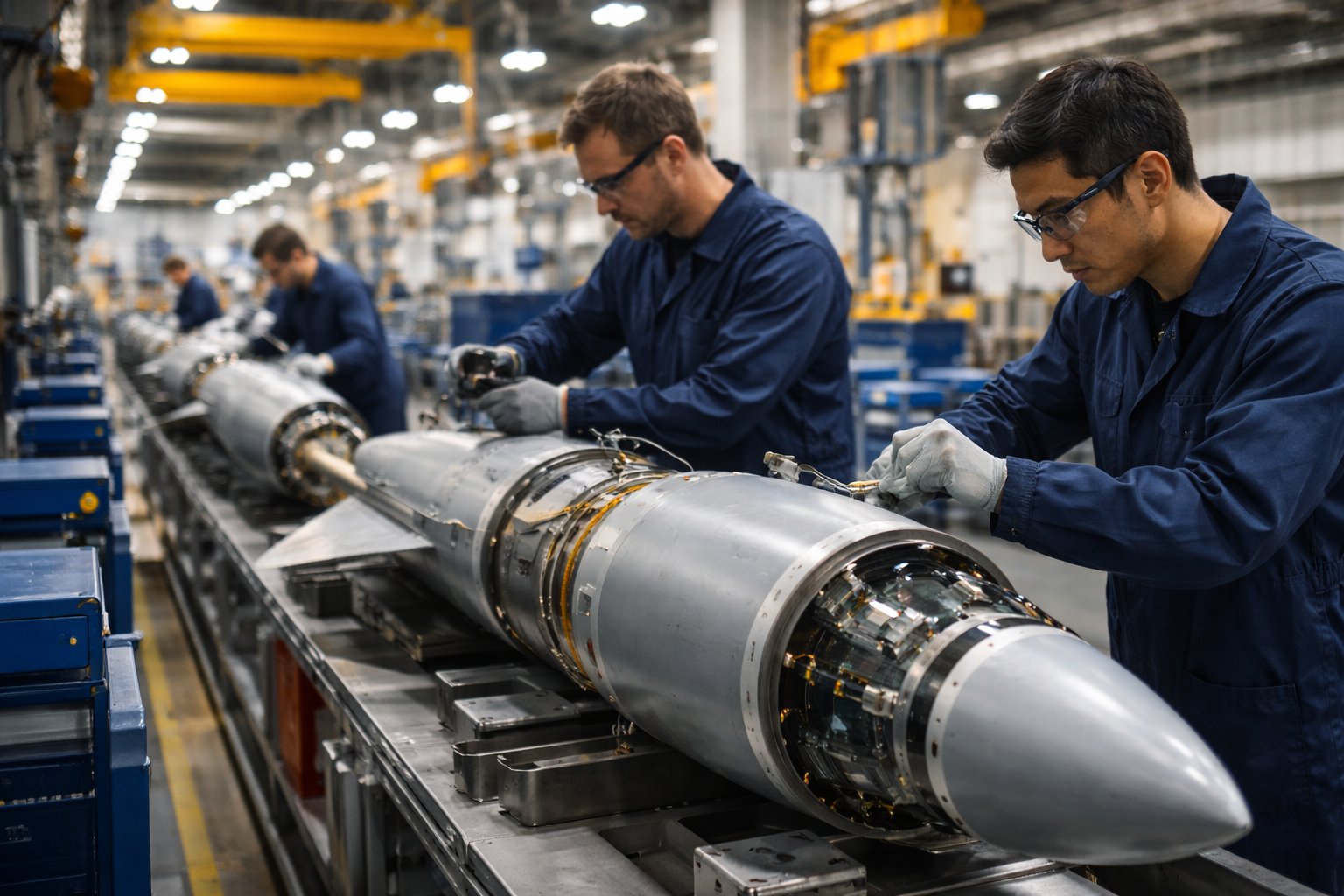
RTX has also been expanding AMRAAM production capacity, with public targets to increase annual output significantly from earlier levels. Variant development without production capacity creates a bottleneck, while production without design evolution risks delivering missiles that age against new threats. The strongest missile programmes now need both: a factory that can deliver numbers and an engineering pipeline that keeps the weapon relevant.
The same pressure has appeared across the precision-effects market, including JDAM LR standoff weapon development and the European loitering-munition route around Toutatis production planning. The AMRAAM work sits at the higher end of that industrial continuum. Precision weapons only have strategic value when they can be upgraded, produced, stocked, and integrated fast enough for operational demand.
The FMS-funded structure is also notable. Allied money is supporting design work because allied forces are embedded users rather than peripheral customers. That has practical consequences for requirements. A future AMRAAM must fit US needs while supporting partner aircraft, air-defence architectures, training systems, and national stockpile plans. Exportability, configuration management, and production allocation all become part of the engineering environment.
Manufacturing will remain a central constraint. Air-to-air missiles combine rocket motors, seekers, guidance electronics, control surfaces, warheads, fuzes, thermal batteries, propulsion materials, and tightly controlled assembly processes. Many of those elements have specialist suppliers with limited surge capacity. Expanding output requires more than final assembly space; it requires deep supplier confidence, qualified labour, test equipment, energetics capacity, and long-lead material management.
The D4 and C9 work will also have to account for a more difficult electronic-warfare environment. Modern missiles must operate against jamming, decoys, low-observable targets, complex clutter, and rapidly changing engagement scenarios. Software and seeker upgrades can help, but they create their own integration and qualification burden. Every change must be tested across aircraft, launch conditions, safety envelopes, and user configurations.
For European and Indo-Pacific users, AMRAAM evolution will remain central to procurement planning. Many countries have standardised around US aircraft or NASAMS-style air-defence systems, making the missile family part of national air-defence architecture. Future variant development gives those users a route to remain aligned with US capability growth, while reinforcing dependence on US production decisions.
That dependence may encourage more allied discussion around production participation, stockpile sharing, and regional sustainment. As AMRAAM becomes a shared defence-industrial asset, allocation during crises will become a harder political and production question. The D4 and C9 design path is therefore more than a technical project; it is part of a wider allied missile-capacity problem.
The agreement gives RTX a funded route to shape the next stage of AMRAAM, but the harder test will be turning design work into manufacturable missiles at useful volume. Air dominance and air defence both depend on weapons being available when needed. The future AMRAAM family will have to prove itself in the factory as much as in the flight envelope.