IN Brief:
- Velo3D is expanding into a 288,747 sq ft advanced manufacturing facility in Livermore, California.
- The campus is designed for more than 40 large-format systems at launch, with infrastructure for over 100.
- The expansion supports the shift from additive prototyping into qualified production and post-processing.
Velo3D is expanding its metal additive manufacturing capacity with a 288,747 sq ft advanced manufacturing facility in Livermore, California, as defence and aerospace customers push additive production beyond prototype work.
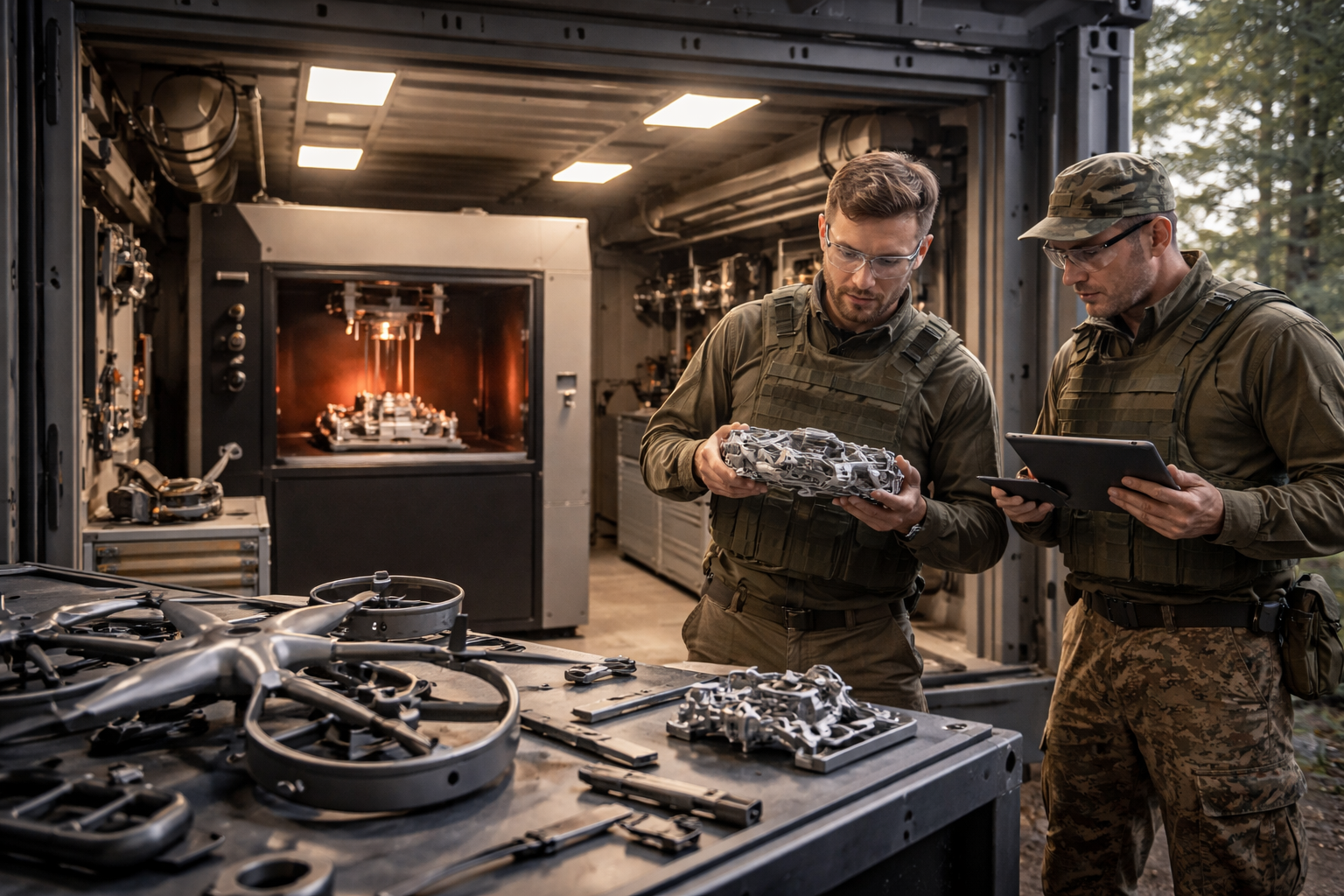
The new campus will include around 270,000 sq ft of manufacturing space with more than 36 ft clear heights and nearly 10 million cubic ft of production volume. It is designed to support more than 40 large-format additive manufacturing systems at launch, with infrastructure to scale beyond 100 systems as demand grows. Velo3D will use the site as its primary production and manufacturing centre, while Fremont remains focused on R&D, applications engineering, process development, customer collaboration, prototyping, and qualification.
That split shows how the additive manufacturing market is maturing. Aerospace and defence customers are no longer asking only whether complex parts can be printed. They need to know whether those parts can be qualified, repeated, inspected, finished, documented, and delivered at the cadence required by real programmes. A larger production campus gives Velo3D more room to address that constraint.
The defence and aerospace market is increasingly interested in additive manufacturing for components with complex geometries, thermal demands, weight constraints, long lead times, or fragile supplier bases. Propulsion, heat exchangers, rocket systems, turbine parts, structural brackets, and fluid-flow components all sit within the potential market. The attraction is design freedom and supply-chain flexibility, but qualification remains the gatekeeper.
In defence, a printed metal component must satisfy material properties, dimensional tolerances, fatigue behaviour, inspection standards, traceability, and process controls. The printer is only one part of that system. Powder handling, build parameters, heat treatment, machining, surface finish, non-destructive inspection, documentation, and operator training all determine whether a part can leave the development environment and enter accepted hardware.
The same production shift is visible in missile manufacturing, where additive work on Tomahawk structures has shown how advanced manufacturing can address bottlenecks in high-demand defence supply chains. Velo3D’s Livermore expansion sits on the capacity side of that equation: more machines, more post-processing space, and more room to turn qualified applications into output.
The facility’s height and volume are more than property details. Large-format additive manufacturing needs room for bigger systems, taller builds, powder movement, material storage, machining, post-processing, inspection, and workflow separation. Defence customers looking at larger or more complex components need a controlled production environment around the machines, not only the machines themselves.
Traditional aerospace supply chains remain essential, particularly for forgings, castings, precision machining, and specialist alloys. Yet long lead times and single-source vulnerabilities are pushing manufacturers to qualify alternative routes where additive methods are technically suitable. Additive will not replace conventional production wholesale. Its value is strongest where geometry, urgency, low-to-medium volume, or supply fragility justify the qualification cost.
For Velo3D, utilisation will be the commercial test. Capacity only has value if customers bring qualified applications, predictable demand, and funding beyond demonstration projects. Defence programmes can move slowly even when they are enthusiastic, and production contracts often arrive later than technology companies expect. Aligning the speed of additive manufacturing with the discipline of defence acceptance will require patience and process control.
The Livermore campus places metal additive manufacturing into a more serious production-capacity conversation. Aerospace and defence customers are under pressure to localise, accelerate, and diversify manufacturing, but they still need assurance. The buildout will be judged by whether printed parts move through qualification and into dependable production, not by machine count alone.