IN Brief:
- COMSUBPAC is using RIMPAC 2026 to demonstrate UUV integration and submarine-launched Harpoon fires.
- The concept extends undersea ISR, targeting, and strike reach in contested maritime areas.
- The industrial burden falls on UUV endurance, secure communications, payload integration, and submarine-compatible kill-chain architectures.
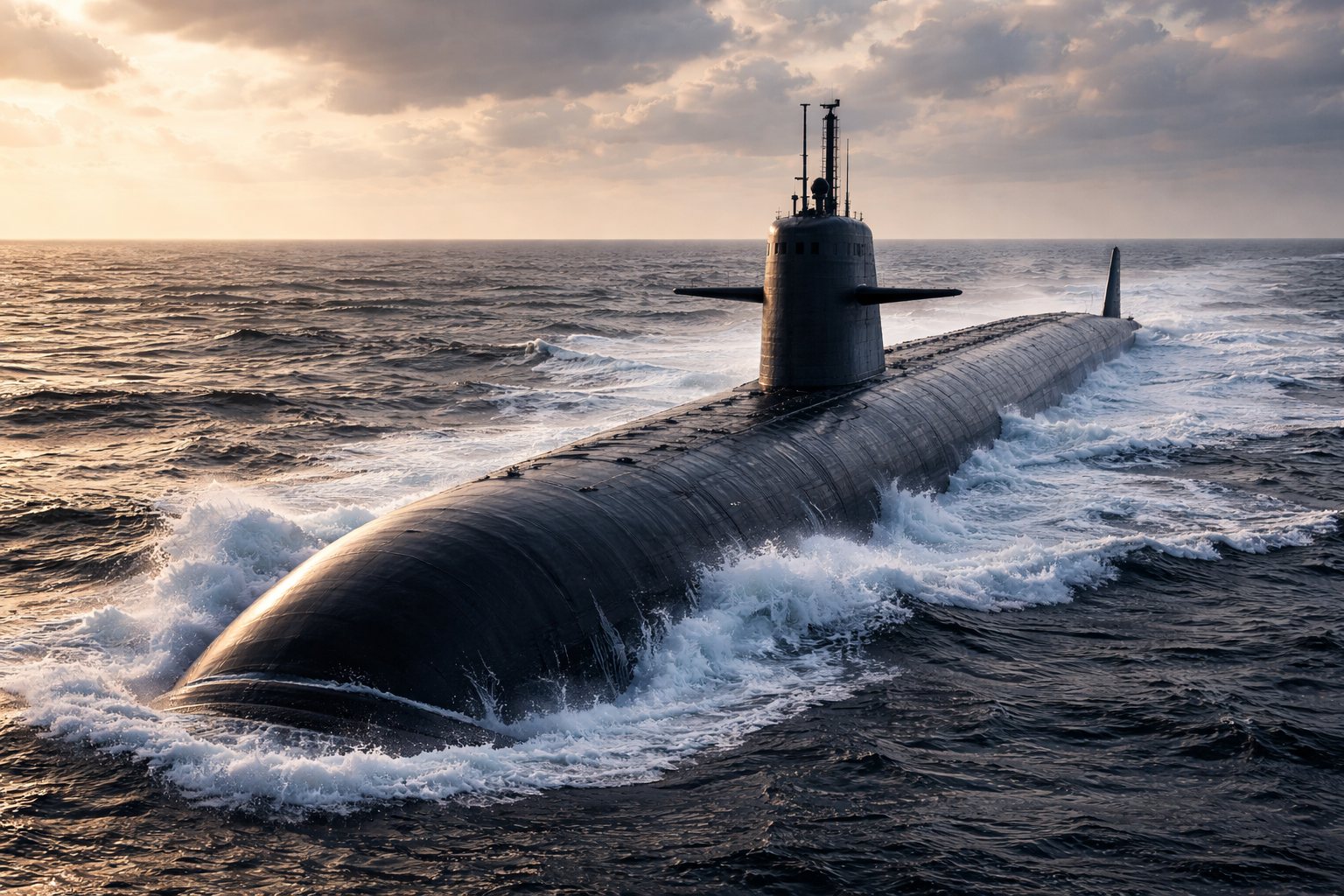
The US Navy is using RIMPAC 2026 to test a more distributed form of undersea warfare, integrating unmanned underwater vehicles with submarine-launched UGM-84 Harpoon anti-ship missiles.
Commander, Submarine Force, US Pacific Fleet units are conducting realistic at-sea scenarios around two capability areas: advanced UUVs and long-range fires. The UUV element extends undersea intelligence, surveillance, and reconnaissance into denied areas, while submarines retain the ability to conduct precision long-range strike using Harpoon missiles.
The operational logic is direct. Autonomous underwater systems can push sensing forward, remain persistent, and gather targeting data without exposing a crewed submarine during the earliest stages of the search. The submarine can then remain further away, preserve stealth, and act as the strike platform once the target picture has matured.
Behind that model sits a demanding integration problem. A distributed undersea kill chain is not created by putting a UUV in the water and retaining a missile aboard a submarine. It requires reliable underwater autonomy, secure data paths, low-probability-of-intercept communications, target classification software, command approval procedures, and weapon-control integration that can function when bandwidth is constrained and acoustic conditions are hostile.
The Harpoon element gives the demonstration an industrially mature strike layer. UGM-84 remains an established submarine-launched anti-ship missile, deployed through a torpedo tube in an encapsulated configuration before transitioning to powered flight. Its continued use in RIMPAC underlines a practical point: future undersea warfare will not be built only around new weapons. Existing weapons will be connected to new sensing and targeting architectures.
That same pattern is visible in the way New Zealand is bringing Harpoon strike to its Poseidon fleet. In that case, the missile sits inside a maritime patrol aircraft capability. At RIMPAC, the missile sits inside an undersea architecture. In both cases, Harpoon’s value increasingly depends on the quality of the sensor network and command system around it.
The UUV manufacturing challenge is more fluid. Underwater autonomous systems face a harsher engineering environment than many aerial or surface drones. Endurance, pressure tolerance, corrosion, navigation without GPS, acoustic communications, energy storage, launch and recovery, and payload modularity all shape whether a system can be used operationally rather than as a controlled exercise asset.
RIMPAC gives manufacturers a large multinational proving ground. Thirty nations, more than 30 surface ships, five submarines, 15 land forces, more than 206 aircraft, and around 30,000 personnel are involved in the 2026 exercise. That scale exposes autonomy and weapons-integration concepts to the interoperability demands that will govern any future allied use.
Pacific geography intensifies the engineering challenge. Vast distances, contested island chains, seabed infrastructure, acoustic complexity, and the growth of China’s surface and submarine fleet all increase demand for persistent undersea sensing. A single submarine, however capable, cannot cover every search area. Distributed UUV networks offer one way to widen coverage while keeping high-value crewed platforms concealed.
The push around REMUS, ROMULUS, and other naval autonomy systems also shows how value is moving beyond individual vehicles. Networks, mission software, common control, payload interfaces, and scalable production partnerships now sit close to the centre of the market. A UUV is no longer the end product by itself; it is a node in a sensing and strike architecture that must connect with submarines, maritime patrol aircraft, surface combatants, satellites, and joint command systems.
That architecture places software assurance and system-of-systems integration on the same level as pressure hulls, batteries, and payload bays. If autonomous undersea vehicles are feeding data into a submarine weapons chain, cyber protection, data integrity, mission assurance, and human authorisation become part of the weapon system.
The production opportunity is considerable, but the qualification burden is heavy. Undersea systems cannot be treated as disposable in the same way as many low-cost aerial drones. They are more expensive, harder to recover, and more difficult to test across representative environments. Once connected to submarine weapons employment, the standards for reliability and data trust rise sharply.
RIMPAC 2026 marks a harder phase for the companies building undersea autonomy. The US Navy is moving UUVs closer to the strike chain, not leaving them at the edge of experimentation. Suppliers able to produce durable vehicles, integrate payloads with existing weapons, and make the resulting architecture usable inside allied command structures will sit close to one of the Pacific’s most demanding naval requirements.