IN Brief:
- Port Alpha will begin on an 835-acre site at Brownsville, with potential expansion across nearly 4,400 acres.
- Initial facilities will support ships up to 850ft, with later capacity for vessels exceeding 1,200ft.
- Construction is planned to begin in 2026, operations in 2028, and employment could reach 10,000 within a decade.
Saronic has selected Brownsville, Texas, for Port Alpha, a proposed shipbuilding complex backed by planned investment exceeding $3 billion.
The first phase will occupy 835 acres at the Port of Brownsville, with potential expansion across nearly 4,400 acres. Initial facilities are intended to construct vessels up to 850ft long, while later phases could support ships exceeding 1,200ft.
Construction is expected to begin during 2026, with operations targeted for 2028. Employment could reach 10,000 people over the following decade across welding, machining, electrical work, robotics, software, naval architecture, and systems engineering.
Port Alpha is intended to produce crewed and uncrewed ships for defence and commercial customers. Saronic plans to connect vessel design, production planning, automation, and onboard autonomy through a common digital architecture.
Brownsville was selected after an assessment of sites across the US East, West, and Gulf coasts. Deepwater access, available land, logistics, workforce potential, and room for expansion gave the Texas location advantages over constrained established yards.
The project follows Saronic’s acquisition of a shipyard at Franklin, Louisiana, where it is investing $300 million and adding approximately 300,000 square feet of production space. That facility supports the company’s 180ft Marauder autonomous vessel.
Development of Marauder’s autonomous production model established the industrial foundation for Saronic’s larger shipbuilding ambitions. Port Alpha extends the concept from one vessel family to the infrastructure required for major ship construction.
A greenfield yard removes inherited constraints
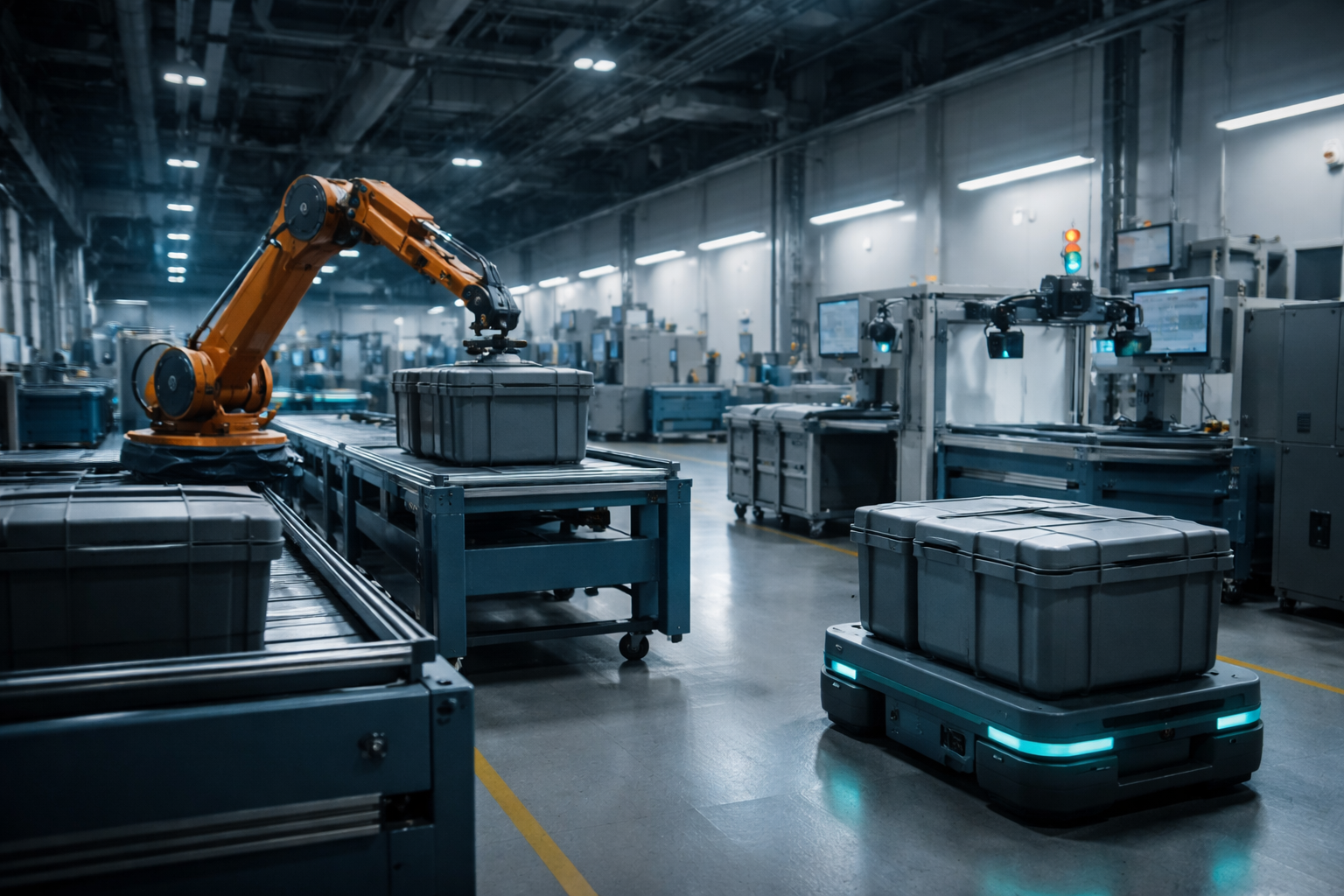
Starting on open land allows buildings, docks, transport routes, lifting equipment, assembly areas, and digital networks to be organised around the intended movement of materials.
Established yards often carry layouts created for older vessel classes and production methods. Congested buildings, restricted waterfront access, and ageing utilities can make modernisation expensive without solving the underlying flow problem.
A greenfield development avoids some of those constraints, although every supporting system must be created together. Quays, dry docks, fabrication halls, panel lines, paint facilities, warehouses, security, utilities, and environmental controls all require substantial capital before useful output begins.
Large ships amplify small production inefficiencies. Steel, piping, cable, propulsion equipment, generators, electronics, accommodation modules, and mission systems move through thousands of interdependent work packages.
A delayed component or unresolved design change can close off access for several other trades, leading to costly rework. Digital production systems can improve visibility by connecting design models with material orders, work instructions, inspections, and configuration records.
Their effectiveness depends on accurate data and disciplined change control. A digital model that diverges from the physical vessel distributes errors more quickly rather than eliminating them.
Saronic’s autonomy work may support greater standardisation of computing, communications, electrical, and control systems across different hulls. Reusing architectures can reduce integration work and allow software improvements to spread across a product family.
Conventional shipbuilding expertise remains indispensable. Hull fabrication, welding distortion, pipe fitting, machinery alignment, corrosion protection, compartment testing, and launch preparation are physical processes governed by material behaviour.
Robotics can assist with cutting, welding, inspection, and material handling, while many tasks still occur inside confined and changing spaces that favour skilled workers. The workforce target reflects both advanced automation and the labour intensity of ship construction.
New capacity still needs stable orders
Port Alpha addresses a recognised shortage of American shipbuilding capacity, but a completed yard cannot operate efficiently without a dependable orderbook.
Defence customers will expect compliance with naval standards, secure handling of data, qualified suppliers, configuration control, and support after delivery. Commercial buyers will compare price and schedule with established Asian yards producing ships at much greater volume.
A mix of commercial and defence work could smooth changes in government procurement. It may also introduce different technical standards, regulatory requirements, and production rhythms within the same site.
US naval programmes frequently suffer from unstable requirements, late design changes, and annual budget uncertainty. A new facility cannot correct those behaviours on its own, although standardised designs and private investment could shorten the path into production.
The Navy’s Medium Unmanned Surface Vessel downselect has already shown how autonomy is changing ownership models, mission-system integration, and relationships with shipbuilders.
Port Alpha is positioned to serve that emerging market while retaining the physical capacity to build much larger crewed platforms. Its supplier base will determine how much of the promised throughput can be achieved.
Engines, gearboxes, castings, valves, switchboards, electronics, and marine equipment often come from a limited number of manufacturers already supporting established programmes.
Vertical integration can reduce selected dependencies, although attempting to produce too much internally would increase cost and management complexity. Effective sourcing will require a balance between control of critical components and access to mature commercial suppliers.
Port Alpha represents more than a factory for autonomous boats. Saronic is attempting to establish a new American shipbuilding centre around digital production, private capital, substantial land, and a workforce developed alongside the yard.
The first repeat vessels will provide the decisive measure. Smooth movement through fabrication, outfitting, launch, and trials would demonstrate that greenfield design and software can improve naval construction.
Persistent design churn, supplier delays, or corrective work would show that modern infrastructure alone cannot overcome the deeper constraints surrounding complex ship programmes.