IN Brief:
- The US Navy has awarded CoAspire $70m to develop the ground-launched CHAOS cruise missile.
- The weapon is derived from the company’s additively manufactured RAACM-ER family.
- Common structures, controlled configurations, qualified printed parts, and secure component supply will determine scalability.
The US Navy has awarded CoAspire a $70m prototype agreement to develop CHAOS, a ground-launched anti-ship cruise missile intended to provide a comparatively affordable long-range strike option for US and coalition forces.
Derived from the company’s Rapidly Adaptable Affordable Cruise Missile Extended Range design, CHAOS builds on a family that already includes air-launched and boosted surface-launched configurations. CoAspire’s original RAACM has entered full-rate production at its Manassas, Virginia facility, giving the new programme an existing manufacturing base rather than a standing start.
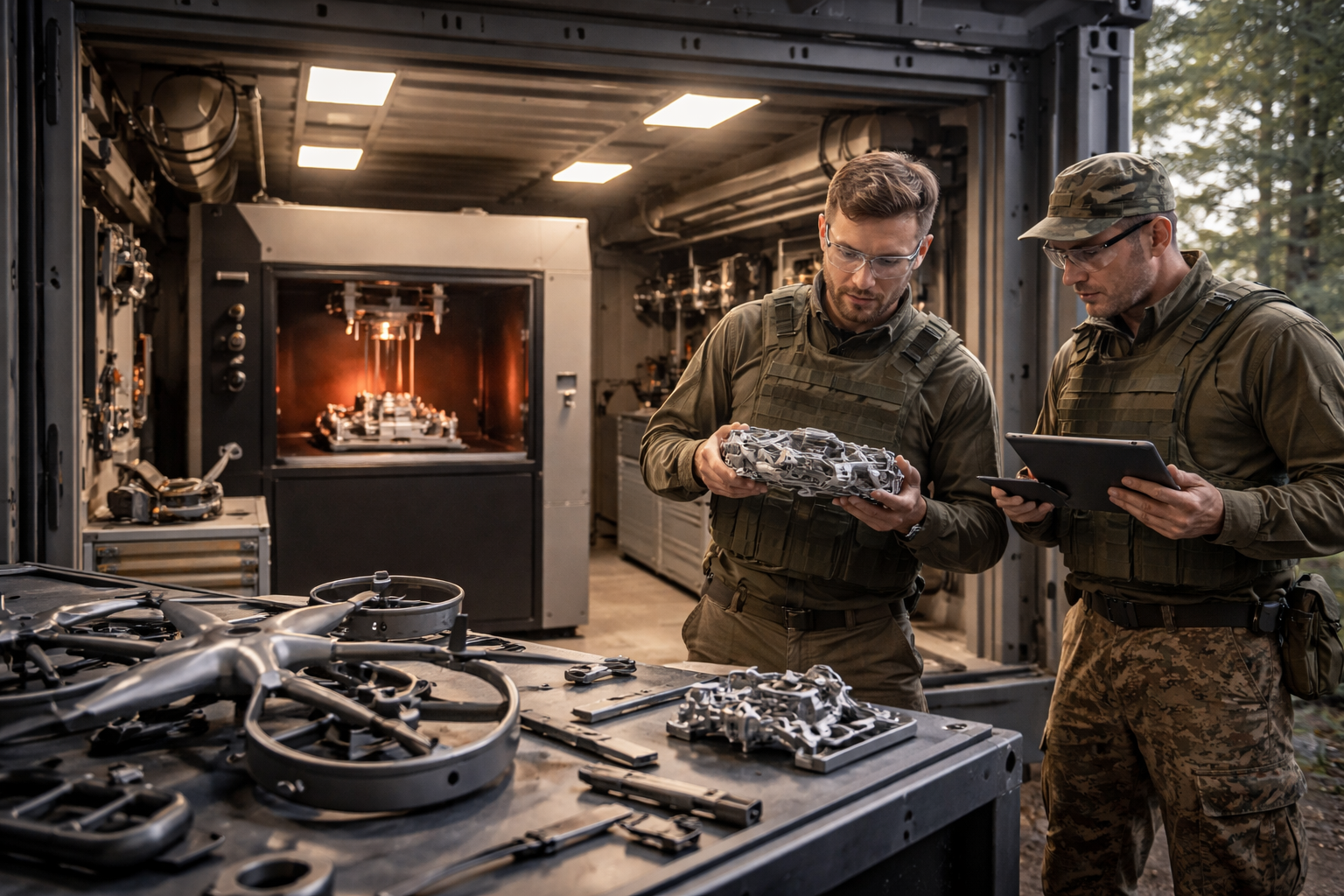
CoAspire uses additive manufacturing for major missile structures and rapid design changes. Printing can reduce tooling, part counts, and joining operations where conventional manufacture would require several machined or formed components, although those advantages survive only when the process is controlled tightly enough for repeat production.
Every printed structure needs qualified feedstock, validated machine settings, controlled build conditions, post-processing, heat treatment, inspection, and evidence that mechanical properties remain stable from batch to batch. Cruise-missile components must then tolerate aerodynamic load, vibration, thermal cycling, launch shock, transport, and long storage.
A structure that survives a handful of demonstration flights is not automatically ready for high-rate production. The prototype agreement will test whether CoAspire can move from rapid iteration to a documented manufacturing system capable of delivering identical hardware over a sustained run.
Guidance, propulsion, warhead integration, communications, control surfaces, and launch equipment must mature alongside the airframe. An inexpensive printed body offers limited value if a scarce turbine, actuator, seeker, or energetic component continues to determine output.
Affordability will be judged against mission effect rather than unit price alone. A cheaper missile that lacks sufficient range, survivability, targeting flexibility, or reliability may require more rounds to achieve an objective, while a weapon that is adequate for a broad target set can preserve higher-end inventory for the hardest missions.
Ground launch removes the need to certify the missile on every aircraft type, but it introduces a booster, canister, transporter, communications equipment, and targeting network. Launch units must also move and conceal themselves before they can be found and attacked.
Common launch and canister interfaces could widen the customer base, particularly among coalition partners seeking land-based maritime strike without developing an entirely new support system. National targeting, communications, and security requirements may nevertheless push customers towards different configurations.
The wider RAACM family offers a possible commonality advantage. Air-, ground-, and ship-launched variants could share structures, electronics, software, production equipment, and support tools, allowing the factory to move volume between versions as orders change.
That benefit will be lost if export customers request different datalinks, navigation systems, warheads, and cyber controls. Configuration discipline must keep bespoke elements concentrated in modular sections rather than allowing the common missile to fragment into several low-volume products.
The US industrial base is attempting to increase affordable missile output through larger framework orders and common production approaches. Predictable quantity gives suppliers enough confidence to invest in automation, materials, workers, and additional machines instead of expanding around isolated prototype awards.
Additive manufacturing is already moving into qualified cruise-missile work, including Divergent’s production route for Tomahawk structures. CHAOS goes further by making printed manufacture part of the new weapon’s cost and scalability case from the beginning.
CoAspire will still depend on a relatively narrow specialist base. Small turbine engines, guidance electronics, actuators, seekers, warheads, and energetic materials remain constrained markets, and the programme will need either secure supply or design choices that allow alternatives to qualify.
Quality assurance must expand with rate. A factory producing hundreds or thousands of missiles needs automated inspection, digital records, statistical process control, calibrated test equipment, and workers authorised to stop output when evidence falls outside limits.
The $70m agreement is sufficient to move CHAOS beyond a paper concept but does not guarantee a production order. Flight testing, target engagement, launcher integration, safety evidence, and cost data will determine whether the Navy and partner nations commit further funding.
Acquisition requirements can also erode the affordability demonstrated by a rapid prototype. Environmental qualification, cybersecurity, export controls, technical documentation, and configuration management add legitimate cost, which must be anticipated rather than treated as unexpected programme growth.
If CHAOS preserves a relatively simple and common architecture through those stages, it could add meaningful maritime-strike capacity. If requirements expand faster than the production system matures, it risks becoming another capable missile delivered in quantities too small to alter inventories.