IN Brief:
- BAE Systems has received a $149.8 million firm-fixed-price contract to maintain and modernise USS Boxer.
- The Selected Restricted Availability will be carried out at Naval Base San Diego and could reach $180 million with all options.
- The programme adds another large amphibious-ship sustainment workload to the US Navy's West Coast repair base.
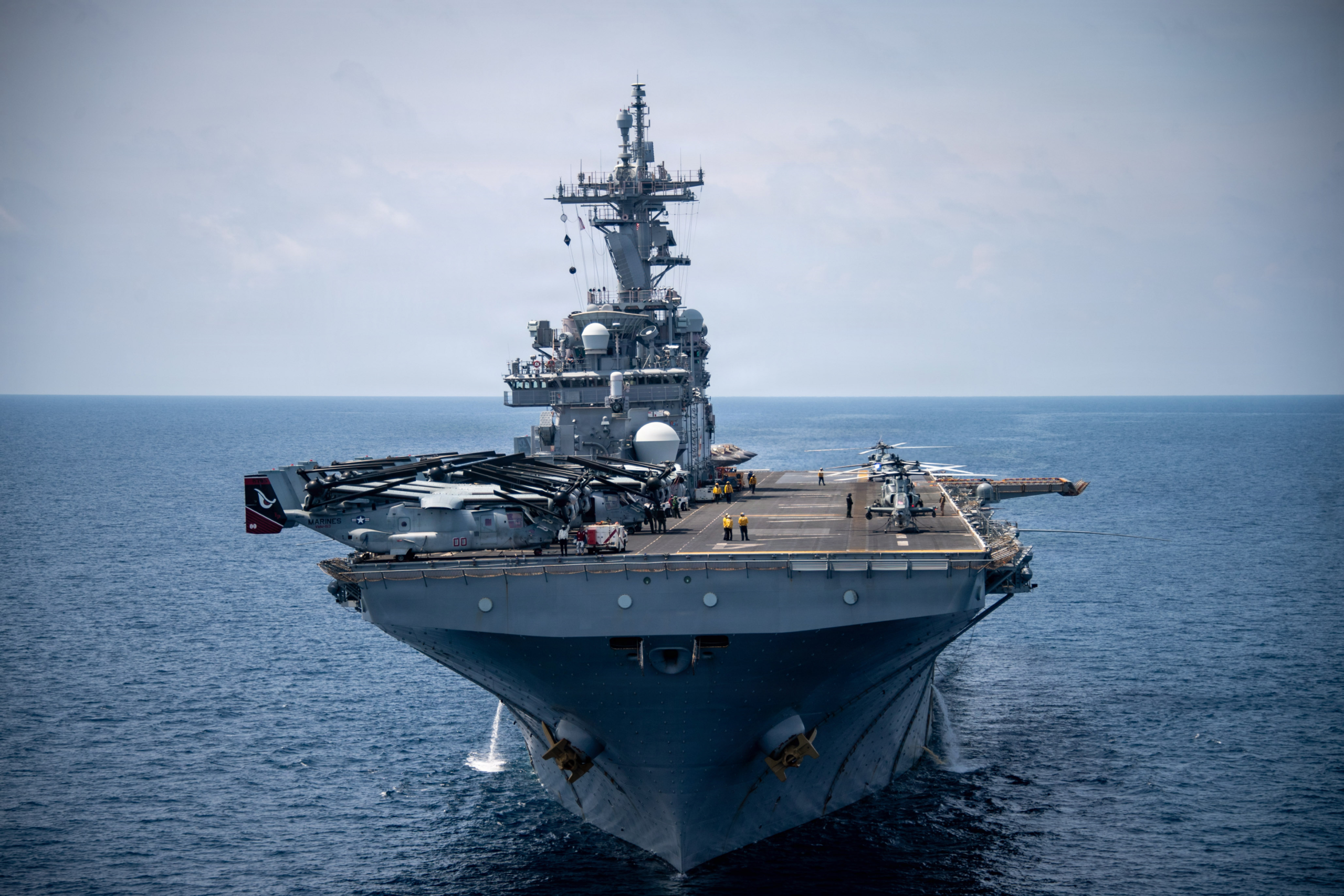
BAE Systems has received a $149.8 million US Navy contract for maintenance and modernisation of the Wasp-class amphibious assault ship USS Boxer, adding another substantial surface-fleet availability to the company’s San Diego workload. The firm-fixed-price Selected Restricted Availability will be carried out at Naval Base San Diego, with options capable of increasing the total contract value to $180 million.
The Navy and BAE Systems have described the programme as covering critical modernisation, maintenance, and repair, although a detailed work package has not been released. Individual combat-system changes, machinery tasks, structural repairs, and accommodation work therefore remain undisclosed. The contract value nevertheless places the availability firmly within the large-scale sustainment work required to keep an ageing amphibious ship available for operational service.
USS Boxer was commissioned in 1995 and is the fourth ship of the Wasp class, a generation of large-deck amphibious assault ships designed to embark Marine forces, aircraft, landing craft, vehicles, and supporting equipment. Its combination of aviation facilities, well deck, command spaces, propulsion plant, electrical systems, sensors, weapons, and accommodation creates a maintenance problem considerably broader than that of a conventional cargo or auxiliary vessel.
A Selected Restricted Availability has to combine planned maintenance with configuration changes while working around machinery and structures already installed in the ship. Equipment has to be isolated and removed, replacement hardware fitted, cables and pipework modified, systems tested, and the vessel returned to an accepted configuration. Discoveries made after work begins can also create additional engineering demand if inspection reveals deterioration not visible during initial planning.
That uncertainty becomes more pronounced as a ship ages. Electronics and computing equipment normally evolve much faster than hull structure and major machinery, creating a growing gap between the vessel’s original design baseline and the equipment fitted after decades of upgrades. Components can become obsolete, suppliers can disappear, and replacement systems may impose different electrical, cooling, space, or software requirements from the equipment they replace.
For Boxer, maintenance and modernisation therefore have to be managed as one configuration-control problem rather than as separate mechanical and electronic workstreams. Updating a sensor or communications suite can require changes to power distribution and cooling, while structural access may be needed to remove or install equipment. Ship repair becomes an integration exercise in which work on one part of the vessel can affect several other systems and schedule lines.
BAE Systems’ San Diego operation is built around that type of workload. The company maintains dry-dock, pier, fabrication, engineering, and ship-support capacity in one of the Navy’s largest Pacific fleet concentrations, where maintenance demand remains relatively constant even when new ship construction is taking place elsewhere. The yard has previously carried out major work on destroyers, littoral combat ships, and amphibious vessels, including an earlier extensive docking availability for Boxer.
The industrial constraint is labour as much as infrastructure. Naval sustainment depends on welders, electricians, pipefitters, machinists, planners, engineers, quality personnel, and specialist subcontractors, many of whom are also sought by new-build shipyards and other defence programmes. Additional investment in docks or facilities does not immediately create qualified workers, making schedule control partly dependent on the repair sector’s ability to retain and deploy skilled labour.
Availability work also draws on a broad equipment supply chain. Pumps, valves, electrical assemblies, control equipment, cables, sensors, computing hardware, accommodation systems, and replacement structural material may all be required within the same programme. Older vessels can introduce procurement difficulties where original components are no longer manufactured and substitutes require additional qualification or engineering approval.
Boxer’s age does not by itself determine the scope of the current contract, and BAE Systems has not announced a completion date. The $149.8 million base value should likewise not be treated as a guaranteed $180 million programme because the higher figure depends on options being exercised. What has been established is a sizeable, defined sustainment commitment for a ship that remains part of the Navy’s amphibious force.
The programme now moves from contract award into the less visible part of fleet modernisation: inspection, removal, repair, installation, testing, and certification across an existing hull. For the San Diego industrial base, performance will be measured by whether that work can be completed without the emergent tasks, labour shortages, and component delays that routinely turn planned maintenance periods into schedule problems.