IN Brief:
- L3Harris has received an undefinitized seven-year PAC-3 MSE propulsion award from Lockheed Martin valued at $4.7 billion.
- Production covers the interceptor’s two-pulse solid rocket motor, attitude-control motors, and Lethality Enhancer.
- Two additional Camden production buildings are due online in 2027 as the wider PAC-3 supplier base expands capacity.
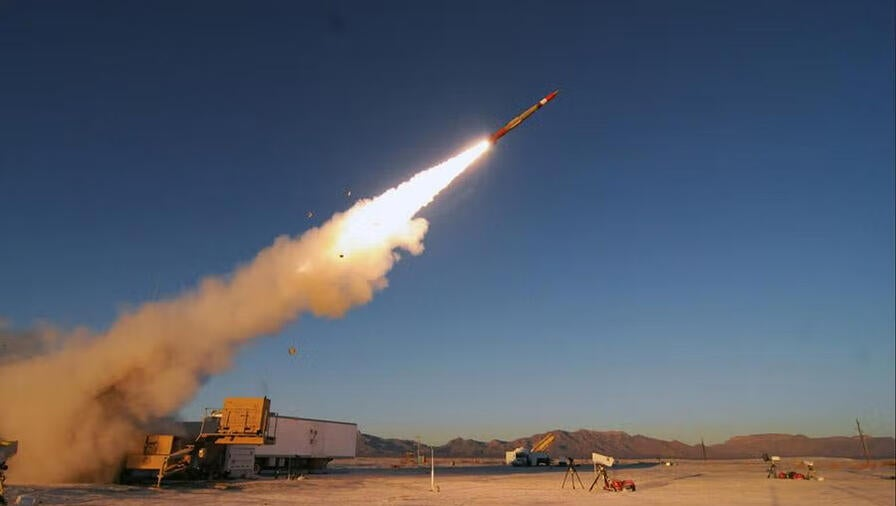
L3Harris Technologies has received an undefinitized award from Lockheed Martin valued at $4.7 billion over seven years to produce propulsion systems and associated components for the PAC-3 Missile Segment Enhancement interceptor.
The award covers large-scale production of the missile’s advanced two-pulse solid rocket motor, Lethality Enhancer and attitude-control motors. L3Harris describes it as its largest PAC-3 propulsion award to date, giving the supplier a longer commercial horizon as new production capacity comes online in Arkansas.
The contract follows a framework agreed with Lockheed Martin and the US Department of War in July. That earlier arrangement established a seven-year route towards sharply higher propulsion output; the latest award moves the programme further from capacity planning towards funded production, although the contract remains undefinitized and continued funding up to its full value is not guaranteed.
L3Harris said in July that the framework would allow it to nearly triple production across the propulsion products it supplies for PAC-3 MSE. Reaching that rate is not simply a matter of increasing final assembly, because solid rocket motors depend on controlled propellant processing, motor-case preparation, insulation, curing, inspection and qualification before they can enter the interceptor supply chain.
The company has already begun expanding the physical production base. Two additional PAC-3 buildings are under construction at its Arkansas Advanced Propulsion Facilities campus in Camden, with both expected to become operational during 2027.
Those buildings add to earlier investments including dedicated processing bays and automated digital X-ray equipment. Non-destructive inspection is particularly important in solid rocket motor manufacture because internal voids, bond defects or other irregularities in propellant and insulation can affect performance without being visible externally.
Higher motor throughput therefore has to be matched by higher inspection capacity. A new production line that casts motors faster than they can be examined and accepted merely moves the bottleneck into quality assurance, while any increase in defect rates can erase the nominal benefit of additional equipment.
PAC-3 MSE uses a larger two-pulse solid rocket motor than earlier PAC-3 variants. Separating propulsion into two firing phases gives the interceptor additional flexibility across its engagement profile, but it also makes repeatable production of the motor a critical part of the missile’s performance.
L3Harris also produces the small attitude-control motors used on PAC-3 variants to refine the interceptor’s flight during the terminal phase. The latest award includes those components alongside the main MSE motor and the Lethality Enhancer, bringing several propulsion and terminal-effect items under the same long-term production structure.
The agreement is part of a broader effort to expand the programme below prime-contractor level. Recent PAC-3 and THAAD supplier-capacity agreements have also pushed investment into motor cases, seeker structures, midsections and other specialised components, recognising that Lockheed Martin’s final production rate ultimately depends on lower-tier suppliers delivering qualified hardware at the same pace.
Propulsion is one of the harder areas to expand quickly. Solid motors require specialised buildings, energetic-material handling, environmental and safety controls, trained operators and lengthy process qualification. New capacity therefore has to be funded before a production shortfall becomes acute if it is to influence deliveries several years later.
L3Harris has also added an international element to the PAC-3 propulsion supply chain. In May it placed an order with Poland’s Wojskowe Zaklady Elektroniczne to manufacture attitude-control motors after specialist equipment was installed at Zielonka and Polish personnel completed training at Camden.
That work supports Poland’s Wisła air-defence programme and creates another qualified source for a component historically produced in Arkansas. Diversifying supply can increase resilience, but only if production methods, materials, inspection and configuration control remain sufficiently consistent for motors from different facilities to enter the same interceptor programme.
The Camden expansion sits inside a much larger L3Harris propulsion investment programme. The company says it is constructing around 60 facilities and adding more than one million square feet of manufacturing space across Arkansas, Alabama and Virginia as several US missile programmes seek higher output simultaneously.
That simultaneous demand is significant because programmes do not operate isolated supply chains. Energetic materials, specialist processing equipment, engineering skills and inspection capability can be needed by multiple missile families, leaving capacity investments competing for many of the same industrial resources.
Multi-year awards help address that problem by giving suppliers more visibility before they buy equipment or construct buildings. A company is more likely to add a new motor line, recruit workers or fund tooling when expected demand extends over several years rather than arriving through a sequence of short emergency orders.
The $4.7 billion figure nevertheless represents an award ceiling rather than proof that the entire amount will be spent. L3Harris explicitly notes that continued funding is among the uncertainties attached to the agreement, and the undefinitized status means final contractual terms still have to be settled.
The more useful production milestone comes in 2027. By then, the two new Camden buildings are expected to be operating and L3Harris will have to demonstrate that additional floor space, equipment and workforce can translate into accepted motors at the rates required by the wider PAC-3 ramp.
Missile-defence output is ultimately determined by the slowest qualified part of its supply chain. The latest award gives propulsion production a seven-year framework and substantial funding visibility; whether it removes that constraint will be measured in motors delivered rather than dollars announced.