IN Brief:
- DroneSentry-X Mk2 systems have been installed and accepted on US military Infantry Squad Vehicles.
- DroneShield completed vehicle installation, live-UAS acceptance testing, and operator training before IOC.
- Three additional systems are planned under a recent modification to the JIATF-401 contract.
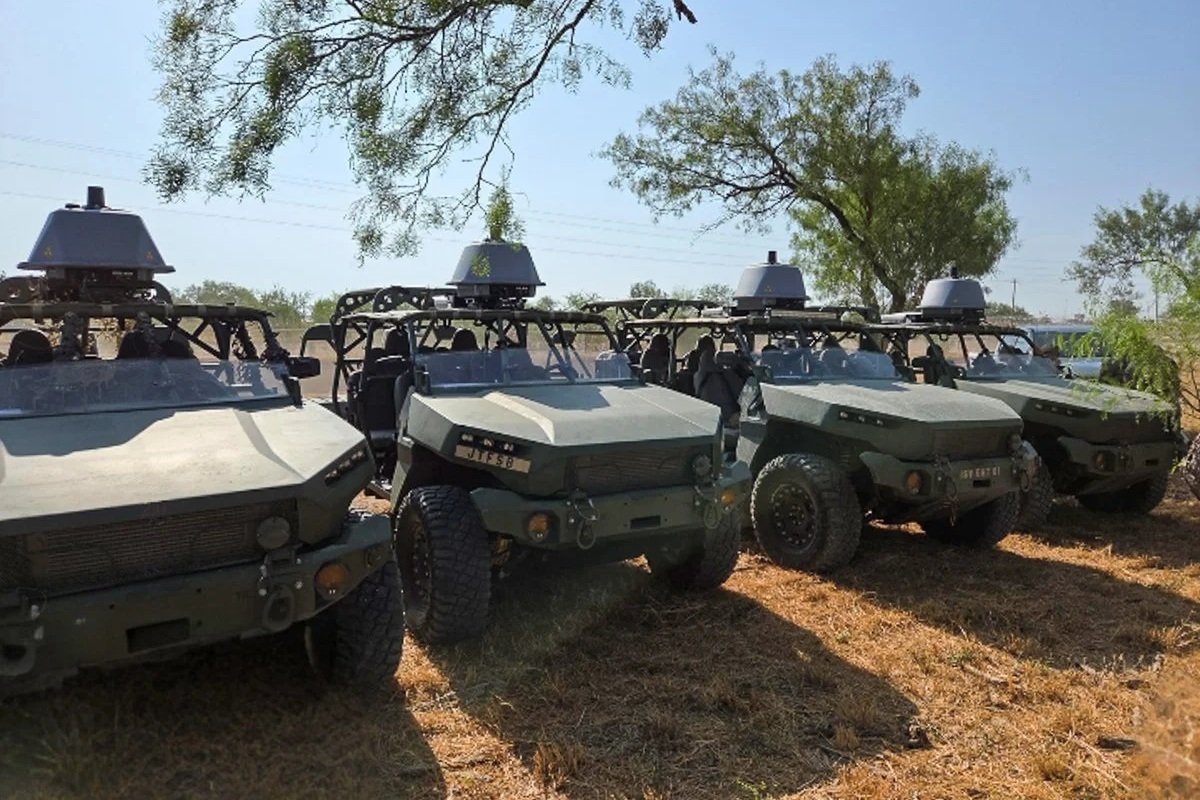
DroneShield has completed installation and acceptance of vehicle-mounted DroneSentry-X Mk2 counter-UAS systems on US military Infantry Squad Vehicles, bringing the deployed equipment to initial operational capability.
DroneShield completed delivery, installation, system acceptance testing, and operator training under the Joint Interagency Task Force 401 programme. Acceptance included testing against live uncrewed aircraft rather than a factory-only handover, and three additional DroneSentry-X Mk2 units are now planned under a recent contract modification.
The company says the deployment moved from contract award to initial operational capability in approximately 80 days. The completed work therefore covers more than physical installation: the fitted systems have passed acceptance activity and been handed to trained military personnel in an operational configuration.
DroneSentry-X Mk2 combines radio-frequency detection with electronic countermeasure functions in a package designed for mobile, field-deployable, and fixed installations. Mounted on an Infantry Squad Vehicle, the system can support counter-UAS activity while the vehicle is stationary or moving, giving the unit a defensive layer that travels with the formation instead of depending on a fixed mast or base installation.
Vehicle integration imposes constraints that are less significant in a static site. A counter-UAS system has to operate within limits imposed by electrical power, roof space, shock, vibration, electromagnetic interference, crew workload, and the need to preserve the host vehicle’s mobility. DroneSentry-X Mk2 weighs about 46kg before mounting hardware and measures roughly 710mm by 710mm by 532mm, while the current system is rated to IP67 and can be connected through dedicated vehicle-power and isolation hardware.
The equipment is software-defined, allowing detection libraries and electronic-countermeasure functions to change as uncrewed-aircraft protocols evolve. Commercial drones, modified control links, and new aircraft types can emerge more quickly than traditional hardware replacement cycles, making software and threat-library updates an important part of maintaining counter-UAS relevance.
That update model places pressure on configuration control. A vehicle fleet using software-defined electronic protection still needs assurance that detection databases, electronic-countermeasure settings, user interfaces, and system firmware remain compatible with the installed hardware and authorised operational configuration. Rapid updates only retain value if units know which baseline is installed and whether it has been tested against the wider platform architecture.
Initial operational capability marks a defined step without completing the programme. It establishes that the current systems have been installed, accepted, and placed in the hands of trained users, while further units are already planned and the wider JIATF-401 requirement extends beyond this particular vehicle fit.
DroneShield announced a broader JIATF-401 contract in June with a potential value of $24.9 million. The arrangement had an initial value of $19.3 million and another $5.6 million in options over five years, covering mobile and fixed-site counter-drone hardware, software subscriptions, warranties, services, and integration of third-party interoperable equipment. Deliveries under that wider contract were planned across 2026 and 2027.
The Infantry Squad Vehicle deployment demonstrates one practical configuration inside that wider procurement structure. JIATF-401 is intended to coordinate counter-UAS activity across the US joint force and accelerate access to relevant technologies, while DroneShield’s equipment is also available through the task force’s C-UAS Marketplace for authorised government customers.
Acceptance against live aircraft is particularly relevant for radio-frequency systems because operational surroundings can affect detection and electronic effects. Vehicle electronics, other radios, terrain, antenna positioning, movement, and nearby emitters can all alter RF performance. A system that performs correctly in a laboratory still has to demonstrate that its sensors, countermeasures, controls, and installation remain usable once mounted on a moving military platform.
Operator training is equally significant because counter-UAS activity is not reduced to a fully automatic response. Personnel need to interpret alerts, understand system status, operate within authorised rules for electronic effects, and coordinate the equipment with other force-protection measures. Completing that training before IOC narrows the gap between hardware being installed and the unit being able to employ it effectively.
The vehicle installation also sits inside a broader layered counter-UAS problem. Radio-frequency detection and electronic countermeasures can be effective against threats that depend on exploitable command links or navigation signals, but they do not defeat every class of uncrewed system. Open interfaces and integration with other sensors, command systems, and effectors become increasingly important as threats diversify.
DroneSentry-X Mk2 is designed to support that wider architecture rather than operating only as an isolated jammer. External data interfaces allow detections to contribute to other systems and support combinations of sensing and defeat technologies where the customer’s architecture permits them.
The next programme measure will be repeatability. Installation and acceptance of the three additional units, followed by sustained field operation across a larger vehicle set, will show whether the rapid 80-day path to IOC can be reproduced without sacrificing integration quality, operator preparation, or configuration control.