IN Brief:
- Lockheed Martin and GM Defense signed their PAC-3 MSE component agreement on 6 August and received the first housings on 28 August.
- GM Defense used casting and machining capability to manufacture the components to defence specifications during the 22-day cycle.
- The new supplier route joins wider PAC-3 expansion across structural components, propulsion, and other parts of the qualified industrial base.
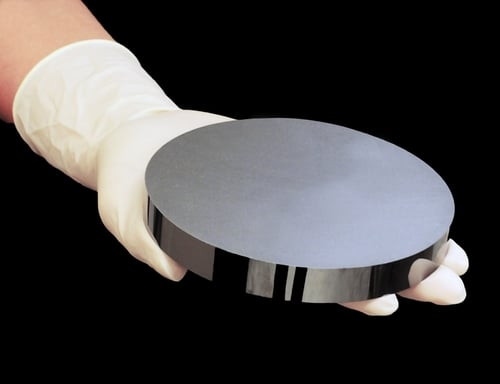
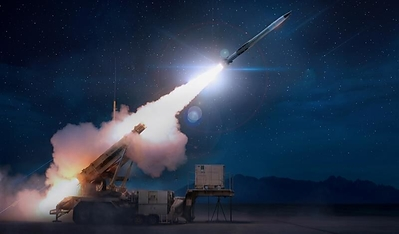
GM Defense delivered the first PAC-3 Missile Segment Enhancement housing components to Lockheed Martin 22 days after the companies signed their formal production agreement, introducing commercial casting and machining capacity into the interceptor’s expanding supplier base.
The agreement was signed on 6 August and the first batch was delivered on 28 August. Lockheed Martin says GM Defense used advanced casting and machining capability to meet defence specifications for the housing components, with the work intended to demonstrate how commercial manufacturing practices can be introduced into munitions production.
The 22-day cycle is an initial delivery milestone rather than a demonstrated sustained production rate. Repeating the process at higher volume while maintaining dimensional control, material traceability, configuration discipline, and acceptance standards will determine whether the additional supplier route removes a meaningful constraint from PAC-3 production.
Missile housings cannot simply be transferred to a commercial production line without qualification. Drawings, materials, tooling, and inspection requirements have to be controlled, while manufacturing equipment must demonstrate that it can repeatedly meet the tolerances demanded by the interceptor programme. GM Defense’s contribution is access to a larger manufacturing organisation experienced in casting, machining, and volume process control.
Lockheed Martin has not disclosed the number of housings contained in the initial batch or the planned annual volume from GM Defense. That limits any conclusion about how much the agreement will alter total PAC-3 output, although the delivery demonstrates that an additional component source has moved from contract signature to accepted hardware within a short period.
The work forms part of a wider PAC-3 supply-chain expansion. General Dynamics Ordnance and Tactical Systems has separately agreed to expand capacity for motor cases, seeker housings, midsections, and shroud deployment hardware, moving investment into structural components that have to arrive at the prime production line in step with final assembly.
Propulsion is expanding through another route. L3Harris has received a seven-year PAC-3 MSE propulsion award valued at up to $4.7 billion covering rocket motors, attitude-control motors, and lethality-enhancement components. Additional production buildings in Camden, Arkansas, are expected to enter operation in 2027.
Those programmes show why the GM Defense delivery extends beyond an isolated machining exercise. A higher interceptor output rate requires propulsion, structures, seekers, electronics, energetic materials, and final integration to increase together. Capacity in one component family has limited effect if another qualified supplier remains unable to meet the same production schedule.
Lockheed Martin says it is investing between $8 billion and $9 billion to scale munitions production, with planned expansion across more than 20 US sites and an almost 50% increase in production and warehousing space. Those figures describe the company’s wider munitions programme rather than spending specific to the GM Defense agreement.
Commercial manufacturing can shorten some lead times where existing equipment and skills are transferable, but defence production adds requirements around documentation, traceability, material control, and acceptance. Automotive-derived process control is useful only if it produces parts that remain within the approved missile configuration and pass the interceptor programme’s qualification and inspection regime.
The new production route also has to remain supportable beyond its first batch. A supplier introduced during a capacity expansion must retain tooling, skilled labour, quality systems, material sources, and inspection capability over the years in which the interceptor remains in production. A short initial cycle is therefore only one measure of whether the manufacturing relationship is sustainable.
Lockheed Martin and GM Defense say they intend to build on the agreement and apply commercial practices across additional munitions programmes. The announcement does not identify those programmes or any corresponding quantities, leaving that expansion as a future objective rather than an awarded body of work.
PAC-3 is already providing a practical test of supplier-level expansion because investment is spreading below prime-contractor assembly into propulsion, structures, and specialist hardware. The recent awards show production planning being pushed into the lower tiers before shortages at final assembly become the sole measure of capacity.
Quality assurance will have to grow alongside physical throughput. More castings and machined components also mean more inspection, process records, material certification, and configuration checks, all of which have to be completed without allowing the acceptance system itself to become the next bottleneck.
GM Defense has now moved from formal agreement to first PAC-3 housing delivery in 22 days. The more durable measure will be whether subsequent batches can be produced predictably, accepted without excessive rework, and increased in volume while the other parts of the interceptor supply chain expand around them.