IN Brief:
- USSOCOM has awarded Tycho.AI a $900,000, 12-month prototype contract for a compact counter-UAS interceptor.
- The system is intended to give dismounted special operations personnel autonomous protection against small unmanned aircraft.
- The programme focuses on portable edge autonomy capable of operating where communications or satellite navigation are degraded.
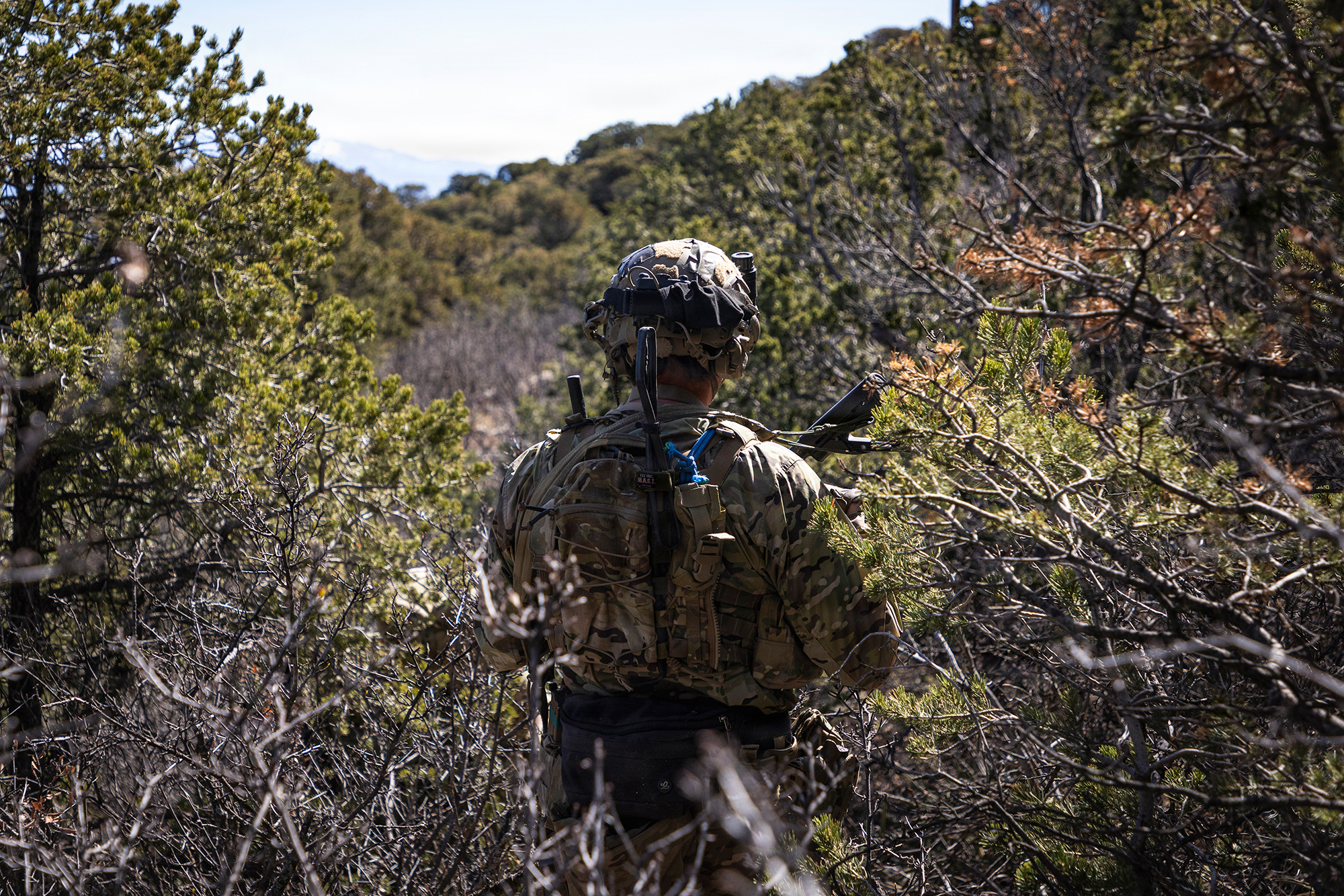
Tycho.AI has received a $900,000 US Special Operations Command contract to develop a small-form-factor counter-UAS interceptor designed to give dismounted personnel an autonomous means of engaging small unmanned aircraft.
The 12-month award has been placed under the Advancing Naval Capabilities through Holistic Opportunities and Resources Other Transaction Agreement, known as ANCHOR. Tycho.AI will design, test, and deliver prototype interceptor capability for Special Operations Forces operating in environments where communications and satellite navigation may be unreliable or actively contested.
The requirement addresses a different problem from the larger counter-UAS systems installed around fixed bases or mounted on military vehicles. Those architectures can support powerful radar, electro-optical sensors, electronic-warfare equipment, guns, missiles, and substantial electrical demand. Personnel operating on foot have much tighter constraints around size, weight, power, setup time, and operator workload.
A useful dismounted interceptor therefore has to carry enough sensing, computing, navigation, and propulsion capability to engage a moving target without becoming another large equipment burden for the team carrying it. Tycho.AI is approaching that problem through onboard autonomy intended to move much of the navigation and engagement process onto the interceptor itself.
“Modern combat demands rapid, autonomous, and portable defense capabilities that keep operators safe without slowing them down,” said Dr Sertac Karaman, founder of Tycho.AI. He said the ANCHOR programme would allow the company to work directly with special operations personnel during development.
Local autonomy becomes particularly important where GPS and communications cannot be assumed. A remotely piloted interceptor normally depends on a reliable command link and an operator able to control it throughout an engagement. Moving more navigation and decision-making to onboard computing reduces that dependency, although the autonomous functions still have to perform reliably within the tight processing and electrical limits of a portable aircraft.
Counter-UAS interception also compresses the time available for those decisions. Small drones can approach at low altitude, manoeuvre rapidly, and present relatively little warning compared with conventional aircraft. A system carried by a dismounted team has to move from detection and launch to interception quickly enough to provide useful protection rather than merely documenting the threat after it has passed.
That creates several competing design requirements. Greater endurance increases the time available to find and pursue a target but normally adds battery mass. More capable sensors can improve tracking while adding weight, processing demand, and cost. Higher speed can shorten interception time but affects propulsion efficiency and control requirements. A prototype programme provides USSOCOM with a way to test those trade-offs with operators before any larger acquisition decision.
Tycho.AI specialises in edge autonomy for unmanned systems operating in GPS-denied and communications-contested environments. The company’s technology is intended to allow unmanned aircraft and other autonomous platforms to navigate and perform mission functions locally rather than depending continuously on remote computing infrastructure.
The counter-UAS programme extends that approach into point defence. Instead of using autonomy primarily to complete a reconnaissance or movement task, the interceptor has to use it against another moving aircraft while maintaining the safety and control expected from a military system operating near friendly personnel.
The contract value is modest compared with major counter-UAS procurement programmes, but that reflects its prototype status. The relevant output is whether the resulting systems demonstrate sufficient performance, portability, reliability, and operator usability during testing to justify further development or larger quantities.
USSOCOM’s use of an Other Transaction Agreement is also suited to that development cycle because prototype OTAs are designed to move experimental capability through evaluation without beginning immediately with a conventional full-rate procurement structure. Operator feedback can therefore influence the hardware and software before the system reaches a more fixed configuration.
Dismounted counter-UAS is likely to remain technically difficult because the physics do not become easier merely because the equipment has to fit into a pack. Detection range, interceptor performance, endurance, processing, and payload all compete for the same limited weight and power budget.
Tycho.AI now has 12 months to demonstrate where that balance can be struck. The programme will be meaningful if a compact autonomous interceptor can move from laboratory capability to a system special operations personnel can carry, launch, and use reliably under the communications and navigation conditions the contract is intended to address.