IN Brief:
- Airbus Cybersecurity will design, produce, and maintain PARACOM gateways for French defence networks under a 25-year contract.
- The equipment will control exchanges between networks carrying different security classifications, from secret to unclassified environments.
- Versions are planned for data centres, command posts, ships, submarines, aircraft, drones, armoured vehicles, and other tactical platforms.
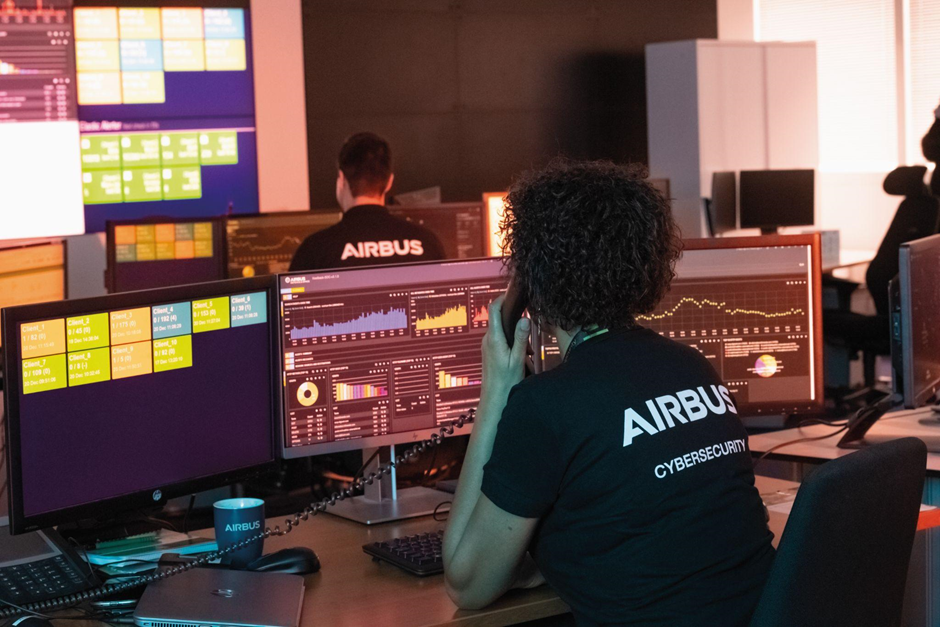
Airbus has secured a 25-year contract from France’s General Directorate for Armament to design, produce, and maintain cybersecurity gateways controlling data exchanges across Ministry of the Armed Forces networks.
The PARACOM programme will be delivered through Airbus Cybersecurity SAS and covers the full lifecycle of the equipment, from design and development through production and long-term operational maintenance. The gateways are intended to connect networks and information systems carrying different levels of classified or sensitive data, with approval planned for exchanges ranging from secret to unclassified environments.
Multi-level gateways sit between networks that cannot simply be connected directly, applying controlled filtering and information-flow rules so authorised data can move without creating an uncontrolled route between separate security domains. The engineering requirement is to maintain those controls while supporting military users who increasingly depend on shared information across command, intelligence, logistics, and platform systems.
Airbus says PARACOM will be produced in several configurations. Rack-mounted versions will support data-centre environments, while self-contained variants will be deployable into command posts and other tactical locations. The design is also intended for constrained installations aboard surface ships, submarines, aircraft, helicopters, drones, armoured vehicles, and other land platforms.
“This gateway strengthens the digital shield the French Armed Forces rely on to execute their missions,” said François Lombard, Director of Connected Intelligence at Airbus Defence and Space. Airbus has supplied gateway technology to French land forces since 2013, giving PARACOM continuity with an established national capability rather than introducing an entirely new technical discipline.
The contract duration creates an unusual lifecycle requirement. Cybersecurity equipment operates on considerably shorter technology cycles than many of the military platforms on which it will be installed, so a 25-year support commitment cannot depend on maintaining one fixed hardware and software configuration. Processors will become obsolete, operating environments will change, cryptographic requirements will evolve, and new vulnerabilities will emerge.
PARACOM therefore has to be managed as a controlled product family capable of evolving while retaining certification. Hardware replacement, software updates, patching, obsolescence management, and configuration control all have to preserve the assurance case that permits the gateway to sit between networks carrying different classifications.
That is particularly demanding where equipment moves from fixed infrastructure into tactical platforms. A data-centre gateway can operate with predictable power, cooling, physical security, and maintenance access. Equipment fitted to a vehicle, aircraft, ship, or deployed command post may face tighter packaging, environmental, bandwidth, and support constraints while still being expected to enforce the same information-security principles.
The broad deployment model also increases the importance of common configuration management. A gateway family used across ministry sites and multiple armed services can reduce the number of bespoke interfaces that individual organisations have to sustain, but only if versions remain controlled closely enough for central security accreditation and lifecycle support.
France is expanding other parts of its sovereign defence information architecture at the same time. Airbus was selected with Unseenlabs for the CASSIOPÉE space-based signals-intelligence programme, adding another source of sensitive information that will eventually have to move through protected command and analytical systems.
Secure data exchange is less visible than the sensor or platform generating that information, but it determines whether separate systems can work together without weakening the security boundaries around them. Modern military networks increasingly combine fixed headquarters, deployed formations, intelligence feeds, sensors, autonomous systems, and coalition connections, each with different access requirements.
Airbus has not disclosed the financial value of PARACOM. Its industrial scale is clearer in the duration and deployment breadth: the same programme covers development, production, certification, and support across central ministry infrastructure and deployed platforms for a quarter of a century.
The immediate milestones will be system development and security approval, followed by production and deployment. Longer term, PARACOM will be tested by whether Airbus can keep the gateway family supportable and certifiable as the digital systems on either side of it change repeatedly over the contract’s lifetime.