IN Brief:
- Mexico has acquired a second C-130J-30 after announcing its first current-generation Hercules acquisition in January 2026.
- The stretched variant provides 15 feet of additional cargo space alongside updated propulsion, avionics, and support systems.
- The order continues replacement of legacy Hercules aircraft while retaining Mexico’s established operational and maintenance experience with the type.
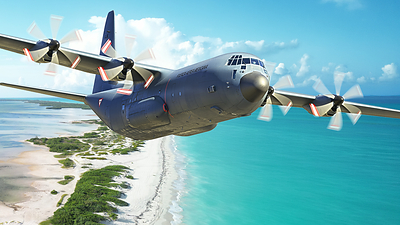
Lockheed Martin has confirmed that the Mexican Air Force is acquiring a second C-130J-30 Super Hercules, continuing a fleet recapitalisation programme that began with Mexico’s first order for the current-generation tactical transport aircraft in January.
The follow-on acquisition will give the Fuerza Aérea Mexicana two C-130J-30 aircraft and reinforces Mexico’s position as the first Latin American operator to join the current Super Hercules fleet. The stretched C-130J-30 adds 15 feet of cargo space compared with the standard C-130J, increasing internal volume for personnel, pallets, vehicles, and other mission loads.
Mexico is not introducing the Hercules concept from a standing start. Its air force has operated C-130 and commercial L-100 variants over several decades, building operational, maintenance, logistics, and training experience around the aircraft family. Retaining that lineage can reduce some of the disruption associated with moving to an unrelated tactical transport, although the C-130J introduces substantially different propulsion, avionics, diagnostics, and support systems from older variants.
Lockheed Martin describes the purchase as part of the recapitalisation of Mexico’s legacy Hercules capability. Two C-130J-30s will not reproduce the numerical strength of earlier Mexican Hercules fleets, but they establish a current-production baseline around which tactical airlift can be rebuilt as ageing aircraft become harder and more expensive to sustain.
The C-130J uses four Rolls-Royce AE 2100D3 turboprops driving six-bladed composite propellers and incorporates digital avionics and greater systems automation than previous-generation Hercules aircraft. Those changes affect the support organisation as much as flight performance, requiring updated maintenance training, diagnostic equipment, software support, and spares while reducing dependence on some of the systems associated with older airframes.
The -30 configuration adds useful volume without moving Mexico into a larger strategic transport class. That is relevant to an air force expected to handle conventional military airlift alongside humanitarian assistance, disaster response, personnel movement, and operations from airfields where larger transports may be less practical.
Mexico’s first C-130J-30 has already been used operationally for regional humanitarian support. Lockheed Martin says the aircraft carried emergency supplies, medical assistance, and personnel following earthquakes in Venezuela. A second aircraft gives the air force greater flexibility because maintenance or another task no longer removes its entire C-130J capability from availability.
The acquisition also connects Mexico to a large international C-130J support base. Hundreds of Super Hercules aircraft are in service or on order globally, generating continuing demand for propulsion support, components, software, structural work, training, modifications, and mission equipment. Smaller operators can benefit from that installed base through longer production runs and a wider pool of sustainment activity than would exist around a low-volume national aircraft type.
Commonality nevertheless has limits. Until older Hercules aircraft are withdrawn, Mexico will have to manage more than one generation of the platform, potentially maintaining parallel training, spares, ground equipment, documentation, and engineering procedures. The logistical benefit of the new fleet increases as the proportion of C-130J aircraft grows.
The aircraft family also leaves open a wider mission path if Mexican requirements change. C-130J derivatives support tactical transport, airdrop, medical evacuation, search and rescue, aerial firefighting, special operations, intelligence and surveillance, and other specialist roles. Mexico’s current procurement is centred on airlift, but the common platform gives future programmes access to an established range of mission integrations.
Lockheed Martin has not disclosed the contract value or delivery schedule for the second aircraft. Those details will determine how quickly the Mexican Air Force can establish a two-aircraft operating cycle and begin reducing dependence on its remaining older transports.
The important development is the emergence of a repeat procurement rather than a single replacement aircraft. Mexico has now committed to two current-generation Super Hercules transports within the same year, making the C-130J-30 the clear basis of its tactical airlift recapitalisation. Delivery timing, support arrangements, training, and any subsequent aircraft orders will show how far that renewal eventually extends.