IN Brief:
- The DDX package is valued at about €3.7 billion, including approximately €1.3 billion of options.
- Fincantieri will integrate the platform while Leonardo develops the combat system, including a digital S-band AESA radar architecture.
- First and second ship deliveries are planned for 2033 and 2035 if the full two-vessel programme proceeds.
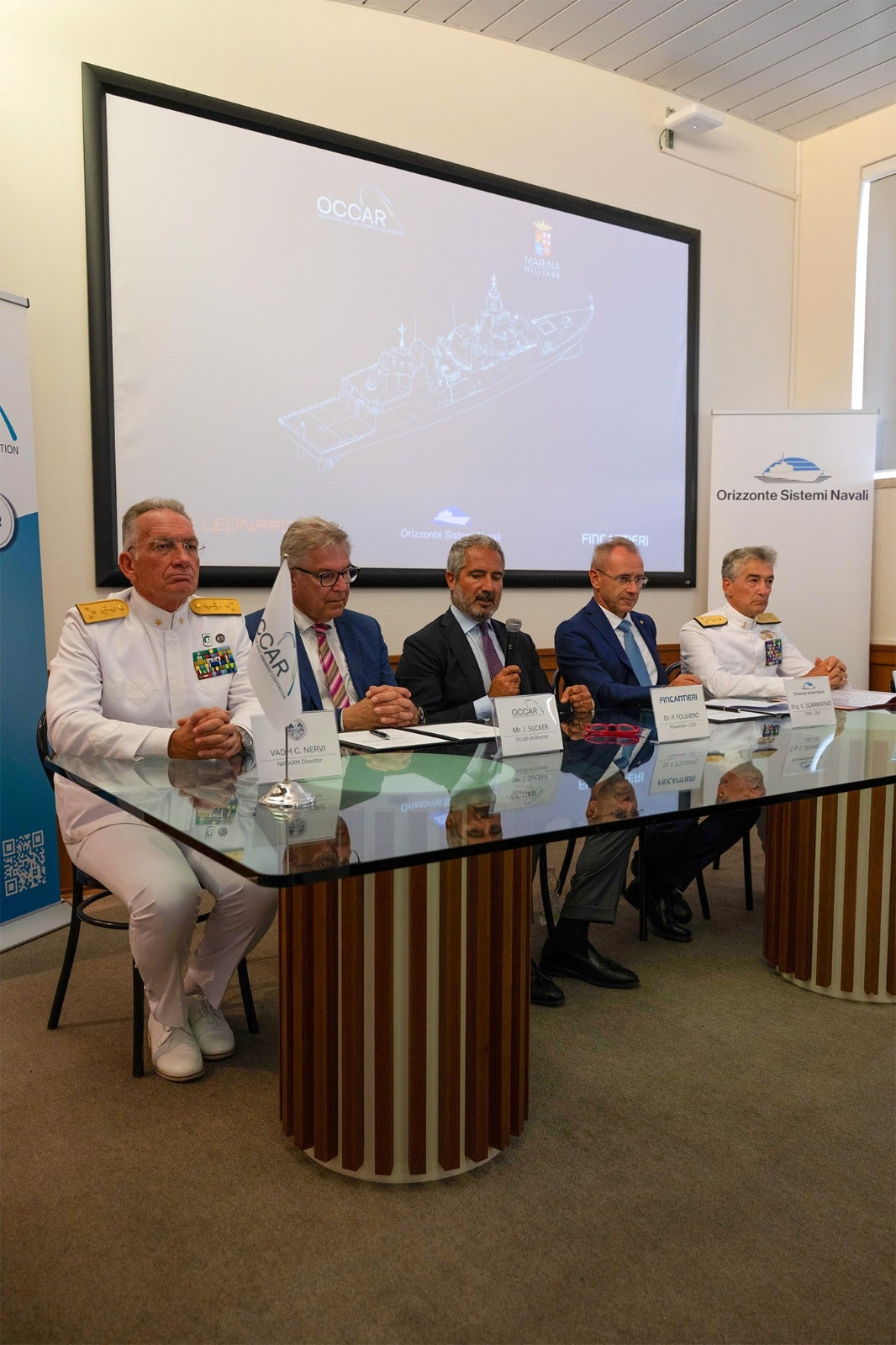
Italy has formally launched its next-generation DDX destroyer programme through a contract between OCCAR and Orizzonte Sistemi Navali, the joint venture owned 51% by Fincantieri and 49% by Leonardo. The programme covers development, production and initial in-service support for the first ship, with an option for a second.
The wider package is valued at about €3.7 billion, including roughly €1.3 billion of options. Orizzonte Sistemi Navali is expected to place subcontracts worth about €1.8 billion with Fincantieri and €1.7 billion with Leonardo, again including option values, giving the two groups the principal platform and combat system workshares.
Fincantieri will act as platform system integrator, while Leonardo will lead the combat system. The disclosed design points to a 180-metre ship displacing around 13,500 tonnes, with a stated range of 4,000 nautical miles and a crew of 251. Deliveries are planned for 2033 and 2035 if both vessels proceed, creating a long engineering cycle in which platform design, combat system integration and lifecycle upgrade capacity will have to mature in parallel.
The electrical architecture is being designed around substantial future power demand. Fincantieri has described a DC power sub-network with energy storage, new methods for managing thermal and electrical balances, an integrated steering and stabilisation arrangement, and further development of the ship management system. OCCAR has also identified growth margins for future technologies, including directed-energy weapons, making power generation, cooling and distribution central design constraints rather than fixed support functions.
The combat system configuration includes the SADOC 5 command architecture, a high-power fully digital S-band AESA radar and an MBDA weapon system. The requirement is built around integrated air and missile defence, long-range strike, command and control, anti-submarine warfare and operations with manned and uncrewed systems across several domains. A platform entering service in the 2030s will also need interfaces that can accommodate sensor, weapon and software changes over a service life measured in decades.
That upgrade path places unusual weight on spare electrical capacity, thermal headroom, software configuration control and open interfaces. A destroyer whose combat system is effectively frozen around its construction baseline would face expensive obsolescence before the second ship reached service. The DDX architecture is being shaped around controlled technology insertion as much as the capability set available at launch.
The programme will also have to absorb weapons already moving through qualification and production. The Italian Navy plans to integrate the TESEO MK2/E anti-ship missile across future DDX destroyers alongside other surface combatants. First missile deliveries are targeted for 2028, well ahead of DDX delivery, giving combat system teams time to mature interfaces while requiring configuration control between early weapon production and later ship integration.
Industrial responsibility is concentrated around Fincantieri and Leonardo, but the whole ship integration layer sits with Orizzonte Sistemi Navali. Fincantieri contributes hull design, ship systems, production engineering and platform integration, while Leonardo supplies major elements of the combat system and sensors. Keeping those packages aligned will depend on disciplined interface governance as weight, power, cooling and software requirements develop through detailed design.
Fincantieri is also building a wider digital concept around the ships through its Navis Sapiens approach, intended to collect and correlate data from onboard systems for operational decision-making, technical management and lifecycle support. Predictive maintenance and faster fault diagnosis can reduce support burdens only if shipboard and shore systems share stable data models, secure links and controlled software baselines.
OCCAR will manage the programme on Italy’s behalf, adding a multinational programme management layer between the customer and the industrial team. The ships are intended to support national, joint and NATO operations, so interoperability requirements will sit alongside sovereign Italian systems and weapons as design reviews progress. That combination will require interface standards to remain stable enough for allied integration without constraining later national upgrades.
The programme combines conventional shipbuilding risks with an unusually dense set of digital and electrical integration demands. Hull construction can proceed only once the weight and space claims of major systems are stable enough to protect margins, while radar, missile, electronic warfare and computing requirements will continue to evolve throughout the design period. Late changes in any one of those areas can propagate into cable routes, cooling plants, power distribution and compartment layouts.
Detailed engineering and supplier mobilisation now become the immediate programme tests. First delivery is planned for 2033, leaving several years for design maturity, combat system integration and production preparation before construction reaches its most resource-intensive stages. Programme performance will depend on preserving the margins promised at contract award while turning them into a buildable ship rather than consuming those provisions during initial design.