IN Brief:
- The $723.997 million modification raises the underlying ASEV contract from about $1.64 billion to $2.36 billion.
- Work supports Japan's Aegis System Equipped Vessel programme and associated combat system integration.
- The programme is moving through shore integration, shipment, ship installation, acceptance, and longer-term support.
Lockheed Martin has received a $723.997 million contract modification for Japan’s Aegis System Equipped Vessel programme, increasing the value of the underlying Missile Defense Agency contract from about $1.64 billion to roughly $2.36 billion.
The work sits within Japan’s Foreign Military Sales programme for two Aegis System Equipped Vessels, or ASEVs. Lockheed Martin‘s role covers combat system and radar-related activity associated with both ships, with work scheduled in Moorestown, New Jersey, and Japan through 31 March 2030.
The award arrives after the first fully integrated ASEV shipset completed validation at Lockheed Martin’s Moorestown Production Test Center. That shipset brings together four SPY-7(V)1 radar arrays, shipboard radar processing, power and cooling equipment, and Aegis Combat System computing and display hardware before shipment to Japan for installation and final acceptance testing.
A second shipset is following through the same integration process. Lockheed Martin said in August that light-off for the second set was planned later in 2026, placing the two-vessel programme in a period where hardware production, software configuration, integration, shipment, ship installation, and acceptance work increasingly overlap.
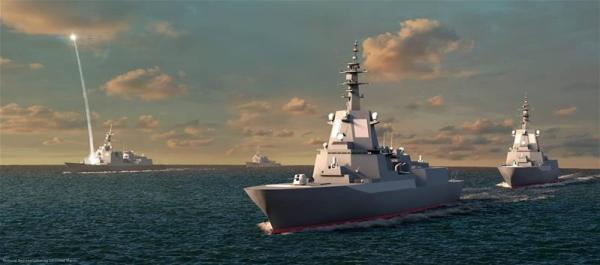
Japan created the ASEV programme after cancelling its land-based Aegis Ashore plan. The resulting ships are being developed as large maritime platforms centred on integrated air and missile defence, with the Aegis Combat System and SPY-7 radar forming the core sensor and command architecture. The programme therefore carries a substantial systems engineering workload outside the ship hull itself.
Land-based integration in Moorestown is designed to remove part of that risk before equipment reaches the shipyard. Radar arrays, processing equipment, computing, displays, power, cooling, and software can be brought together in a controlled environment, allowing engineers to identify interface problems before the equipment is installed inside the ships. That does not eliminate shipboard commissioning, but it moves more troubleshooting into a site where access, instrumentation, and specialist engineering support are easier to manage.
The approach is particularly useful for a programme of only two vessels. A long production run can absorb lessons across successive hulls, but a two-ship class has little scope to recover from first-ship integration problems through later repetition. The value of the shore integration phase lies in reducing the number of issues left to discover after installation, when physical access is tighter and schedule changes can affect several ship systems at once.
SPY-7 also adds a demanding power and cooling requirement to the ship design. The radar’s four fixed arrays, associated processing, and combat system equipment have to be integrated with ship services that also support propulsion, communications, weapons, accommodation, and other mission systems. The latest contract modification helps fund the engineering and programme activity needed to carry those interfaces through installation and acceptance.
The two shipsets also have to remain aligned with the vessels being built in Japan. Equipment delivery dates, software baselines, cable and cooling interfaces, and acceptance activity all have to match ship construction closely enough that the radar and combat system do not become pacing items. With only two ships in the class, a configuration change on the first ship can quickly become a schedule and rework issue for the second.
Japanese industrial participation is expanding alongside the US work. In February, Lockheed Martin and Fujitsu formalised an initial purchase order for a power supply line replaceable unit used in the SPY-7 Subarray Suite. The arrangement is intended to establish Japanese production and support capacity for a component that will remain relevant during the radar’s service life.
That local supply work has consequences beyond initial delivery. Radar and combat system support continues through replaceable electronics, software updates, cooling equipment, test capability, obsolescence management, and trained engineering personnel. A domestic source for selected equipment can shorten support routes and reduce dependence on returning every component to the United States.
The contract running through March 2030 therefore spans more than assembly of two sets of hardware. It overlaps with installation, acceptance, commissioning, and the establishment of a sustainment structure around systems that will continue to change after the ships enter service. Aegis development increasingly depends on software baselines and processing upgrades as well as physical radar and weapon hardware, so long-term configuration management will remain part of the programme.
The $723.997 million modification is not a new order for two additional ships, and it should not be read as one. It increases an existing contract for systems already moving through production and integration. Its scale reflects the amount of value concentrated in radar, computing, software, power, cooling, test, and engineering activity before either ASEV reaches operational service.