IN Brief:
- Northrop Grumman has received an $18.8 million US Army contract to develop propulsion for the XRC counter UAS missile programme.
- The company will integrate a solid fuel ramjet into missile prototypes before ground and flight testing.
- The design is intended to remain compatible with the Stinger Vehicle Universal Launcher while increasing engagement range.
Northrop Grumman has received an $18.8 million US Army contract to develop solid fuel ramjet propulsion for an extended-range counter UAS missile, moving the XRC programme towards prototype integration and flight testing.
The eXtended Range Counter-Unmanned Aircraft System programme is intended to give mobile Army formations more distance in which to engage drones and other low altitude aerial threats. Northrop Grumman will integrate its propulsion design into missile prototypes before completing ground and flight testing.
The proposed interceptor is intended to remain compatible with the Stinger Vehicle Universal Launcher. That allows the Army to investigate greater engagement range without beginning with an entirely new vehicle launcher installation.
Propulsion is the central technical change. A conventional solid rocket motor carries both fuel and oxidiser within the missile, while a ramjet uses atmospheric oxygen once sufficient forward speed has been established.
Reducing the oxidiser carried aboard the missile can leave more internal volume available for fuel. Northrop Grumman says the approach is intended to increase the range and energy available against aerial targets.
The complete propulsion sequence remains more complicated than replacing one motor with another. A ramjet requires the vehicle to reach suitable speed before its air breathing stage can operate efficiently, so the design has to manage initial acceleration, transition into sustained propulsion and stable operation throughout the engagement.
Those requirements become particularly relevant when the missile has to remain within an established launcher envelope. Increasing range by making an interceptor substantially larger would weaken compatibility with the Army’s existing Stinger launch architecture and could create corresponding changes to vehicles, handling equipment and magazine capacity.
The XRC approach instead attempts to obtain more performance from a missile that can still use the Stinger Vehicle Universal Launcher. Northrop Grumman says the proposed target set includes uncrewed aircraft, fixed-wing aircraft and helicopters.
Development will take place at the company’s Allegany Ballistics Laboratory in Rocket Center, West Virginia. The site supports missile propulsion, energetics and advanced weapons work, giving the programme access to established manufacturing and test infrastructure.
The facility is important because an air breathing propulsion concept has to progress from controlled development hardware into something capable of repeatable manufacture. Internal flow geometry, energetic materials, structures and thermal behaviour all affect ramjet performance, while tolerances that can be maintained on an individual prototype also have to be achievable across a production batch.
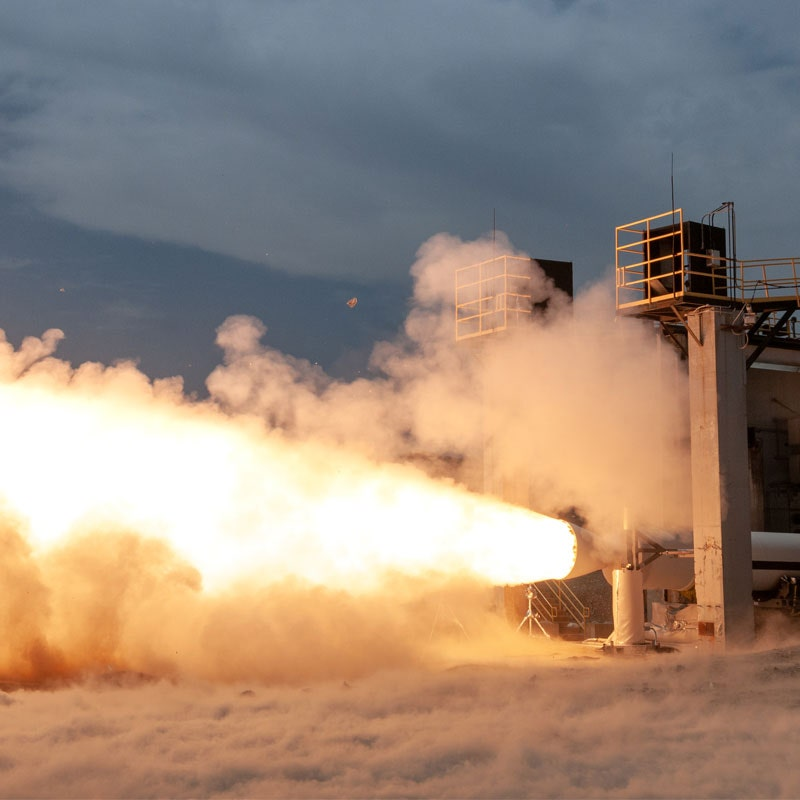
Ground firings will provide the first opportunity to examine those characteristics under controlled conditions. Engineers can assess propulsion behaviour, structural loads and thermal performance before exposing the complete missile to the additional aerodynamic and guidance demands of flight.
Flight testing then brings propulsion together with the rest of the interceptor. Guidance, control, launcher interfaces and the weapon’s aerodynamic design must function through initial acceleration and the later engagement phase rather than as separate subsystems.
Greater missile reach also places demands on the wider counter UAS architecture. An interceptor cannot exploit additional range unless sensors can detect and track a target far enough away and the command system can provide engagement quality information before the target enters the defended area.
The Army has therefore been investing across detection, command and defeat technologies rather than treating counter UAS as a missile problem alone. Radar, passive radio-frequency sensing, electro-optical equipment, electronic attack and kinetic effectors provide different options against threats that vary considerably in size, speed and control method.
Interceptor economics remain another constraint. Small drones can cost far less than conventional air defence missiles, so extending engagement range does not by itself create a sustainable defensive system. Weapon cost, magazine depth and the number of threats that can be engaged before reloading all remain part of the operational calculation.
Preserving an existing launcher architecture may help reduce some integration cost and complexity. Vehicles already designed around the Stinger launcher can potentially retain their established mounting, power and command arrangements while the missile itself provides a different performance envelope.
The current award remains a development contract rather than a production commitment. Prototype performance will have to establish whether the solid fuel ramjet delivers sufficient additional range and energy while meeting launcher, reliability and manufacturing requirements.
The next programme milestones will therefore come from successful ground testing, prototype integration and flight trials. Those events will determine whether the propulsion concept can progress from an $18.8 million development effort towards a practical longer-range layer within the Army’s mobile air defence structure.