IN Brief:
- Raytheon has secured a five-year SM-6 contract with two option years valued at up to $24.4 billion.
- The industrial plan supports production above 500 missiles annually while expanding facilities, automation, workforce, and supplier capacity.
- A $115 million Alabama expansion has already added integrated missile assembly capacity to the wider production ramp.
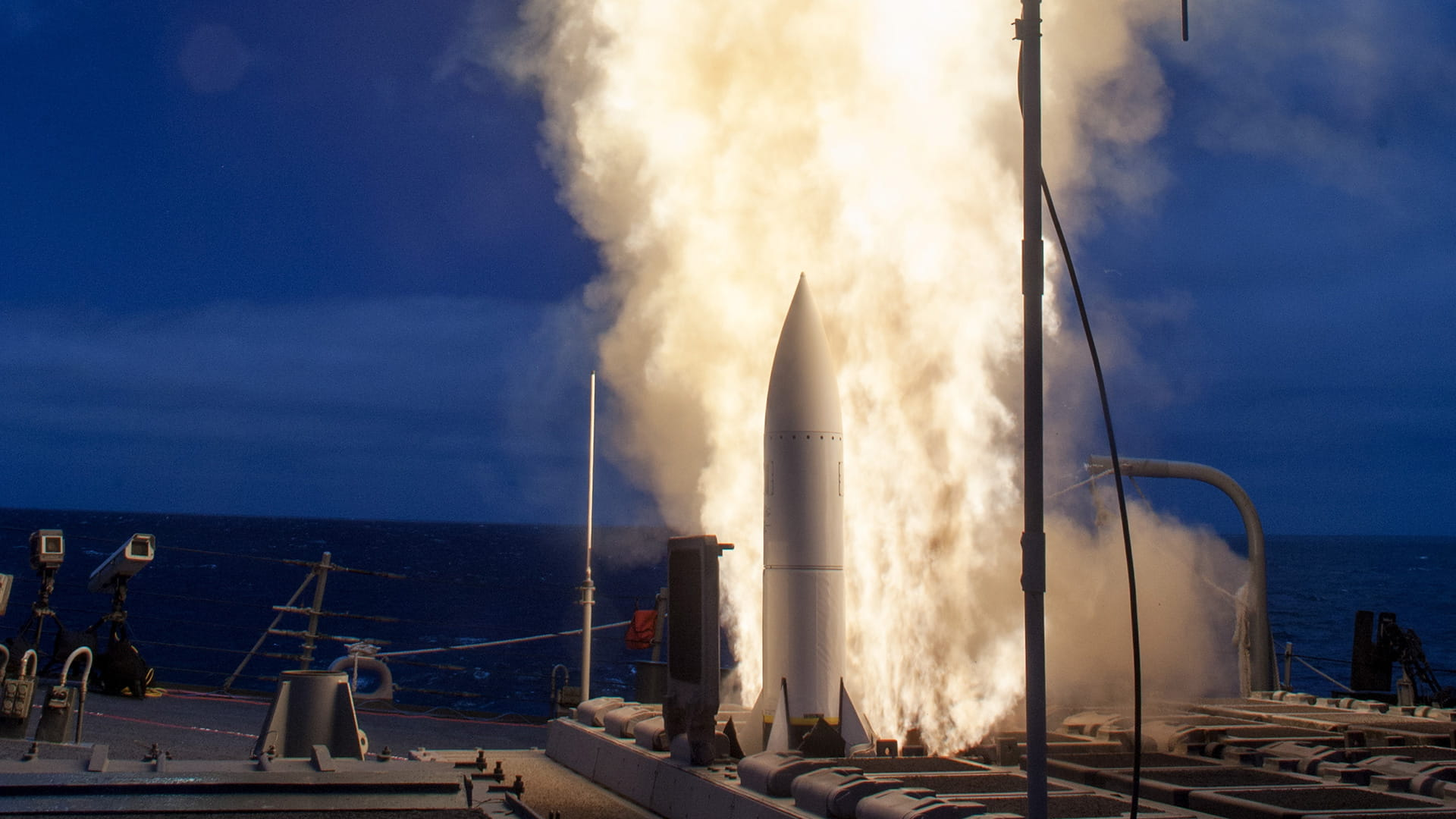
Raytheon has secured a five-year SM-6 contract with two additional option years valued at up to $24.4 billion, giving the US Navy a long-term procurement framework intended to support annual output above 500 missiles.
The award places a large production commitment behind an industrial expansion that was already under way. Raytheon is increasing plant capacity, automation, workforce, and supplier investment as the United States attempts to raise production across several missile families simultaneously.
SM-6 is used for anti-air warfare, anti-surface missions, and ballistic missile defence. That range of roles has widened demand for the weapon, but the more important industrial development is the length of the contract because manufacturers can plan against several years of expected production rather than isolated annual lots.
Raytheon’s stated target is to manufacture more than 500 SM-6 missiles per year. Reaching that rate requires substantially more than adding stations to a final assembly line.
Propulsion, guidance electronics, control hardware, structures, energetic materials, seekers, wiring, and other qualified components all have to reach production in compatible quantities. A bottleneck at a comparatively small lower-tier supplier can restrict finished missile output even when the prime contractor has spare assembly capacity.
Raytheon has already completed a $115 million expansion at its Alabama operation, where missile sections are brought together into integrated weapons. The investment adds physical capacity at one of the most visible stages of manufacture, but upstream suppliers remain equally important to whether that capacity can be used continuously.
Automation is also being expanded across the production system. Missile manufacturing still requires specialist technicians and extensive inspection, but automated handling, measurement, and repeatable processes can reduce cycle times while improving consistency.
Longer procurement horizons strengthen the business case for those investments. A company is more likely to purchase new equipment, qualify another production line, or recruit additional staff when it can see sustained demand rather than a short batch followed by uncertain funding.
The same logic applies across the supplier base. Specialist manufacturers may need new machining centres, energetic material capacity, electronics equipment, controlled facilities, or additional test systems before they can raise deliveries.
Those investments take time. Increasing final assembly output quickly is of limited value if propulsion units, guidance components, or control hardware remain tied to older production rates several layers further down the industrial chain.
Raytheon has therefore linked the SM-6 award explicitly to broader defence industrial base expansion. Supplier partnerships, additional facilities, workforce growth, and automation are all being treated as parts of the same production problem rather than separate corporate initiatives.
The programme is also competing for industrial capacity with other missile ramps. RTX is increasing production across AMRAAM, SM-3, Tomahawk, and other systems at the same time, creating pressure on specialist labour and on common suppliers of electronics, energetic materials, propulsion components, and precision manufactured parts.
Where programmes share suppliers, higher demand can support investment in additional capacity. It can also create conflicts if several production lines require the same constrained component or specialist process at the same time.
The Navy’s use of a multi-year framework is intended to reduce some of that uncertainty. Longer commitments allow Raytheon and its suppliers to place material orders further ahead, reserve capacity, and plan staffing around a clearer demand signal.
That approach also improves the economics of qualification. Defence production cannot simply switch to an unapproved supplier when one source becomes constrained. New manufacturers generally have to demonstrate their processes, materials, inspection, and product quality before components can enter a production missile.
Testing capacity must expand alongside manufacture. Completed weapons still require inspection and acceptance before delivery, so output can stall late in the process if ranges, instrumentation, factory acceptance equipment, or technical staff do not grow at the same pace as assembly.
Inventory management adds another industrial constraint. A high-rate line requires enough component stock to keep work moving without creating excessive inventories of expensive or shelf-life-limited items.
The $24.4 billion figure represents the maximum value of the framework rather than immediate spending. Actual production will depend on funded orders and exercise of the option years, but the agreement gives industry a far stronger planning horizon than successive short-term contracts.
For the Navy, that matters because missile stocks cannot be rebuilt instantly when operational consumption rises. Manufacturing lead times begin at lower-tier suppliers long before a completed SM-6 reaches the final acceptance process.
Raytheon has already reported a substantial increase in wider munitions deliveries, but sustaining SM-6 output above 500 per year will require the production system to remain balanced. Expanding one factory merely moves the bottleneck if the rest of the chain remains unchanged.
The new contract therefore establishes both an order book and an industrial test. Raytheon now has a multi-year framework supporting higher production; the next measure will be whether plant investment, automation, suppliers, workforce, and test capacity can increase together quickly enough to deliver that rate reliably.