IN Brief:
- FMV has awarded Saab SEK 1.3 billion to develop a new Gripen flight-control computer.
- The replacement is intended to support long-term availability, manoeuvring performance and security of supply.
- Deliveries are planned during 2030, without a published aircraft-variant allocation or installation schedule.
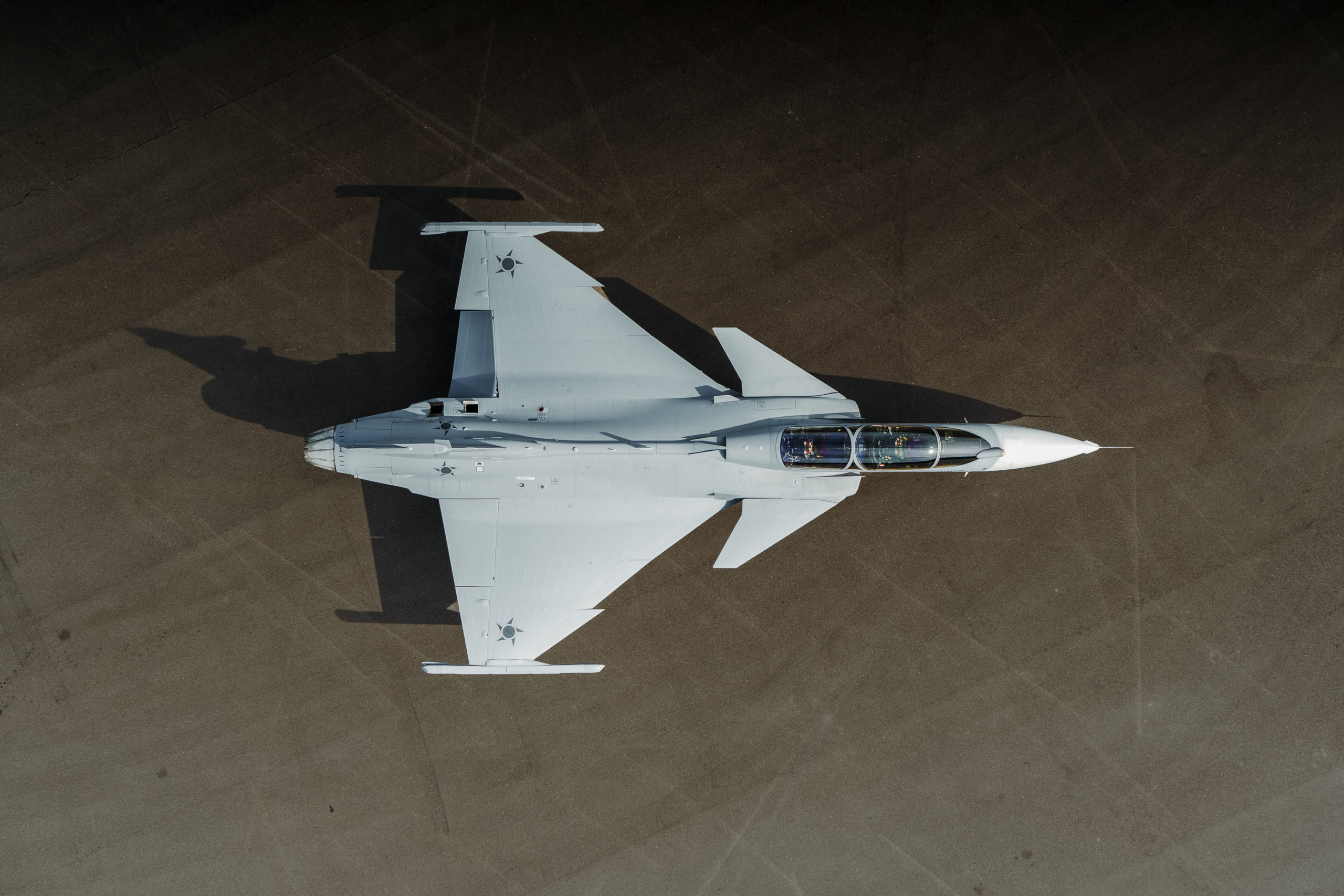
Saab has received a SEK 1.3 billion order from Sweden’s Defence Materiel Administration, FMV, to develop a replacement flight-control computer for Gripen. Deliveries are planned during 2030. The award covers engineering and future supply of a central flight-control component, rather than completed installations or an additional aircraft purchase.
A flight-control computer translates pilot commands and measured aircraft motion into instructions used to control an aircraft’s response. Saab says the new generation unit is intended to support precise manoeuvring and the long-term availability, performance and security of supply of Gripen. It has not disclosed the computing hardware, software architecture or the specific aircraft variants covered by the replacement programme.
Digital flight control depends on control laws that interpret commands in the context of speed, attitude and rates of movement. Their outputs must remain consistent with the aircraft’s permitted operating envelope rather than simply reproduce movements of the pilot’s controls. The programme will need to maintain the correct relationship between sensing, processing and actuator commands, although Saab has not said how processing responsibilities will be divided in the new system.
Flight-control processing is safety critical because a delayed, incorrect or missing instruction can affect aircraft behaviour. Deterministic timing, fault detection and controlled responses to abnormal conditions are therefore fundamental considerations when replacing a flight computer. These are engineering requirements common to such systems, not confirmed features of a particular chip, processor or redundant configuration selected for Saab’s development contract.
Compatibility can be as demanding as the computing task itself. A replacement unit has to exchange signals correctly with sensors, cockpit controls, monitoring functions and the control equipment that moves flight surfaces. Changing an interface or data rate can affect equipment elsewhere in the aircraft, even when the replacement performs its own calculations correctly. Neither FMV nor Saab has specified whether existing electrical and software interfaces will be retained unchanged.
Saab’s stated objectives extend beyond immediate computing performance. Fighter aircraft can remain in service long after particular electronic components stop being manufactured. Maintaining a flight-control system therefore involves long-term access to suitably qualified parts, firmware, repair capability and approved engineering documentation. A new computer may address obsolescence and supply risks, but the announcement identifies no semiconductor supplier or revised manufacturing source.
A longer-lived computing solution must therefore be supportable in production and maintenance environments after its initial acceptance. Component sourcing, repair arrangements, software baselines and configuration records can determine whether a service organisation can return an aircraft to flight promptly after a fault. The order does not disclose a semiconductor supplier, processor architecture, domestic-content requirement or production location, so a particular supply-chain redesign cannot yet be claimed.
Validation work will have to show how the new component responds to expected inputs, abnormal sensor conditions and faults. Hardware-in-the-loop testing is one established way of exercising flight-control logic with representative signals before committing equipment to an aircraft. Such methods explain the type of assurance involved; Saab and FMV have not announced the project’s specific test facilities, certification route or flight-trial timetable.
The verification challenge extends beyond normal handling. Engineers need evidence across the approved flight envelope and under foreseeable equipment disturbances, with changes in software or electronics controlled against that evidence. A faster processor alone is not sufficient grounds to accept a safety-critical replacement, because the important result is predictable behaviour of the complete flight-control chain.
Gripen support encompasses several separate engineering programmes. Earlier this month, Saab and GKN Aerospace extended their engine-support relationship for Gripen E/F. That work concerns propulsion support and has no disclosed contractual connection to the newly commissioned flight-control computer, which Saab describes only as a replacement for Gripen’s current unit.
Gripen C/D and E/F operate with different aircraft configurations, and the October announcement does not identify which version will receive the development first, how many computers are covered or whether a fleetwide retrofit is planned. The 2030 delivery indication should therefore not be treated as an operational service-entry date for any particular Gripen variant.
Changes in flight-control computing are closely coupled to aircraft configuration management. Technical documentation has to establish which software and hardware versions belong together and what maintenance organisations are authorised to install. If additional revisions are introduced during development, engineers must assess whether the evidence produced for one version still applies to the next.
FMV and Saab will work together on development, with delivery planned during 2030. Design verification, configuration integration and acceptance still lie ahead, and subsequent announcements will be needed to establish the first installation programme. The SEK 1.3 billion order fixes a development and supply commitment without demonstrating that a new flight computer is already in service.