IN Brief:
- Hyundai Rotem has awarded Kongsberg a NOK700 million contract for PROTECTOR RS4 weapon stations.
- The equipment covers K2 main battle tanks, armoured recovery vehicles and combat engineering vehicles.
- Initial deliveries for integration begin in spring 2027, with spare parts, training and support included.
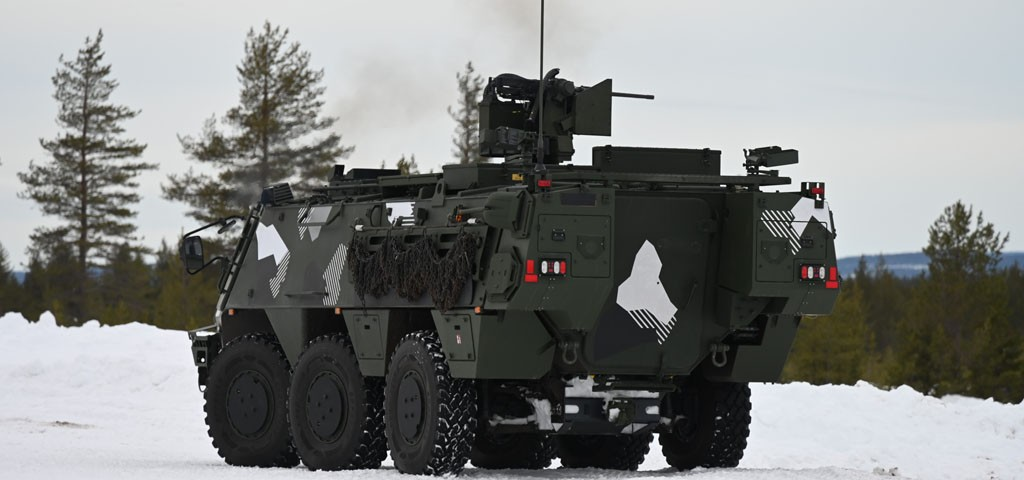
Kongsberg has secured a contract valued at approximately NOK700 million with Hyundai Rotem to supply PROTECTOR RS4 remote weapon stations for vehicles within Poland’s K2 armoured programme. The order covers main battle tanks, armoured recovery vehicles and combat engineering vehicles, with initial deliveries for vehicle integration scheduled to begin in spring 2027.
The agreement, announced on 22 October, also includes an Integrated Product Support package covering initial spare parts, training and other support services. Kongsberg has not disclosed the number of stations to be supplied, their allocation between the three vehicle variants or the complete integration timetable. The total contract value therefore cannot be divided into a reliable per-station price.
Hyundai Rotem is the South Korean manufacturer supplying the underlying K2 vehicle programme, while Kongsberg provides the contracted remote weapon equipment. Its first delivery milestone concerns shipment for integration rather than completed Polish Army acceptance or operational entry. Additional work will be needed to install, test and qualify the equipment on the relevant configurations.
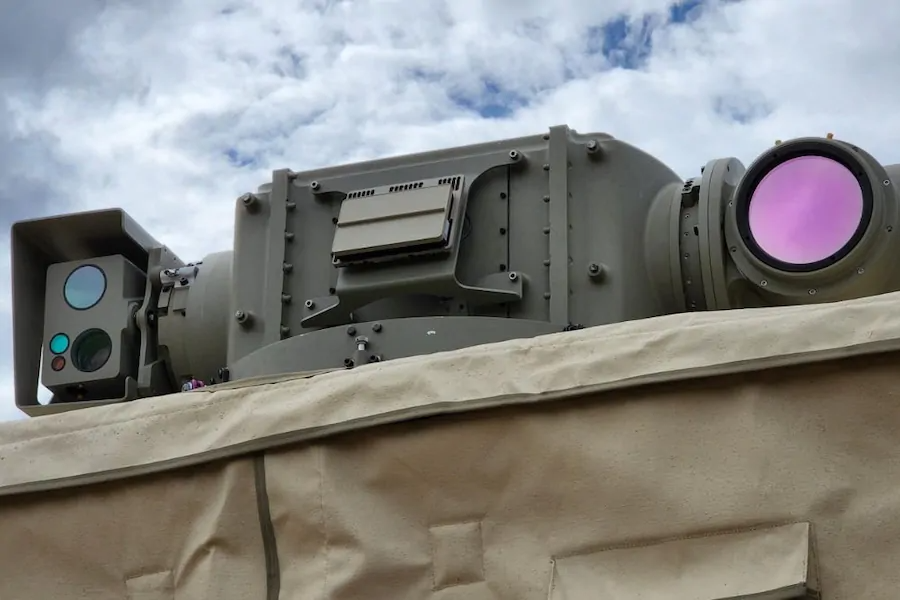
The PROTECTOR RS4 enables a crew member to observe and control an externally mounted weapon from a protected position inside the vehicle. It combines a moving weapon mount with optical sensors, stabilisation, fire control equipment and an operator interface. The configuration reduces the need for an operator to remain exposed at the weapon, although it does not remove the vehicle’s other protection or operating requirements.
As a product family, RS4 can carry 5.56mm, 7.62mm or 12.7mm machine guns and 40mm automatic grenade launchers, with options involving a coaxial weapon or anti-tank missile. These are available configurations, not a disclosure of the exact armament selected under the Polish order. Kongsberg has not confirmed the weapons, sensors or additional protection equipment that each Polish vehicle variant will receive.
Day cameras, thermal imagers and laser rangefinders provide observation and ranging functions in the manufacturer’s modular sensor architecture. RS4 uses a stabilised detached line of sight arrangement, allowing the sighting system to be controlled separately from weapon movement associated with ballistic correction. This helps maintain a usable view during vehicle movement, subject to the equipment’s actual operating limits.
Movement over uneven ground introduces changes in platform orientation and vibration. The control equipment must manage these disturbances while directing the weapon and the sensor assembly, with effectiveness depending on the installed sensors, mechanical actuators and the available stabilisation range. The station’s general specifications cannot be substituted for completed performance testing on a particular K2 variant.
Integration requires a suitable mounting structure, electrical connections and interfaces with the vehicle’s operator controls. Engineers must account for the load carried on the hull or roof, the available space and any interaction with other installed equipment. A recovery vehicle and an engineering vehicle may impose different constraints from a tank, even when all three use an RS4 station.
On a main battle tank, the remote station can provide an additional weapon independent of the principal gun’s normal operating role. Armoured recovery vehicles are primarily intended to assist damaged or immobilised equipment, while combat engineering variants undertake specialised battlefield engineering tasks. The weapon station provides a means of observation and protection without changing those core vehicle functions.
Using the same station family across several variants can enable common training materials, maintenance procedures and spare parts for shared components. The advantages depend on how much equipment is actually standardised. Differences in installation hardware, weapons or sensor configurations can still require variant-specific documentation and support arrangements.
The support package included in the agreement is therefore an integral part of the order rather than an incidental addition. Operating a weapon station involves maintenance of mechanical drives, electrical interfaces, optics and controls, as well as access to replacement components and personnel familiar with the selected configuration.
Kongsberg has an established history of supplying PROTECTOR systems to European defence programmes, including other armoured vehicle fleets. Its cooperation with Hyundai Rotem predates the new Polish contract. These relationships provide relevant engineering experience, but previous installations do not establish that the configuration purchased by Poland is identical to any earlier customer system.
Poland’s K2 programme brings together vehicle manufacturing and weapons integration from several countries. A prime vehicle manufacturer remains responsible for delivering an integrated platform while specialist suppliers provide equipment that must meet the agreed mechanical, electrical and functional interfaces. Acceptance depends on the completed installation, not only on qualification of the individual component.
Spring 2027 is the first disclosed delivery milestone. Further integration and acceptance will determine when the RS4 systems are installed and available to the Polish Armed Forces. Kongsberg has not announced a final delivery date for the complete order or a confirmed date for entry into service on each vehicle variant.