IN Brief:
- The £74m SERPENS award covers Gryphon R1430 Close Find Radars for the 5th Regiment Royal Artillery.
- AESA radars will operate in vehicle-mounted and dismounted configurations alongside an integrated acoustic detection system.
- SRC UK plans to expand hardware facilities and high-technology employment in Lincolnshire during the contract’s initial six-year period.
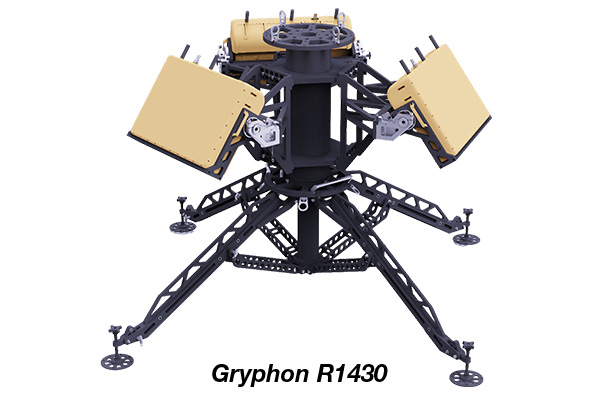
SRC UK has won a £74 million Ministry of Defence contract to supply Gryphon R1430 Close Find Radars for the British Army’s SERPENS programme. The systems are intended for the 5th Regiment Royal Artillery and will form part of a combined radar and acoustic capability for identifying hostile mortar, artillery and other nearby threats.
The contract forms part of SERPENS, which will replace ageing British Army weapon-locating equipment. SRC UK will provide the Gryphon R1430 for vehicle-mounted and dismounted operation, serving different transport and deployment requirements. The initial contract term is six years; SRC UK has not specified the number of radar sets, the mix of configurations or their delivery timetable.
Close Find Radars identify and locate threats at ranges relevant to deployed formations, including mortar and artillery fire. By analysing detected trajectories, the sensor can estimate the point of origin and pass target-location information into the sensing and targeting chain. The British Army intends to integrate the R1430 with acoustic detection, providing complementary information to commanders; the detailed fusion architecture and acceptance thresholds have not been set out by the programme.
The R1430 uses active electronically scanned array, or AESA, technology. Instead of relying on a mechanically rotated antenna to point its beam, an AESA varies the phases of signals across multiple radiating elements to steer the sensing pattern electronically. This can support rapid updates and flexible coverage depending on the radar’s configuration and signal-processing software. Electronic beam steering also allows successive observation periods to be allocated to different sectors without rotating the complete array. Effective detection still depends on the array, waveform, processing and local terrain; a specific R1430 detection range cannot be inferred from AESA architecture alone.
SRC describes the R1430 as a compact, low-power solid-state radar without mechanical beam-scanning parts. Fewer moving components can reduce certain maintenance demands, although deployed equipment still needs electrical power, cooling, structural support and environmental protection. SRC has not provided comparative reliability or range figures for the Army’s specific configuration.
The software-configurable R1430 architecture is intended to support exchanges with other defence systems. Its geolocation outputs need consistent coordinates, confidence information and timing so that command and targeting equipment can interpret the data correctly. Secure communications, interface compatibility and performance testing will therefore be part of integration with the wider SERPENS capability.
Vehicle-mounted installation brings its own engineering requirements. Power supplies, electromagnetic compatibility, secure data links and the mechanical integrity of mounts must all be addressed without compromising the carrier’s mobility or available payload. A dismounted configuration places a different emphasis on setup time, equipment handling, power provision and the ability to maintain sensor geometry after transport.
The award is also an industrial development for SRC UK, which is based at Lincoln Science and Innovation Park. The company plans to expand its hardware facility to meet work under the contract and says the programme will support additional technical employment in Lincolnshire. The precise capital expenditure, number of new jobs and share of hardware manufactured locally have not been specified.
SRC UK, based in Lincoln, is a subsidiary of the US-based SRC, Inc. group and expects to draw on expertise from SRC and SRCTec while delivering the British contract. SRC UK has committed to UK-based supply and support and intends to expand its Lincolnshire hardware facility. The company has not assigned a precise proportion of manufacturing and engineering work to the facility or other group companies.
SRC’s Gryphon R1810 radar developed for Northrop Grumman’s Raid Hunter serves a separate counter-drone application. SERPENS instead specifies the R1430 for British Army weapon locating. Sharing a Gryphon product-family name does not establish identical ranges, configurations, integration requirements or procurement status.
Deployment performance will depend on more than delivery of radar hardware. Terrain masking, electromagnetic interference, power supply and data-link resilience affect the completeness and timeliness of the sensor picture. Operator and maintainer training must also encompass the use of radar information alongside acoustic detection, as those capabilities are integrated for Army service.
The £74 million award establishes SRC UK’s initial six-year role in delivering the Army’s R1430 Close Find Radar capability. Integration with acoustic sensing and deployment in mounted and dismounted configurations remain separate programme workstreams. SRC UK has not specified first delivery dates, radar quantities or the timetable for initial Army fielding.