IN Brief:
- Defence Equipment and Support has published plans for a £30m Spearfish development services contract.
- BAE Systems is the proposed direct-award supplier because it is the heavyweight torpedo’s design authority.
- The planned five-year arrangement could be extended by three one-year options; the notice is not an award.
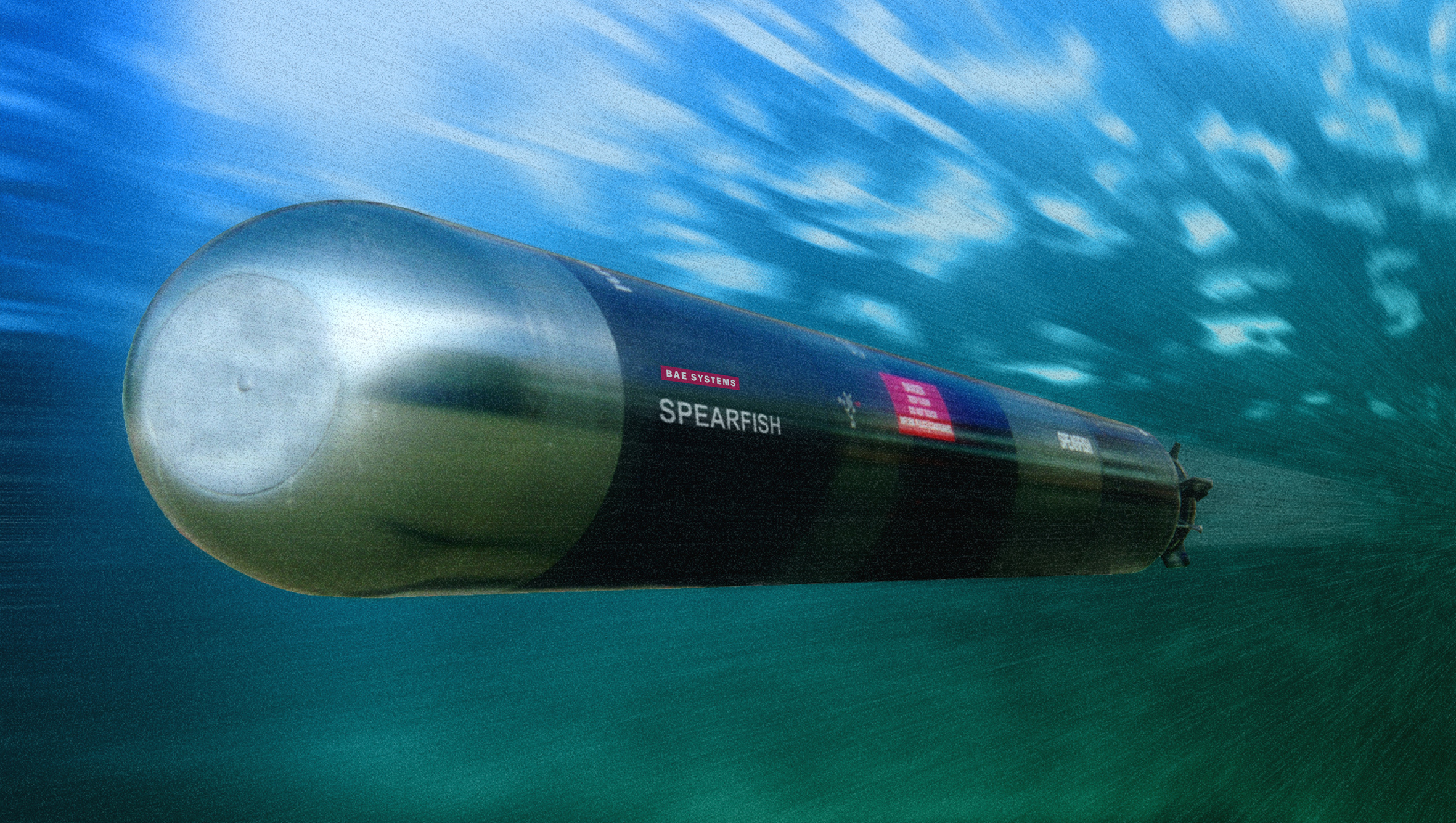
Defence Equipment and Support is considering a single-source engineering development contract with BAE Systems for the Royal Navy’s Spearfish heavyweight torpedo. The planned arrangement has an estimated value of £30 million excluding VAT and would cover research and development services rather than a disclosed purchase of additional weapons. BAE Systems is the proposed direct-award supplier because it is Spearfish’s design authority. The Ministry of Defence has not yet made the contract award, and the precise development tasks remain subject to the procurement process.
The proposed contract has a five-year base term and three optional one-year extensions, allowing a maximum of eight years. Defence Equipment and Support envisages work starting in 2027. Its procurement narrative describes an April start with a March 2032 base-term end, whereas the structured contract fields specify June 2027 to May 2032. Both place the work in the same general planning period, but they do not establish an agreed contractual commencement date. Any extension would require a subsequent decision rather than occurring automatically.
The Ministry of Defence plans to use the direct-award provisions of the Procurement Act 2023, citing the system design authority’s position and the grounds available under Schedule 5. The arrangement would also be treated as a qualifying defence contract under the Defence Reform Act 2014 and Single Source Contract Regulations 2014. Those rules address procurement oversight and the commercial arrangements for eligible non-competitive defence work. They do not convert a pipeline proposal into an executed contract or determine the eventual engineering specification.
Spearfish is the Royal Navy’s submarine-launched heavyweight torpedo. The weapon brings together propulsion, steering and control, guidance electronics, target sensing and interfaces with the firing submarine. Changing one part of that architecture can affect other subsystems: an electronics replacement may change power or thermal loads, a guidance modification may alter verification requirements, and a control-system update must remain compatible with the weapon’s physical limits and safety case. Its existing design baseline therefore influences the scope and cost of subsequent development.
BAE Systems’ design-authority role is directly relevant to engineering changes. Design records, hardware configuration, software versions, interface documentation and safety evidence must remain consistent as modifications are assessed. A supplier working on one component may need access to the broader system definition before a changed part can be qualified for use. The proposed £30 million covers the development category, without an identified list of new sensors, propulsion changes, software releases or weapon variants. None of those possibilities can yet be treated as a funded deliverable.
Spearfish has already passed through a major upgrade programme involving guidance and electronics alongside work required to qualify the upgraded weapon for Royal Navy service. Further development need not repeat that earlier programme: obsolescence management, interface changes and future capability requirements can each prompt engineering tasks over the life of a complex underwater weapon. The procurement proposal does not tie its estimate to any particular previous upgrade or to a new manufacturing batch, and the Royal Navy’s future torpedo quantities are not established by the development budget.
Separate in-service support arrangements have addressed Spearfish and the Sting Ray lightweight torpedo. Support work maintains existing equipment and the ability to sustain it, whereas research and development changes or evaluates a design baseline. The same industrial expertise can be involved in both activities, and engineering knowledge from support may inform future modifications, but the two contract purposes and their values must remain distinct. The proposed development estimate does not represent an additional order for torpedo rounds or a change to previously awarded support work.
The planned base term would give time to carry out engineering analysis, equipment design, laboratory work and trials where those activities are specified by the eventual contract. Any modification intended for a submarine-launched weapon would need verification of relevant system interfaces and controlled evidence before it could be introduced into an operational configuration. Specific prototype dates, trial objectives and fleet installation milestones have not been allocated under the proposed procurement. The three possible extension years provide contractual flexibility rather than confirmed work through 2035.
The £30 million estimate remains a planning value before the procurement process and final commercial scope are concluded. Defence Equipment and Support will need to reconcile the inconsistent commencement-date fields as it moves towards a formal decision. BAE Systems remains the intended engineering contractor because of its responsibility for the Spearfish design, while the eventual contract will determine which development activities are authorised and when that work can begin.