IN Brief:
- Saab’s LoyalEye early-warning radar flew on a GA-ASI MQ-9B aircraft during trials in Southern California.
- GA-ASI reports simultaneous tracking of multiple airborne and maritime targets, including instrumented fighter aircraft.
- The flights demonstrate sensor integration and target tracking, not an accepted operational deployment or customer procurement.
Saab and General Atomics Aeronautical Systems (GA-ASI) have completed airborne early warning flight tests with Saab’s LoyalEye radar aboard an MQ-9B uncrewed aircraft in Southern California. The integrated payload detected, tracked and classified airborne contacts, while GA-ASI also reported simultaneous tracking of maritime targets. The evaluation extends the programme beyond the first radar-equipped flight in May 2026. The aircraft remains a test configuration, with no customer deployment or entry-into-service date established.
Operations from GA-ASI’s Desert Horizon Flight Operations Facility included multiple airborne contacts at long range. Among them were instrumented fighter aircraft acting as simulated adversaries and commercial aircraft, alongside maritime contacts tracked during the wider campaign. Stakeholders observed a representative trial in real time. Neither supplier has given numerical detection ranges, track accuracy or false-alarm measurements, so the flights cannot yet support a quantified comparison with established crewed airborne early warning platforms.
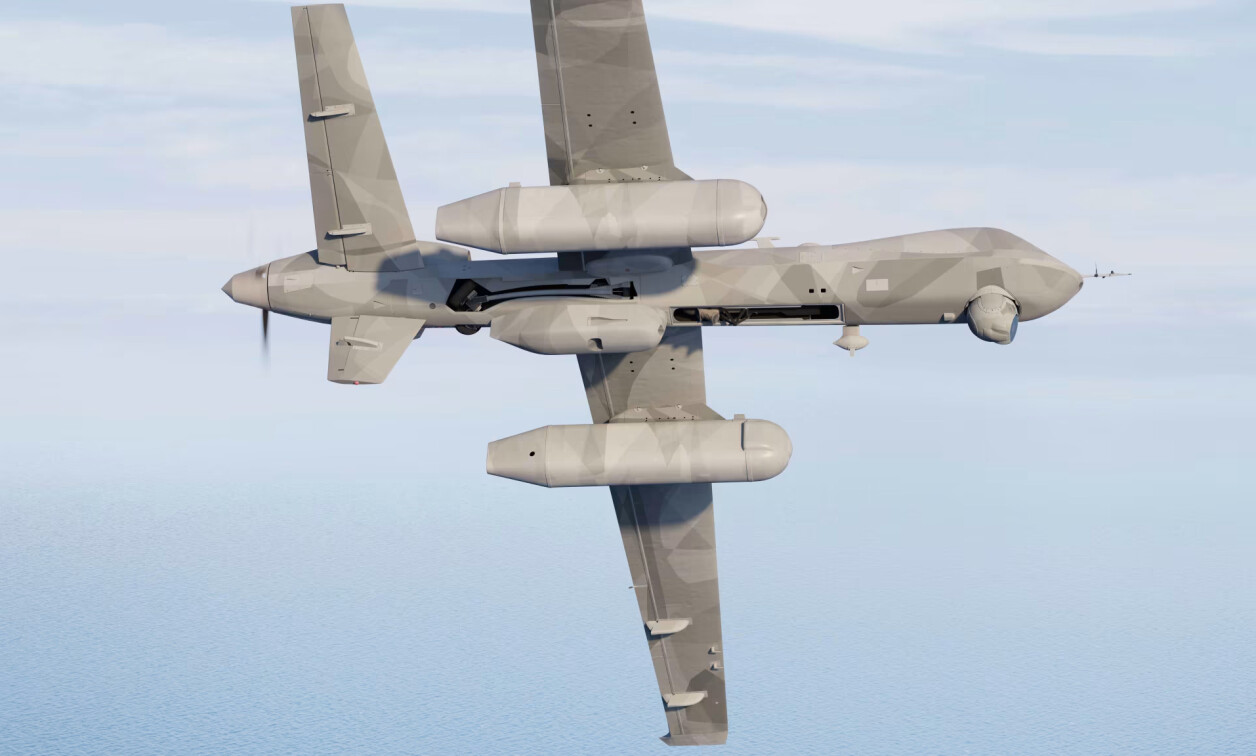
LoyalEye is installed in external payload pods on the MQ-9B. Housing the radar outside the airframe enables GA-ASI to adapt a long-endurance aircraft for airborne surveillance, but the podded configuration must still be supported by electrical power, cooling, structural attachments and data links. The partners have flown the installation and demonstrated sensing functions; the detailed mass, power, drag and operating limits of the configuration have not been specified publicly. Those limits will affect how the aircraft performs on long missions with the additional equipment.
The first flight in May established that the radar-equipped aircraft could operate in the air. The subsequent evaluation added simultaneous target detection and tracking, which are needed before radar observations can be used to construct an air picture. Classification of contacts is a further function, though the partners have not quantified its reliability against different target signatures. Demonstrating the sensor on an aircraft is one stage of integration; acceptance by a military operator would require testing the wider mission system and its links to command users.
A radar positioned at altitude can observe areas obscured from some fixed surface sensors by terrain or the curvature of the Earth. Actual coverage depends on altitude, target characteristics, operating conditions and radar performance. The MQ-9B’s endurance offers a potential means to sustain that observation without carrying a radar crew on board. The companies have not supplied operating-cost comparisons, fleet-availability figures or a confirmed surveillance radius for the LoyalEye configuration, so persistence remains an operational proposition rather than a quantified procurement advantage.
GA-ASI also envisages distributed battle management and command-and-control arrangements. Data from the aircraft could be processed or used through infrastructure ashore, aboard a ship or within an existing crewed airborne early warning platform. That architecture requires reliable communications, consistent track identification and clear authority for decisions based on the radar picture. The Southern California trials established target-tracking functions; they did not certify an end-to-end military command network or any particular weapon-control arrangement.
The partners describe the uncrewed system as complementary to larger airborne early warning and control aircraft. A smaller aircraft could extend coverage or provide an additional surveillance orbit, while a crewed platform may retain a wider command staff, communications suite and sensor complement. Integrating the two would depend on how radar tracks are shared and interpreted across the force. The ability to carry LoyalEye does not by itself make the MQ-9B a direct replacement for a dedicated crewed command aircraft.
The broader MQ-9B family includes SkyGuardian, SeaGuardian and Britain’s Protector variant. GA-ASI has not identified the tested aircraft as an RAF Protector, and no UK selection of LoyalEye has been announced. The company is also developing a separate short take-off and landing MQ-9B configuration for potential naval applications. Adaptation of airborne early warning to that variant would introduce additional aircraft and ship integration requirements beyond the trials completed in California.
GA-ASI is in discussions with prospective customers about the radar-equipped MQ-9B, but has not identified a production buyer or fleet-conversion programme. Flight demonstration, production engineering and service qualification are separate milestones. Operational users would need evidence of sensor behaviour across their target sets, environmental conditions and communications arrangements before they could define an accepted configuration. The current work provides airborne detection and tracking results rather than those later acceptance decisions.
The new flight results establish that an MQ-9B can carry LoyalEye pods and maintain tracks on multiple air and maritime contacts during an evaluation campaign. Saab and GA-ASI can now use those results to inform further integration and customer discussions. The absence of published performance thresholds prevents a like-for-like assessment with existing systems, while the first operational user, final aircraft specification and service date remain open.