IN Brief:
- L3Harris has secured two multi-million-dollar TKMS contracts covering German and Norwegian submarine requirements.
- The equipment will raise and retract submarine masts carrying surveillance, navigation, and communications payloads.
- L3Harris's established mast portfolio includes electric and hydraulic actuation systems, with more than 600 mast units supplied internationally.
L3Harris Technologies has secured two multi-million-dollar contracts from German shipbuilder TKMS for submarine mast-raising equipment and associated electronic control units. The systems will support German and Norwegian submarine requirements, enabling the deployment and retraction of payloads used for surveillance, communications, and navigation.
The awards, confirmed on 2 November, extend L3Harris’s involvement in European naval manufacturing through its established maritime engineering operations in Italy. The contracted equipment forms part of the mechanical and electronic infrastructure used to position sensors and antennas above the surface while a submarine operates at an appropriate depth.
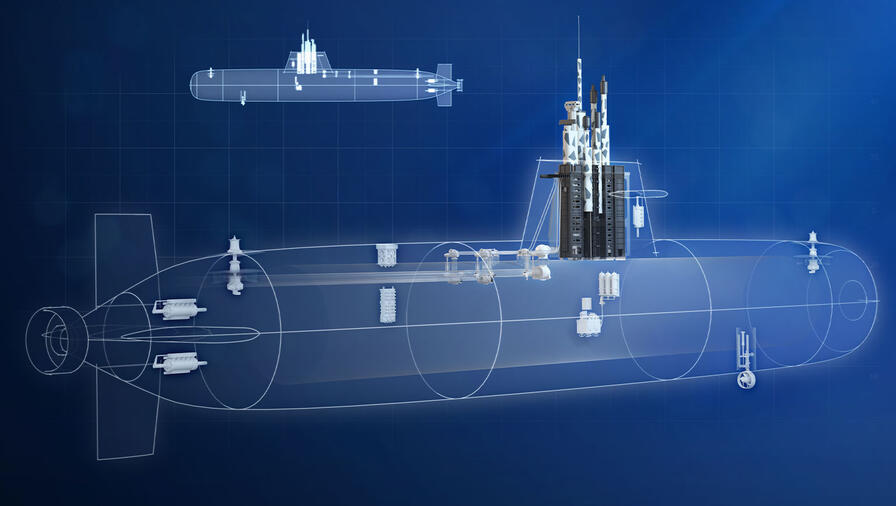
Submarine masts support several functions that require equipment to be raised beyond the surrounding seawater. Optical sensors provide surface observation, radar antennas support detection and navigation, and communications equipment allows the vessel to exchange information through appropriate radio links. The raising mechanism positions these payloads for use before returning them to a protected location within the submarine’s structure.
The mechanical system has to move its payload in a controlled manner while accommodating the loads imposed by the equipment’s mass and operating environment. Extension and retraction involve the interaction of actuators, guides, bearings, and structural supports, with the assembly required to maintain alignment throughout its movement. The design must also account for forces encountered when the mast is exposed to water flow or conditions above the surface.
Maintaining accurate positioning is particularly important where the mast carries optical or electronic equipment. Sensor performance depends partly on the relationship between the payload and its intended field of observation, while repeated movement places demands on the mechanism’s guidance and supporting components. Precision manufacturing and reliable mechanical operation therefore contribute directly to the equipment’s ability to perform its intended function.
The associated electronic control units coordinate the mast’s movement with the submarine’s onboard systems. Commands to raise or lower equipment must be translated into actuator operation while respecting the mechanical limits of the installation. Position indication and suitable equipment protection functions form part of the control architecture required for dependable operation.
L3Harris manufactures a range of mast-raising equipment for submarine applications, including systems using hydraulic or electric actuation. Its electrically actuated products remove the need for hydraulic oil and associated piping, reducing the fluid-handling arrangements required within the installation. Hydraulic systems remain another established option within the manufacturer’s portfolio.
The different arrangements involve distinct engineering requirements. Hydraulic equipment uses pressurised fluid to generate mechanical movement, while electric systems use powered actuators and their supporting controls. Both approaches must provide controlled movement and suitable load handling, with the final installation determined by the requirements of the submarine and the selected equipment.
L3Harris’s product portfolio also includes non-hull-penetrating mast arrangements. These designs allow sensors and antennas to be positioned without requiring the complete mast assembly to pass through the submarine’s pressure hull. The approach changes the relationship between the external equipment and the vessel’s internal structure, with electrical and control connections replacing some of the mechanical arrangements associated with traditional penetrating installations.
Protecting pressure hull integrity is a central consideration in submarine engineering. Equipment installed across the boundary of a pressure hull must preserve its structural and watertight characteristics, while external mechanisms require suitable mounting and support. Non-hull-penetrating architecture provides an alternative means of accommodating sensors and antennas within the vessel’s overall design.
The manufacturer offers mast equipment for several payload categories, including optronic sensors, electronic support measures, radar, communications antennas, and periscope-related installations. Its Universal Modular Mast is designed to support integration of different sensor and antenna combinations within a common mechanical architecture.
These equipment categories place different demands on their supporting mechanisms. Optical sensors require stable positioning and appropriate viewing arrangements, while communications masts must accommodate the electrical connections and physical exposure needed by their antennas. Radar equipment introduces additional requirements associated with antenna installation, signal transmission, and its integration with the submarine’s navigation or surveillance systems.
Acoustic performance is another consideration in submarine mast design. Moving mechanical equipment can generate vibration and noise, while the transmission of those effects through supporting structures can influence the vessel’s acoustic characteristics. L3Harris’s mast technology incorporates controlled raising and lowering arrangements intended to reduce operating noise alongside maintenance requirements.
Service life also influences the equipment’s engineering and manufacturing requirements. Submarine masts operate within a demanding marine environment, requiring suitable materials, corrosion protection, mechanical durability, and access for inspection and maintenance. Actuators and their control equipment must remain compatible with the vessel’s support arrangements throughout the intended operational period.
L3Harris reports that its mast systems have been supplied to numerous naval fleets, with more than 600 units delivered internationally. That installed base provides the manufacturer with experience in equipment development, production, and support across different submarine configurations. Its Italian maritime operations provide the specialist engineering and industrial capabilities associated with this product range.
TKMS is undertaking submarine construction work for Germany and Norway, including their joint Type 212CD programme. That wider activity involves suppliers responsible for propulsion, sensors, electronic systems, mechanical equipment, and structural components. The integration of specialist mast equipment requires its mechanical and control interfaces to be accommodated within the relevant submarine design.
The shared German-Norwegian submarine programme provides an industrial setting for cooperation between the countries’ naval suppliers. Equipment commonality can support maintenance planning, replacement parts, and technical support where the same configurations are selected for different vessels. The precise equipment quantities and configurations associated with the L3Harris contracts will be governed by the TKMS programme requirements.
Manufacturing the mast systems will involve precision mechanical components, actuator assemblies, electronic control equipment, and verification of their integrated operation. Factory testing must establish that the mechanisms move correctly and that their controls respond as intended before the completed equipment enters the wider shipbuilding and installation process.
The two contracts add further European submarine work to L3Harris’s established maritime portfolio. Delivery of the raising mechanisms and associated control units will support TKMS’s continuing integration of surveillance, communications, and navigation equipment for German and Norwegian naval customers.