IN Brief:
- Greece has contracted three Embraer KC-390 Millennium aircraft through Portugal, with options for a further three.
- The €590m agreement includes mission equipment, training, technical support, and the aircraft's introduction into Hellenic Air Force service.
- Portugal will train Greek aircrews and maintainers at Beja and expects €33m in industrial returns from the three-aircraft sale.
Embraer will supply three KC-390 Millennium military transport aircraft to Greece under a government-to-government agreement signed with Portugal on 2 November. The approximately €590 million contract covers the aircraft, mission equipment, training, and operational support, with the first delivery planned for 2027 and options allowing the Hellenic Air Force to acquire three additional aircraft.
The agreement was signed in Athens during a visit by Portuguese Defence Minister Nuno Melo, who met his Greek counterpart Nikos Dendias. It establishes a long-term operational partnership between the two countries, drawing on Portugal’s experience introducing the KC-390 into military service. The confirmed acquisition covers three aircraft, with further deliveries scheduled for 2029 and 2031.
Portugal will oversee aspects of production, aircraft acceptance, and delivery, while providing support for the Greek fleet’s entry into service. The arrangement includes logistical assistance and the initial qualification of aircrews and maintenance personnel at Beja, where the Portuguese Air Force operates its KC-390 training facilities. Those activities connect the aircraft purchase with the technical and organisational preparation required to operate the new fleet.
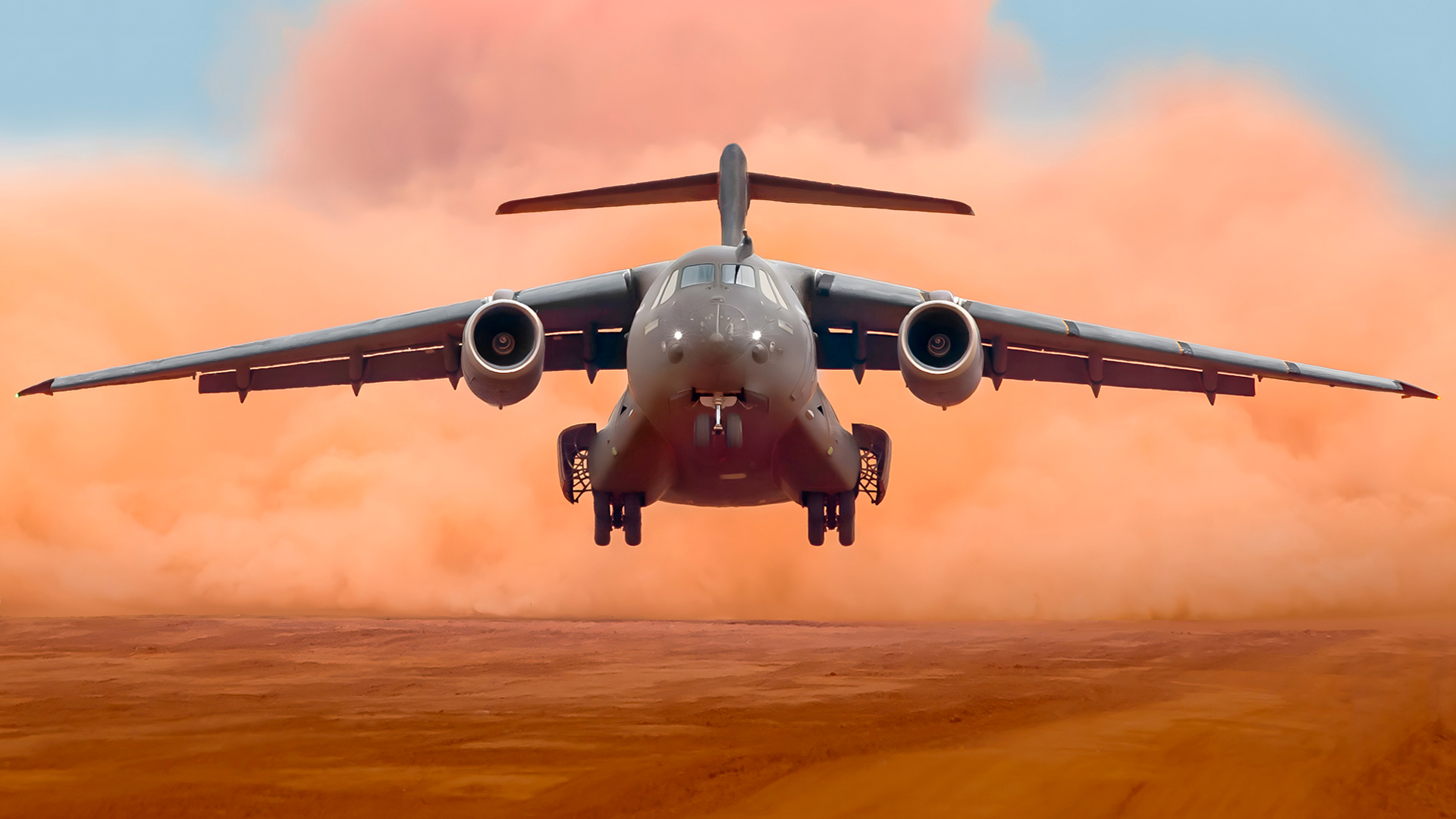
The KC-390 is a twin-engine military transport designed for airlift, aerial refuelling, and other specialist missions. Embraer specifies a maximum payload of 26 tonnes and a speed of approximately 470 knots, placing the aircraft within the medium military transport category. Its cargo compartment, rear loading ramp, and mission equipment support the movement of personnel, vehicles, and other cargo, alongside airdrop and medical evacuation tasks.
The aircraft’s jet propulsion provides a different operating profile from the turboprop aircraft traditionally used in this transport category. Higher cruise speed can reduce transit times between suitable airfields, while the KC-390 is also designed to operate from temporary or unpaved runways. Actual range and payload performance depend on the operating conditions, fuel load, runway characteristics, and configuration selected for the mission.
Aerial refuelling is a central capability within the Greek procurement. The KC-390 can be equipped with refuelling equipment that allows it to transfer fuel to compatible aircraft, while the aircraft itself is also capable of receiving fuel in flight. The tanker function expands the range of missions available to the Hellenic Air Force, linking transport operations with the support of other military aircraft.
Tanker operations require equipment and procedures beyond those used for conventional cargo transport. Fuel transfer systems must be integrated with the aircraft’s control and monitoring equipment, while operating crews must manage the positioning and coordination required between participating aircraft. Aircraft compatibility, refuelling equipment configuration, and crew qualification determine which operations can be conducted using the installed system.
The Greek acquisition includes aircraft in the Portuguese NATO configuration, according to Portugal’s Ministry of Defence. That arrangement draws on equipment and operating standards developed through Portugal’s existing programme. The associated package includes mission systems and support for the aircraft’s entry into service, creating continuity between the established Portuguese fleet and the new Greek operation.
Portugal’s contribution extends through training and technical support. At Beja, Greek personnel will use established facilities and procedures for operating and maintaining the KC-390, supported by experience gained from the Portuguese Air Force’s introduction of the aircraft. The programme will cover the transition into service as well as the initial training needed to operate the new fleet.
Maintenance personnel require knowledge of the aircraft’s propulsion, electrical, hydraulic, avionics, and mission systems, together with access to the approved technical documentation and support equipment. Establishing those capabilities before the first aircraft arrives reduces the amount of work that must be completed during its introduction. Spare parts, servicing arrangements, and maintenance planning also form part of the continuing support programme.
Aircrew training involves familiarisation with the aircraft’s digital cockpit, mission equipment, performance characteristics, and operating procedures. The different demands of cargo transport, aerial refuelling, and other missions require appropriate qualifications and practical preparation. Portugal’s established training infrastructure provides the setting for the initial Greek programme, with subsequent operational development taking place through the Hellenic Air Force.
The agreement carries an industrial component for Portugal. Its defence ministry expects a return of €11 million for each aircraft sold under the arrangement, giving a total of €33 million for the three confirmed aircraft. The government intends to direct that funding towards Portuguese industry, reflecting the country’s participation in KC-390 development, manufacturing, and adaptation to NATO requirements.
Portugal’s involvement in the aircraft programme includes industrial production and technical development activities undertaken with Embraer. The latest agreement connects that established manufacturing participation with a new European customer, while giving Greece access to operational support from an air force already using the aircraft. The arrangements provide a common platform for cooperation between the countries’ aircrews, maintainers, and programme teams.
The aircraft will also expand Embraer’s European defence customer base. Greece becomes the seventh European country to select the KC-390, joining Portugal, Hungary, the Netherlands, Austria, the Czech Republic, and Sweden. These fleets are being introduced through separate national procurement programmes, with operational support and equipment configurations determined by their respective contracts.
Beyond Europe, Embraer has secured KC-390 customers including Brazil, South Korea, Uzbekistan, the United Arab Emirates, and Colombia. The international programme gives the manufacturer an expanding order base for military aircraft production and support, while operators acquire a common airframe capable of undertaking several transport and specialist missions.
Portugal’s government-to-government arrangement with Greece converts an existing bilateral defence cooperation relationship into a defined aircraft acquisition and support programme. The €590 million package includes the equipment and services needed for entry into service, while the optional additional aircraft remain subject to future purchasing decisions.
The first Greek KC-390 is scheduled for delivery in 2027, followed by the other two aircraft in 2029 and 2031. The manufacturing and acceptance programme will proceed alongside preparations at Beja, where Greek crews and maintainers will begin their initial qualification before operating the aircraft in Hellenic Air Force service.