IN Brief:
- British and German National Armaments Directors signed a Sting Ray procurement implementing arrangement on 2 November.
- The agreement advances earlier cooperation on the future lightweight torpedo, whose UK development programme includes prototypes and underwater trials.
- German P-8A maritime patrol aircraft are already operating periodically from RAF Lossiemouth under separate bilateral arrangements.
The UK Ministry of Defence and Germany’s Federal Ministry of Defence have advanced joint Sting Ray lightweight torpedo procurement through a new implementing arrangement signed by their National Armaments Directors. The agreement was concluded on 2 November during the second Defence Ministerial Council held under the Trinity House partnership, extending cooperation on a future anti-submarine warfare capability.
The arrangement follows an agreement signed in May 2025 to pursue joint procurement of new Sting Ray torpedoes under development. The two governments had previously identified common acquisition of the weapon as an objective of their October 2024 Trinity House Agreement. The latest document provides a further step in implementing those commitments, connecting the existing bilateral procurement initiative with ongoing British torpedo development.
Sting Ray is the UK’s lightweight anti-submarine torpedo family, designed for deployment from aircraft and naval vessels. The weapon combines underwater propulsion with onboard acoustic sensing and guidance equipment, allowing it to search for and engage submarine targets after launch. Its installation aboard different platforms requires the weapon and the host’s mission systems to operate through compatible equipment, procedures, and safety arrangements.
The Royal Navy operates Sting Ray Mod 1 from surface vessels and maritime helicopters, including the Merlin and Wildcat fleets. The weapon is designed to operate against submarines in both deeper ocean environments and shallower coastal waters, where acoustic conditions and seabed characteristics can complicate target detection and classification. Its guidance system uses active and passive acoustic homing to support the engagement sequence.
Active acoustic sensing involves transmitting sound into the surrounding water and examining reflected signals, while passive sensing processes acoustic energy already present in the environment. The combination provides different sources of information for the weapon’s guidance equipment. Target movement, acoustic propagation, and environmental conditions influence the information available to the torpedo as it proceeds through its search and engagement sequence.
British development of the next Sting Ray configuration is being undertaken by BAE Systems under a £60 million Ministry of Defence contract awarded in September 2024. The four-year assessment phase covers engineering development, prototype manufacture, and in-water trials. The programme includes additional deployment options intended to extend the weapon’s capabilities as underwater threats and operating requirements evolve.
BAE Systems is conducting the work through its Maritime Services operations in Portsmouth and specialist manufacturing facilities at Hillend in Fife. The contract supports more than 80 engineering positions at Portsmouth and approximately 20 manufacturing jobs at Hillend, alongside work for British technology suppliers. Its industrial scope covers the development and testing of new equipment as well as the manufacturing activity required to produce prototype torpedoes.
Prototype construction and underwater testing provide the means to evaluate new design features under controlled conditions. Guidance equipment, propulsion performance, onboard controls, and the interfaces used by launch platforms must work together within the approved configuration. Information collected during the assessment phase will support subsequent decisions on the weapon’s development, qualification, and production arrangements.
Germany’s participation introduces a second government customer into the procurement planning for the future weapon. Common requirements can be addressed through the bilateral process, including equipment specifications, qualification expectations, training arrangements, and the support needed during service. The contractual structure and eventual order quantities will be established through the next stages of procurement and programme delivery.
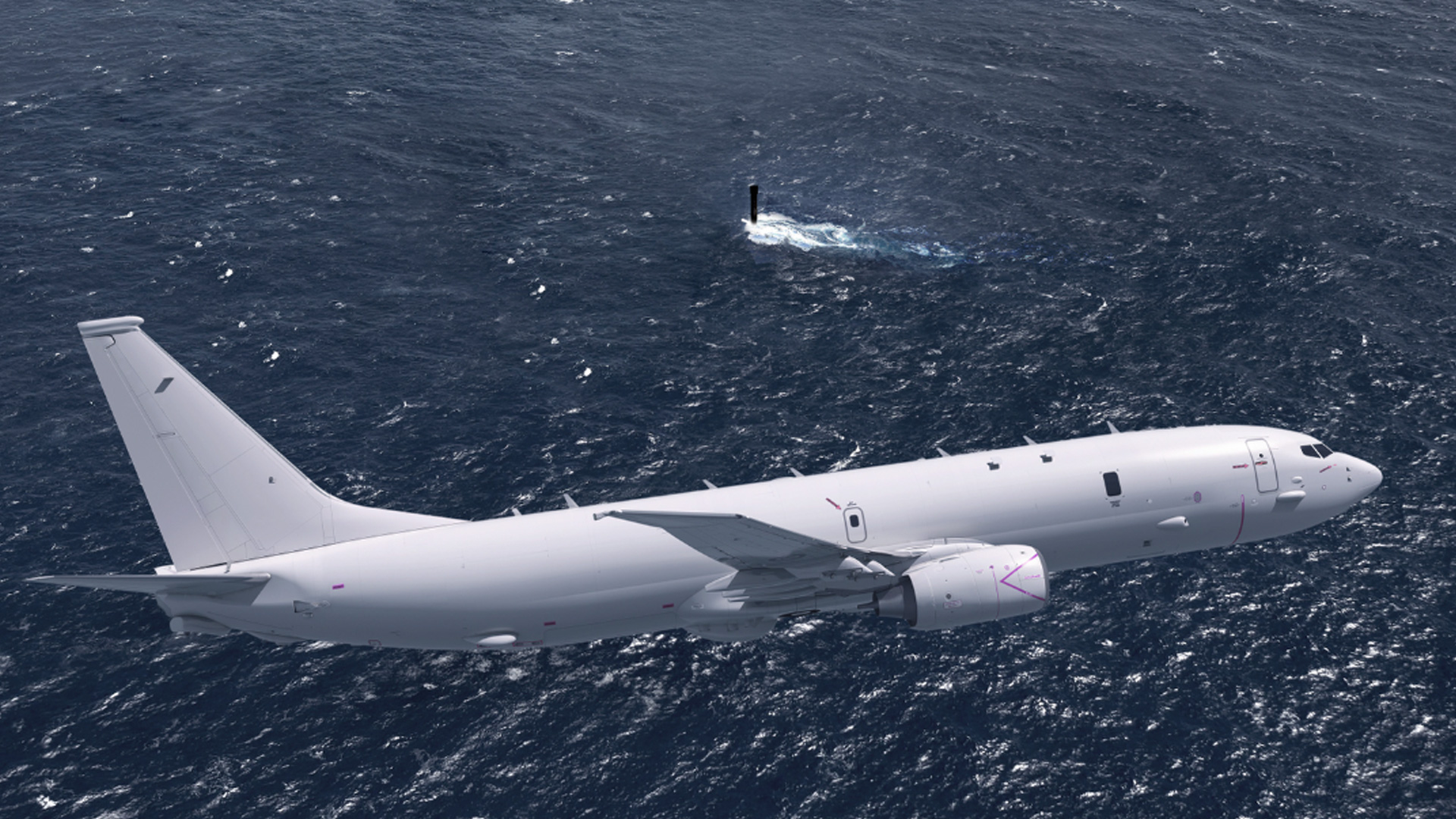
The arrangement also sits alongside closer cooperation between the two countries’ maritime patrol aircraft fleets. The Royal Air Force operates Boeing P-8A Poseidon aircraft from RAF Lossiemouth, while the German Navy has been introducing the same aircraft type into its own maritime surveillance capability. Both forces use the platform for operations involving long-range surveillance, submarine detection, and coordination with other naval assets.
The RAF selected Sting Ray Mod 1 for integration with its P-8A fleet in November 2023, supplementing its existing use of the American Mk54 lightweight torpedo. That programme requires the British weapon to be integrated with the aircraft’s mission and weapons systems. Aircraft carriage, weapon release, communications, and safety interfaces are among the functions that must be accommodated before a new weapon configuration can enter service.
The common P-8A platform creates an established basis for cooperation on training and operational procedures. Germany’s involvement in the joint Sting Ray procurement initiative provides an additional opportunity to align future capability requirements, although the 2 November agreement does not itself establish a completed German aircraft weapon integration or a final delivery schedule.
German Navy P-8A aircraft operated from RAF Lossiemouth during Exercise Dynamic Mongoose in May 2026 and later during Exercise Strike Warrior, which concluded in October. These deployments put into practice an earlier agreement allowing German maritime patrol aircraft to use British facilities periodically. The activity strengthens cooperation in the North Atlantic and North Sea, where both countries maintain maritime surveillance and anti-submarine responsibilities.
Operating aircraft from another country’s military airfield requires compatible ground handling, maintenance support, communications arrangements, and mission planning procedures. Crews and supporting personnel also need to coordinate the use of equipment and facilities, providing practical experience in working alongside another force operating the same aircraft type.
The maritime activities form part of a wider programme of bilateral defence-industrial cooperation. During the November ministerial council, Britain and Germany also reported progress on their Deep Precision Strike initiative, which targets a future capability with a range exceeding 2,000 kilometres. The governments agreed to extend their Cyber Lighthouse cooperation to include artificial intelligence, alongside further work on defence space capabilities.
The Sting Ray implementing arrangement provides a further contractual and organisational step within that partnership. BAE Systems’ development programme continues through prototype engineering and underwater trials, while British and German procurement teams advance the arrangements governing their future requirements. Subsequent programme decisions will establish equipment quantities, qualification responsibilities, and the timetable for delivering the shared torpedo capability.