IN Brief:
- MSM North America has been selected for a five-year US Army ammunition manufacturing infrastructure framework worth up to $4.2bn across all participating contractors.
- The programme covers seven facilities producing explosives, propellants, ammunition components, and finished rounds.
- MSM North America is already delivering the Iowa Future Artillery Complex, a project worth up to $635m and targeted to enter operation in 2029.
Czechoslovak Group (CSG) has secured eligibility to compete for US Army ammunition plant modernisation projects through its American subsidiary MSM North America, following selection under a five-year procurement framework covering seven government-owned manufacturing facilities.
The Multiple Award Task Order Contract (MATOC), administered by Army Contracting Command – Rock Island, has a combined ceiling of approximately $4.2bn. It allows the Army to invite selected contractors to compete for individual projects involving industrial infrastructure, production equipment, automation, and manufacturing capacity.
The $4.2bn figure applies collectively to the framework, not to MSM North America. Selection does not guarantee the company any particular contract value, manufacturing programme, or volume of work, with subsequent orders to be awarded through separate competitions.
The framework covers facilities operated under government-owned, contractor-operated arrangements, commonly described as GOCO. The US government owns the industrial infrastructure, while private companies undertake specified manufacturing and operational responsibilities under contractual agreements.
Modernisation activities can include the construction of new buildings, replacement or improvement of existing production lines, installation of advanced manufacturing equipment, and commissioning of additional industrial capacity. The precise work undertaken will depend on the Army's requirements and the task orders awarded to successful contractors.
MSM North America's selection follows an established manufacturing infrastructure project at Iowa Army Ammunition Plant. In August 2025, the company secured a contract worth up to $635m to design, construct, and commission the Future Artillery Complex, a new facility intended to modernise the production of large-calibre ammunition.
Jason Gaines, CEO of MSM North America, said the framework selection was an extension of the company's existing relationship with the Army.
"We are building on our experience with the Future Artillery Complex project, where we have demonstrated our ability to manage a complex industrial project in close cooperation with the U.S. Army and our technology partners," he said.
The Iowa contract provides MSM North America with experience managing a programme that combines construction, equipment integration, and manufacturing development. The company acts as prime contractor and systems integrator, coordinating the different elements required to bring the new facility into operation.
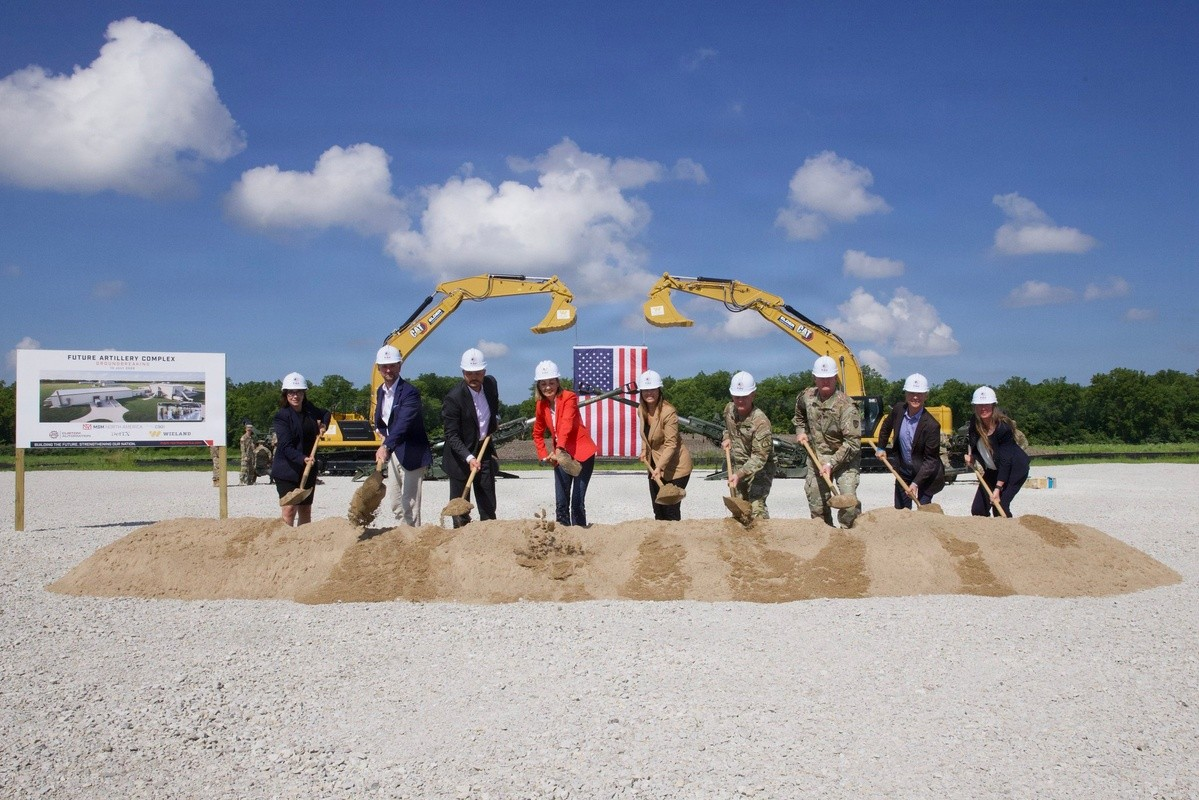
Construction began following a groundbreaking ceremony on 15 July 2026. The US Army identified the project as a replacement for an ageing production line whose origins extend to the Second World War, with the new complex designed to provide a more flexible manufacturing arrangement.
The planned development occupies approximately 201.6 acres and includes 13 buildings, providing 123,200 square feet of operational space. The Army has described the facility as incorporating automated production equipment, digital integration, and modern safety arrangements.
Its manufacturing scope covers activities associated with 155mm ammunition, including component assembly, energetic loading, projectile conditioning, and final packaging. The Army intends the installation to support different production requirements and provide greater flexibility when adjusting output.
CSG states that the facility will be capable of loading up to 36,000 rounds of 155mm ammunition per month once completed. The company expects operations to begin in 2029 and reports that the project remains on schedule and within budget.
Those figures describe planned capacity and company-reported progress rather than output already achieved. The facility will still require completion of construction, equipment installation, commissioning, and the relevant acceptance procedures before routine production can begin.
Digital integration forms part of the Army's planned manufacturing approach. Production systems are intended to provide information supporting process monitoring and control, helping operators manage equipment performance and maintain records across the different stages of manufacture.
Automation also forms part of the facility's safety objectives. Certain ammunition manufacturing activities involve hazardous materials, making the separation of personnel from selected operations and the use of controlled industrial equipment important considerations in the design of production infrastructure.
The wider MATOC arrangement extends beyond the Iowa project to facilities specialising in different parts of the ammunition supply chain. Holston Army Ammunition Plant in Tennessee produces military explosives, while Radford Army Ammunition Plant in Virginia manufactures propellants and other energetic materials.
Lake City Army Ammunition Plant in Missouri specialises in small-calibre ammunition. Iowa supports the loading and assembly of medium- and large-calibre ammunition, while Scranton Army Ammunition Plant in Pennsylvania manufactures metallic components used in artillery rounds.
The Quad City Cartridge Case Facility in Illinois produces large-calibre cartridge cases, and Milan Army Ammunition Plant in Tennessee is also included within the scope of the framework. The seven facilities therefore represent different industrial activities rather than identical manufacturing operations.
Projects at those locations will require engineering approaches appropriate to their existing equipment and intended production functions. Infrastructure supporting energetic materials has different operating and safety requirements from facilities manufacturing metallic components or undertaking final ammunition assembly.
Modernisation can also involve work within operating industrial sites. Construction schedules, equipment installation, maintenance access, and other site activities must be coordinated with the requirements of existing operations and the restrictions applicable to each facility.
The MATOC arrangement allows the Army to procure these projects separately. Each competition can define its own requirements for engineering, infrastructure, equipment, delivery, and acceptance, with the successful contractor responsible for the work specified in the resulting task order.
The contractual structure also allows different companies to compete for work suited to their industrial capabilities. A place on the framework establishes eligibility, but the actual distribution of contracts will depend on future requirements and the outcome of those competitions.
CSG's European operations provide experience in ammunition manufacturing and associated industrial engineering. The group's businesses cover several stages of the production chain, including energetic materials, propellants, metallic components, and finished ammunition.
Jan Marinov, CEO of CSG Defence Systems Division, said: "Thanks to our high degree of vertical integration, we possess expertise across the entire production chain, from energetic materials to finished products."
That industrial scope gives the group experience across different manufacturing disciplines, although the US framework does not specify which capabilities MSM North America will be required to provide. Individual projects will determine whether the company is responsible for construction, equipment integration, production line modernisation, or other contracted services.
MSM North America was established in 2024 to develop the group's presence in the United States. Headquartered in St Petersburg, Florida, it works with American contractors and specialists from CSG's European operations on industrial projects for the US defence sector.
The subsidiary intends to use substantially the same project team and management approach developed for the Iowa Future Artillery Complex when pursuing additional work. Its existing contract demonstrates involvement in a major ammunition manufacturing development, but does not guarantee an advantage in any subsequent competition.
The US Army's modernisation effort reflects the need to maintain and expand an industrial base containing facilities that have operated for decades. Improving manufacturing flexibility, replacing ageing infrastructure, and introducing new technologies can support the continued production of different ammunition types under changing procurement requirements.
The scale of investment will depend on the projects commissioned at individual plants. The MATOC ceiling establishes the maximum combined value available under the framework, while actual expenditure will be determined through task orders and the funding committed to those contracts.
MSM North America's confirmed major manufacturing infrastructure programme remains the Iowa Future Artillery Complex, with operations currently targeted for 2029. Any additional work secured through the new framework will become identifiable as the Army issues individual competitions and awards contracts to participating suppliers.