IN Brief:
- The Republic of Korea Air Force has selected four Sikorsky S-92A+ helicopters for presidential transport.
- The upgraded aircraft incorporates new engines, a Phase IV main gearbox, and increased payload or fuel capacity.
- KAEMS will complete mission equipment in South Korea, while Sikorsky expands S-92A+ manufacturing capacity in the United States.
Sikorsky has been selected to deliver four S-92A+ helicopters to the Republic of Korea Air Force under its Presidential Helicopter II programme, introducing an upgraded version of the aircraft already used for government transport.
The new helicopters will incorporate upgraded engines, a Phase IV main gearbox, and increased capacity for payload or fuel. Korea Aviation Engineering & Maintenance Service (KAEMS), a subsidiary of Korea Aerospace Industries, will undertake mission equipment completion within South Korea.
The agreement also covers additional special mission equipment, spare parts, field service representation, and sustainment support. Neither the contract value nor the delivery schedule has been disclosed.
South Korea has operated three S-92 helicopters for presidential transport since 2007. Selecting the S-92A+ continues that platform relationship while introducing mechanical and performance improvements developed for the latest production configuration.
The existing fleet provides an operational reference for the new aircraft, although the updated equipment will require its own maintenance, training, and technical support arrangements. Sikorsky confirmed the selection on 6 November.
The S-92A+ retains the basic configuration of the twin-engine S-92 helicopter while introducing changes to its propulsion and transmission systems. The revised design is intended to increase operating flexibility and address requirements associated with continued production and fleet support.
The Phase IV main gearbox is a principal element of the upgrade. A helicopter's main transmission transfers engine power to the rotor system, operating under substantial mechanical loads while accommodating the speed and torque requirements of the aircraft.
Gearbox reliability affects both aircraft availability and maintenance requirements. Components must operate within the specified mechanical and thermal conditions, and their condition must be managed through approved inspection, servicing, and replacement procedures.
Developing an updated transmission requires manufacturers to consider the relationship between component durability, lubrication, operating temperatures, and the aircraft's approved performance limits. Any revised design must also be assessed as part of the complete helicopter rather than independently of the engines and rotor system.
Sikorsky has identified improved performance and reliability among the objectives for its updated drivetrain. The company has not published the detailed maintenance intervals or reliability figures that will apply to South Korea's presidential configuration.
The upgraded engines provide another element of the performance improvement. Additional available power can increase the flexibility with which an aircraft carries passengers, equipment, and fuel, particularly where operating conditions place greater demands on the propulsion system.
Actual performance depends on factors including aircraft weight, altitude, ambient temperature, and the equipment installed. A greater available payload does not automatically translate into an equivalent increase in operating range, because fuel and mission equipment compete for part of the aircraft's allowable weight.
Sikorsky describes the S-92A+ as providing increased payload or fuel capacity compared with the earlier aircraft. The precise allocation between those requirements will depend on the final configuration selected by the Republic of Korea Air Force.
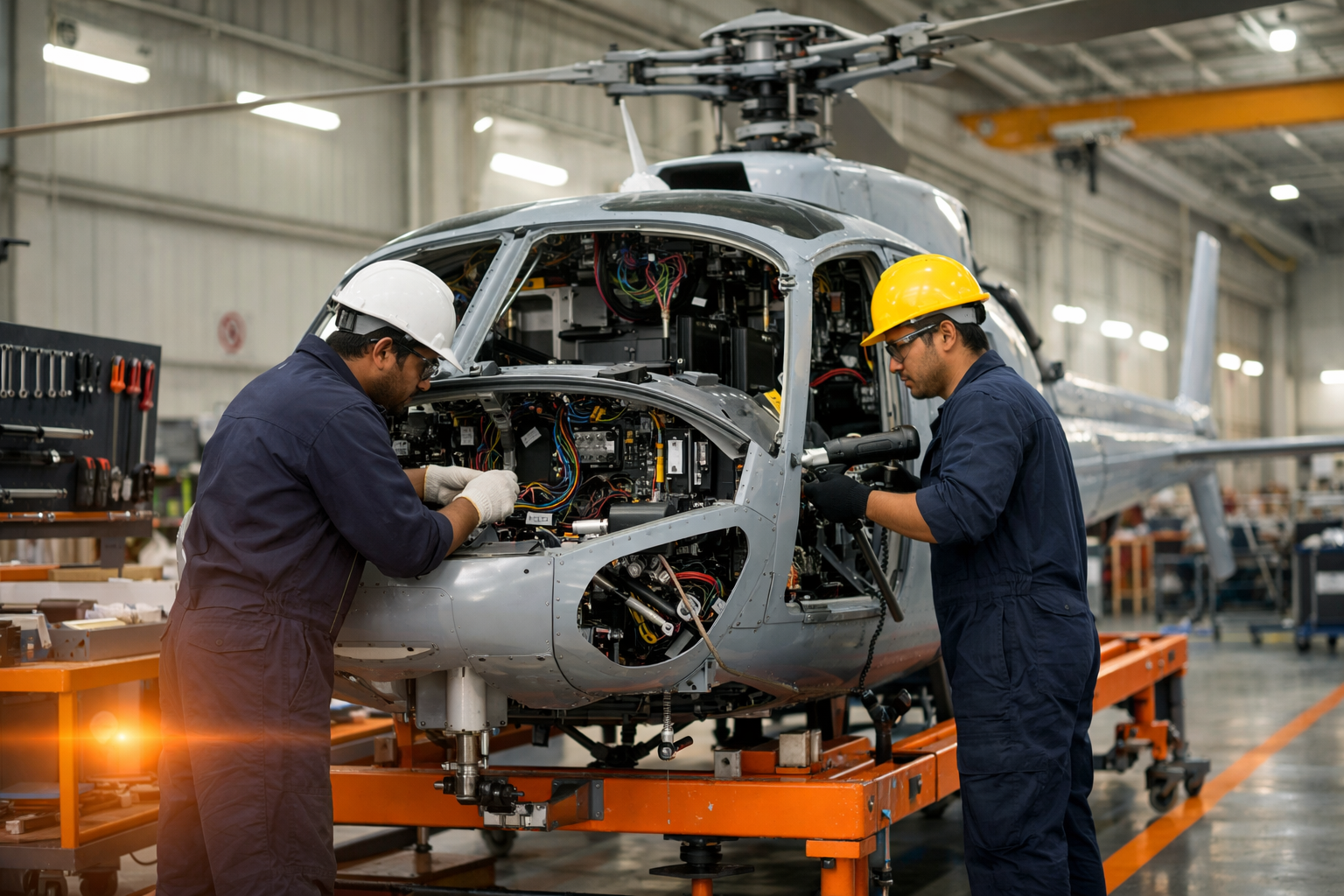
Mission equipment completion by KAEMS introduces a domestic industrial component to the programme. The Korean company will undertake the work required to install and complete selected equipment for the aircraft's intended role.
The companies have not identified the full equipment package to be completed locally. Consequently, the arrangement does not establish which communications, cabin, protective, or other specialist systems will be fitted to the aircraft.
Integration work of this kind must be coordinated with the helicopter's existing electrical and structural architecture. Additional equipment can introduce requirements involving electrical loading, wiring, mounting arrangements, electromagnetic compatibility, and the distribution of weight within the airframe.
Maintenance and technical documentation must also reflect the installed configuration. Equipment incorporated during mission completion becomes part of the aircraft's support requirements, and subsequent modifications must be controlled to preserve compatibility with the approved installation.
KAEMS' involvement provides a local engineering capability for the programme while Sikorsky continues to manufacture and support the underlying aircraft platform. The precise allocation of future maintenance responsibilities has not been disclosed.
The manufacturer's wider S-92 fleet has accumulated more than 2.6 million flight hours, with more than 300 aircraft delivered across 28 countries. Sikorsky also reports an average lifetime availability rate exceeding 90% for the global fleet.
Those figures cover several aircraft variants and operating roles, including offshore transport, search and rescue, and government aviation. They provide background on the platform's operating history but are not performance guarantees for the four new Korean helicopters.
The S-92 also provides the airframe basis for the US Marine Corps' VH-92A presidential helicopter. That aircraft follows a separate military development and mission equipment programme, and its configuration should not be treated as identical to the helicopters selected by South Korea.
Sikorsky is increasing S-92A+ production activity at Stratford, Connecticut, and Owego, New York. The company reports manufacturing capacity of up to 12 aircraft per year, supporting government customers and other operators adopting the updated variant.
Production capacity is not equivalent to confirmed annual deliveries. Manufacturing output will depend on customer orders, component availability, equipment installation, and the production arrangements maintained across the two facilities.
The S-92A+ programme must also accommodate customers with differing mission requirements. Common aircraft components can support manufacturing efficiency and spare parts management, while specialised equipment requires configuration-specific installation, testing, and support.
South Korea's previous experience with the aircraft family may provide continuity in established maintenance knowledge and operating procedures. Nevertheless, the new gearbox, propulsion equipment, and mission installation will need to be supported under the requirements applicable to the upgraded configuration.
The selection establishes the aircraft type and principal domestic mission completion partner for Presidential Helicopter II. The next confirmed milestones will be the final equipment specification, the delivery arrangements, and the acceptance of the four aircraft into Republic of Korea Air Force service.