IN Brief:
- Tonbo Imaging has received an Indian defence order worth approximately ₹35.62 crore, including taxes.
- The contract covers uncooled clip-on thermal weapon sights and associated support equipment.
- Delivery is required within 52 weeks, while additional purchase options remain at the customer's discretion.
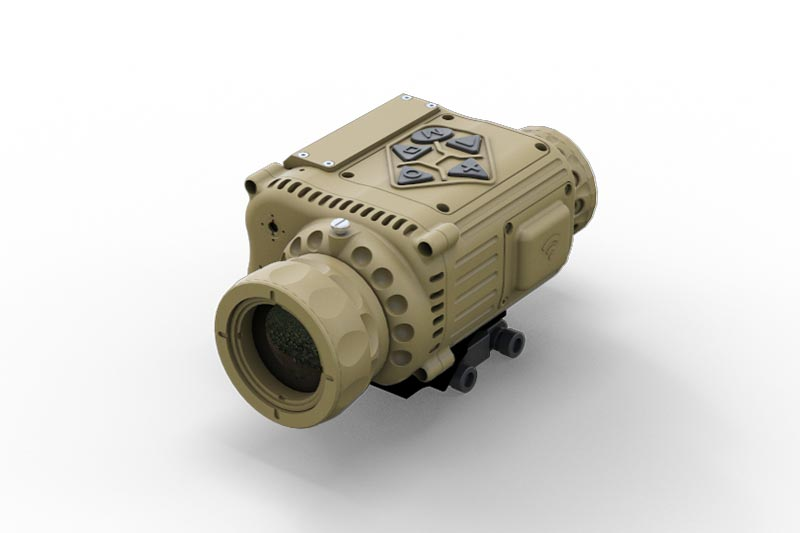
Tonbo Imaging India has secured a Ministry of Defence order worth approximately ₹35.62 crore for clip-on thermal weapon sights and associated support equipment. The Bengaluru-based defence electronics manufacturer will supply uncooled infrared systems intended to provide night observation capability for personnel equipped with assault rifles.
The contract was disclosed to India’s stock exchanges on 18 November 2026 and requires deliveries in two lots within 52 weeks of its effective date. It includes a 24-month warranty and separate option and repeat-order provisions, each allowing the customer to purchase up to 50% of the initial quantity. Neither provision represents a confirmed additional order.
Tonbo has not disclosed the number of sights covered by the initial contract. The published value includes taxes and associated support equipment, so dividing the award by an assumed unit quantity would not provide a reliable equipment price. The company has also not identified the military formations expected to receive the systems or the schedule assigned to each delivery lot.
The ordered sight is based on uncooled thermal imaging technology, using a detector that responds to infrared radiation associated with the temperature of objects and their surroundings. This differs from conventional night-vision image intensification, which amplifies available light. Thermal imaging can provide useful contrast in darkness without requiring the same level of ambient visible illumination.
The resulting image is determined by differences in infrared radiation rather than the colours visible to the human eye. A person, vehicle, or other object may appear distinct from its background where sufficient thermal contrast exists. The usefulness of that contrast varies with environmental conditions, surface characteristics, and the sensitivity and configuration of the imaging system.
Uncooled infrared detectors avoid the cryogenic cooling arrangements required by some other thermal imaging technologies. Removing the need for a dedicated cooling system can simplify equipment packaging and reduce demands on power, weight, and maintenance. Actual performance nevertheless depends on the detector, optics, electronics, processing software, and thermal management of the complete product.
Tonbo describes its weapon sight as compact and lightweight, with configurations supporting rifle-mounted, helmet-mounted, and handheld use. The ability to employ an imaging system in several arrangements can improve equipment flexibility, although the physical mounting, power supply, and operating requirements will differ according to the configuration.
When installed as a clip-on sight, an imaging device must remain mechanically stable and compatible with the equipment to which it is attached. Optical alignment, mounting repeatability, and the relationship between the thermal image and the operator’s existing sighting arrangement are important design considerations. The manufacturer has not released the precise mounting specification for the newly awarded contract.
The thermal imaging chain begins with optics that collect infrared radiation and direct it towards the detector. Electronic circuits then read and process the resulting measurements, producing image information suitable for presentation on a display. Detector calibration and processing functions help manage differences between individual sensing elements and the conditions under which the equipment operates.
The quality of the resulting image depends on several interacting factors. Detector resolution influences the amount of spatial detail available, while field of view affects how much of the surrounding scene can be observed at once. Optical characteristics, image processing, display performance, and power constraints also influence the equipment’s practical usefulness.
Neither Tonbo nor the Ministry of Defence has disclosed the detector resolution, spectral band, operating endurance, field of view, or detection range specified for this order. The manufacturer’s broader portfolio contains several thermal and electro-optical products, but specifications from those devices cannot automatically be attributed to the equipment covered by the November contract.
Thermal imaging also has operating limitations. The apparent contrast between an object and its background can diminish when surrounding surfaces reach similar temperatures, while atmospheric conditions may reduce the infrared radiation reaching the detector. Reflections and other environmental effects can complicate interpretation, particularly where a scene contains several materials with different thermal properties.
The company’s development and manufacturing activities include imaging cores, optics, embedded electronics, and software. Tonbo identifies these capabilities as part of its own intellectual property portfolio and describes the newly ordered sight as designed, developed, and manufactured in India. That provides a domestic industrial basis for the contract, although the company has not disclosed a component-level breakdown of local sourcing.
Tonbo also supplies other electro-optical and targeting equipment, including thermal binoculars, surveillance payloads, and systems intended for integration with military platforms. Its existing product development activities provide relevant experience in optical design and electronic integration, but the new award is specifically for clip-on thermal sights and their associated support equipment.
Manufacturing portable thermal equipment requires consistent detector performance, optical alignment, environmental protection, and electronic calibration across successive units. A completed assembly must operate within the intended conditions while providing an image that meets its specified requirements. Testing and inspection are therefore integral to production rather than activities reserved for the development phase.
Mechanical reliability is particularly important for equipment attached to a weapon or carried by an individual. Repeated handling, vibration, environmental exposure, and mounting changes place demands on the enclosure and internal assemblies. The contractual specification may define particular qualification requirements, but the company has not published the complete standards or acceptance tests applicable to this order.
The 24-month warranty establishes a defined period of supplier responsibility after delivery under the agreed terms. Through-life support may involve repair, replacement components, technical documentation, and maintenance arrangements, depending on the equipment configuration and the customer’s requirements. The disclosed contract confirms associated support equipment but does not itemise its contents.
The purchase also illustrates the relationship between domestic technology development and military equipment procurement. Tonbo participates in India’s defence electronics market as a manufacturer of locally developed systems, while the Ministry of Defence requires equipment that can be supplied, accepted, and supported over its intended service life.
Although the contract contains provisions for additional quantities, their exercise remains entirely at the customer’s discretion. An option clause provides a possible route to extending the purchase without establishing that the additional equipment is needed or funded. The repeat-order provision similarly cannot be treated as part of the confirmed ₹35.62 crore award.
The initial delivery programme will be completed in two lots over the specified 52-week period. The principal milestones are production of the ordered equipment, delivery to the Ministry of Defence, and acceptance under the contract terms. Any further orders would require separate customer decisions and subsequent disclosure.