IN Brief:
- India's Ministry of Defence has awarded Israel Aerospace Industries a ₹1,976.40 crore Barak modernisation contract.
- Hardware, software, and obsolescence work will support existing shipborne point-defence installations.
- The agreement follows procurement approval in August 2025, with upgrade schedules and revised performance specifications undisclosed.
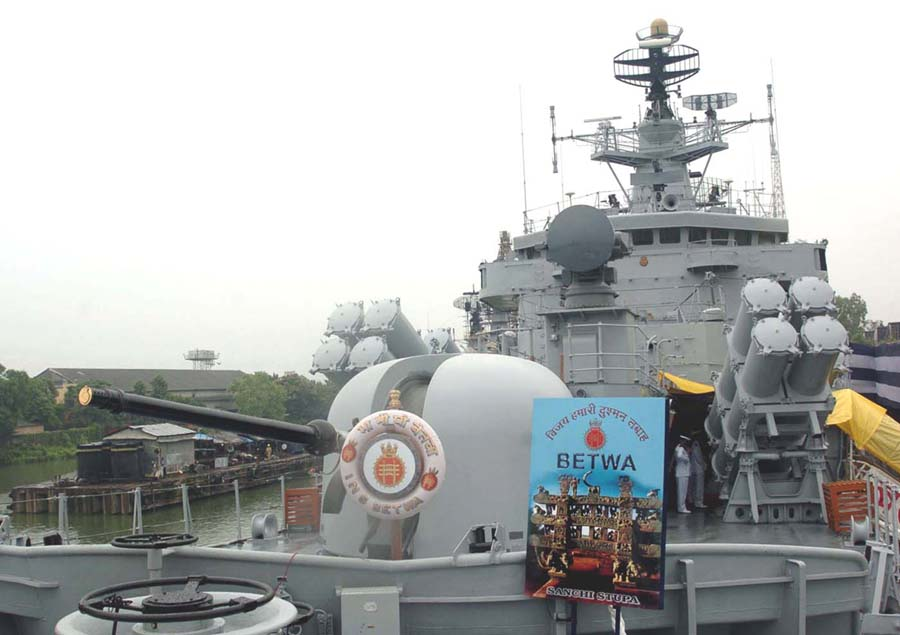
India’s Ministry of Defence has awarded Israel Aerospace Industries (IAI) a ₹1,976.40 crore contract to modernise the Barak Point Defence Missile System installed aboard Indian Navy warships. The agreement covers hardware and software upgrades, together with obsolescence management intended to extend the effectiveness and supportability of existing naval air-defence equipment.
The contract was signed in New Delhi on 18 November 2026 in the presence of Defence Secretary Rajesh Kumar Singh. Awarded under India’s Other Capital Procurement Procedure, it follows the Defence Acquisition Council’s August 2025 approval of a proposed upgrade to the Navy’s Barak-1 point-defence capability. The ministry has not disclosed the number of ships involved, the delivery timetable, or the individual systems scheduled for modification.
India’s government expects the modernisation to enhance the system’s features and effective air-defence range. Although these are stated objectives of the programme, the ministry has not released revised performance figures or specified the technical changes intended to deliver them. The contract establishes the scope of a modernisation effort rather than evidence of completed qualification or improved operational performance.
Barak-1 was developed as a shipborne point-defence missile system intended to protect naval platforms against approaching aerial threats, including anti-ship missiles. Such systems form part of a warship’s defensive architecture, using information from detection and tracking equipment to support engagement decisions and direct the weapon towards a target.
The Barak-1 installation should be distinguished from the longer-range Barak-8 family, which has been developed through separate programmes involving Israel and India. Both belong to the wider Barak missile lineage, but their system architectures, engagement roles, and procurement arrangements are not interchangeable. The November contract specifically concerns the established point-defence system aboard Indian Navy vessels.
Maintaining that capability requires continued support for equipment that may remain in service for decades. The commercial availability of individual electronic components is frequently shorter than the service life of a naval combat system. Manufacturers can discontinue processors, memory devices, interface components, and other assemblies while the military installation containing them remains operationally required.
Obsolescence management addresses that mismatch through engineering assessment, component substitution, redesign, or replacement of equipment whose continued supply can no longer be assured. The appropriate solution depends on the function of the affected component and its relationship with the surrounding system. Replacing a discontinued electronic assembly with a newer product may require changes to software, electrical interfaces, testing procedures, or technical documentation.
The ministry’s inclusion of both hardware and software is therefore consistent with the requirements of a substantial systems modernisation programme. Processing equipment, interface electronics, and application software must operate together within a controlled configuration. Changes to one part of that architecture can affect communication with sensors, command equipment, and other elements of the ship’s combat system.
Naval weapon installations impose additional engineering constraints. Components must withstand the operating environment aboard a warship, including vibration, electrical disturbances, temperature variation, and exposure to conditions associated with maritime service. Equipment replacements may also need to fit existing spaces, use available power and cooling, and remain compatible with established cabling and maintenance arrangements.
The specific assemblies covered by IAI’s contract have not been identified publicly. It would therefore be premature to attribute the work to particular radar processors, launch-control units, missile electronics, or other subsystems. The available information confirms a comprehensive hardware and software upgrade, but not the configuration of the resulting installation.
The same qualification applies to engagement performance. Improving a point-defence system’s effective capability may involve several interacting elements, including the quality of target information, processing functions, weapon-control arrangements, and the characteristics of the interceptor itself. The Indian government has not established which of those elements will change or whether new interceptor hardware forms part of the agreement.
Any revised configuration must also remain compatible with the warship carrying it. Combat systems depend on carefully defined interfaces between equipment supplied by different manufacturers, frequently across several generations of technology. A replacement unit that performs an individual function correctly still needs to demonstrate that it exchanges information and responds as required when integrated into the complete installation.
Testing consequently extends beyond inspection of manufactured components. Engineering verification can establish whether hardware meets its design requirements, while software and system integration assessments examine the interaction between subsystems. Acceptance of a modified naval weapon system requires confidence that the installed configuration performs reliably within the intended operating conditions.
Obsolescence work also affects the equipment’s future maintenance arrangements. Replacement components require updated technical records, approved repair procedures, suitable test equipment, and provision for spare parts. Without those supporting changes, a modernised installation can still become difficult to maintain when individual assemblies fail or require replacement during the remaining service life of the ship.
Implementing an upgrade across operational warships creates scheduling demands that differ from those of supplying a new weapon system for a vessel under construction. Work may have to be coordinated with maintenance periods and other equipment changes, while the Navy must manage the availability of ships undergoing modification. The ministry has not indicated whether installations will be completed during planned refits or through a separate programme.
IAI’s existing involvement in Indian naval air defence provides an established industrial basis for the work. The company has participated in India’s missile programmes for many years, while the Navy’s investment in upgrading existing equipment reflects the continuing requirement to support established platforms alongside newer capabilities.
The November agreement does not disclose a new missile quantity, an order for additional warships, or a unit cost for individual upgrade installations. Its value covers the modernisation and obsolescence management specified in the contract, and no breakdown has been published that would allow the expenditure to be allocated reliably between hardware, software, engineering, and support activities.
With the contract now signed, the programme moves from procurement approval into contracted execution. The next significant milestones will be confirmation of the upgrade configuration, integration and qualification activity, and the installation schedule for participating ships. Those developments will determine how the planned technical improvements are translated into a maintainable naval capability.