IN Brief:
- Helsing is reducing activity at its Plymouth maritime facility after losing the Atlantic Net competition.
- The factory was established in 2025 to manufacture SG-1 Fathom underwater gliders and integrate Lura acoustic intelligence software.
- Some research functions will move towards London, while Helsing maintains its £350 million UK investment commitment.
German defence technology company Helsing is reducing activity at its Plymouth maritime facility after losing the competition to provide the Royal Navy’s Atlantic Net underwater surveillance capability. Some research and development functions will move towards a planned facility near London, while a small number of employees have been made redundant. Helsing intends to retain a presence in Plymouth.
The restructuring follows the Ministry of Defence’s selection of Ocean Infinity Solutions as the commercial mission partner for Atlantic Net on 10 November 2026. Helsing had competed for the programme as part of a consortium with QinetiQ, seeking to establish a role in the Navy’s emerging network of autonomous underwater surveillance systems. The company has not disclosed the final size of its remaining Plymouth workforce.
Approximately 10 redundancies have been reported, although Helsing has not independently published a definitive workforce reduction figure. The company has also not specified which manufacturing activities will continue at the site or whether production of its SG-1 Fathom underwater glider will proceed at the scale originally envisaged. The reported changes therefore establish a reduction in activity rather than a complete factory closure.
Helsing opened its first UK Resilience Factory near Plymouth on 19 November 2025, presenting the 18,000 sq ft operation as a centre for maritime manufacturing and research. Production and testing of its underwater surveillance equipment had begun, supported by access to maritime facilities including Turnchapel Wharf and the British Underwater Test and Evaluation Centre in Scotland.
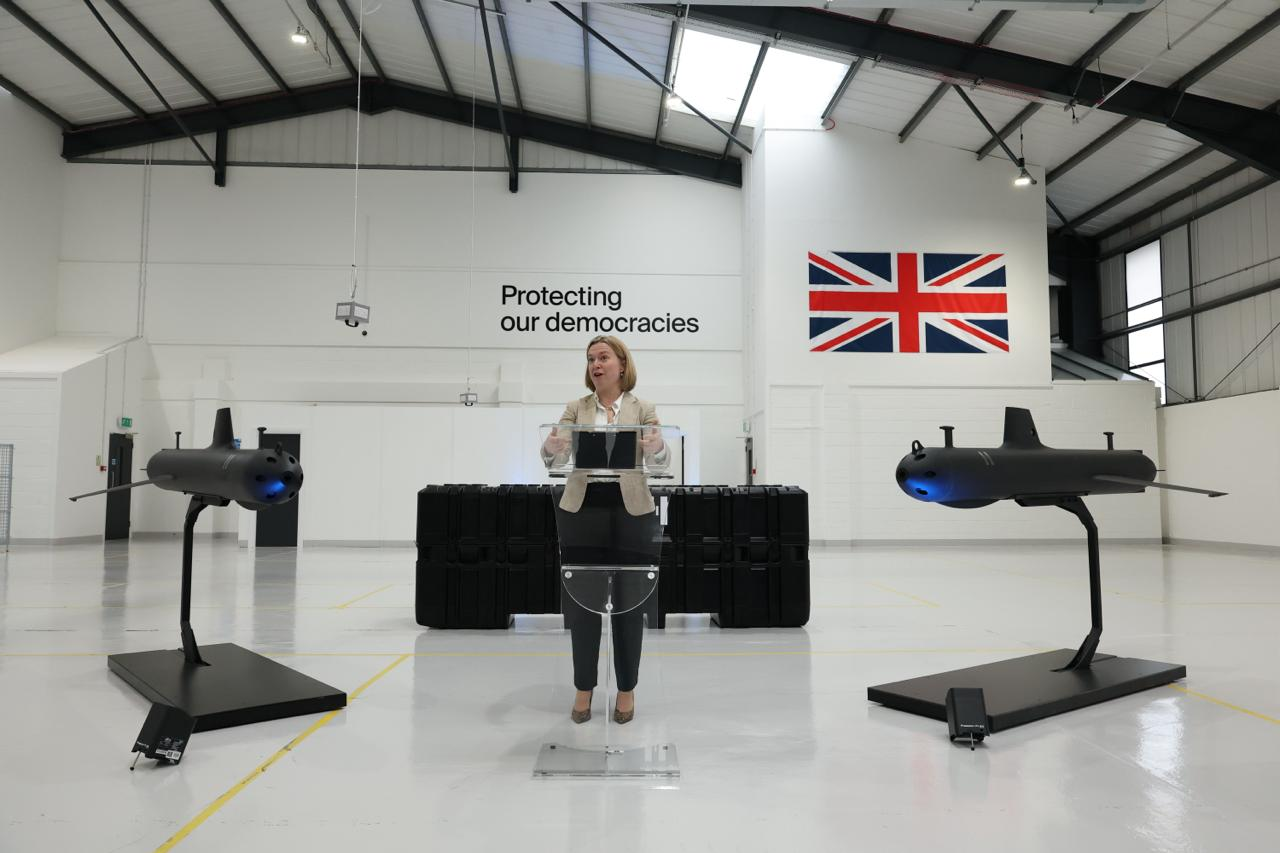
The facility was intended to combine physical manufacturing with development of autonomous maritime systems. Its principal product, the SG-1 Fathom, is an underwater glider designed for persistent surveillance, working alongside Helsing’s Lura acoustic intelligence platform. The arrangement brings together vehicle engineering, underwater sensing, software development, and testing within a wider maritime capability.
Underwater gliders use changes in buoyancy to move vertically through the water, with hydrodynamic surfaces converting part of that movement into forward travel. This differs from conventional continuously powered propulsion and can support relatively long-duration operations where speed is less important than persistence and energy efficiency.
The characteristics of the vehicle also impose limits on its deployment. Payload capacity, battery endurance, communications availability, operating depth, and the underwater environment influence the surveillance missions it can perform. Gliders collecting acoustic information must also operate within the physical constraints of sensor installation and the need to return useful data to the wider surveillance system.
Helsing developed Lura to analyse acoustic information collected by underwater sensors, including those deployed aboard SG-1 vehicles. The software is intended to support the identification and classification of underwater contacts using machine learning. Acoustic surveillance involves separating potentially useful signatures from background conditions created by shipping, marine life, sea state, and changes in the underwater sound environment.
The company’s combination of gliders and acoustic processing was a relevant offering for Atlantic Net, which is intended to provide persistent surveillance over large areas of the North Atlantic. The Navy’s requirement extends beyond individual underwater vehicles, however, encompassing the delivery of a broader sensing and information service that can operate alongside existing naval assets.
Ocean Infinity’s selection establishes a different industrial route for the initial programme. The Royal Navy’s framework provides for approximately £90 million of investment in uncrewed vehicles, sensors, and artificial intelligence, with Ocean Infinity acting as its commercial mission partner. The arrangement forms part of Atlantic Bastion, the wider effort to strengthen underwater surveillance and protection of critical maritime infrastructure.
The framework does not mean that every component of the eventual surveillance service has already been ordered or its configuration finalised. Equipment selection, integration, operations, and supporting services will develop through subsequent programme activity. Helsing’s unsuccessful bid therefore removes a prospective route into the initial contract without necessarily excluding the company’s technology from every future maritime opportunity.
Nevertheless, losing a major anticipated programme can materially change the production requirements facing a specialist manufacturer. Establishing factory capacity for a new defence technology involves expenditure on equipment, engineering resources, qualification, and testing before substantial customer orders are assured. The size and timing of those orders influence whether further manufacturing investment can be justified.
Helsing’s Plymouth operation was created around the integration of physical maritime systems and software, with manufacturing activity forming a central part of its original industrial proposition. Moving some research towards London will alter that organisation, although the precise division of responsibilities between the two locations has not been disclosed.
Manufacturing underwater equipment also creates requirements that are difficult to separate entirely from development. Hull structures, sealing arrangements, electronics, sensors, and buoyancy systems must be assembled and tested as integrated equipment. Design changes may need to be validated through additional environmental testing and sea trials before they can be incorporated into repeatable production.
Those activities depend on the relationship between engineering teams and the facilities available to them. Research software can be developed in different locations, but physical qualification and manufacturing remain tied to suitable equipment, technical personnel, and access to representative testing conditions. Helsing has not explained how its revised organisation will distribute these responsibilities.
The company says its commitment to invest £350 million in the United Kingdom remains unchanged. That pledge was associated with the 2024 Anglo-German Trinity House defence agreement and covers a wider range of Helsing’s British activities than the Plymouth factory alone. Maintaining the overall investment commitment does not establish that the original allocation or scale of individual maritime projects will remain intact.
Helsing’s business encompasses software, unmanned aircraft, maritime systems, and other defence technologies. Its continued investment in Britain may therefore support activities outside the product family originally associated with Plymouth. The company has not published a revised breakdown of its planned expenditure by location or technical programme.
The decision also illustrates the dependence of specialist defence manufacturing investments on procurement outcomes. A new factory can provide the physical capacity needed for rapid production, but sustained operation requires sufficient customer demand, approved products, and a viable programme of work. Development success alone does not guarantee that the supplier will secure a particular acquisition contract.
With Ocean Infinity now selected for Atlantic Net, Helsing’s immediate industrial task is to determine the future scope of its Plymouth operation while continuing other UK activities. Confirmation of remaining manufacturing functions, workforce numbers, and new maritime contracts will establish how much of the original SG-1 Fathom production ambition continues at the site.