IN Brief:
- The Philippines is preparing to receive five retired Abukuma-class destroyer escorts from Japan.
- Surveys, configuration decisions, refit work, training, and sustainment arrangements must be completed before operational service.
- Availability will depend on maintenance infrastructure, technical data, spare parts, and a stable regional support chain.
Japan’s planned transfer of five Abukuma-class destroyer escorts to the Philippines promises a substantial increase in hull numbers, although the industrial workload extends far beyond recommissioning and crew conversion.
Both governments have moved the proposal into detailed discussions, with administrative arrangements, technical inspections, training, maintenance, and operational coordination still to be completed. Philippine officials expect the process to take between two and three years, providing time for a structured transfer but leaving little margin if Manila wants the ships to address near-term fleet requirements.
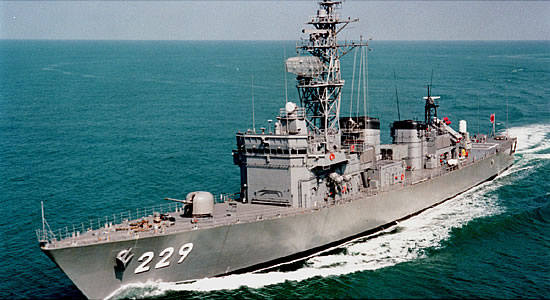
Entering Japanese service between 1989 and 1993, the Abukuma class has a standard displacement of around 2,000 tonnes, measures 109 metres in length, and was designed for a crew of approximately 120. The original configuration includes a 76mm gun, close-in weapon system, surface-to-surface missiles, anti-submarine rockets, and torpedo launchers, although the equipment retained for transfer has not been finalised publicly.
Decisions over weapons, sensors, combat-management equipment, communications, and identification systems will shape the refit programme. Equipment subject to Japanese export controls may be removed or replaced, while retained systems must be assessed for compatibility with Philippine Navy infrastructure and operating doctrine.
Keeping older Japanese subsystems could accelerate acceptance and reduce initial modification costs, but it would also leave Manila supporting equipment approaching the end of its original service life. A deeper modernisation would provide greater commonality with existing Philippine systems, although it would introduce additional engineering, testing, training, and certification work before the ships could deploy.
Refit before transfer
Material surveys will need to examine hull thickness, corrosion, shaft alignment, propulsion machinery, generators, electrical distribution, piping, and habitability after more than three decades of service. Although the vessels have been maintained within the Japan Maritime Self-Defense Force, an export transfer requires a different assessment from routine fleet maintenance because the receiving navy must establish its own support baseline.
The class uses combined diesel or gas-turbine propulsion, adding complexity to the maintenance package. Engines can remain effective for decades when properly supported, but a mixed-propulsion fleet requires overhaul records, specialist tooling, test equipment, technical publications, and access to components that may no longer be in routine production.
Japan will also need to determine which drawings, maintenance procedures, software documentation, and supplier information can be transferred. Missing technical data can turn otherwise manageable repairs into reverse-engineering exercises, particularly where original manufacturers have withdrawn products or replaced earlier components with newer designs.
With five ships potentially creating close to 600 shipboard posts, the training requirement will reach well beyond bridge operations and weapons employment. Marine engineers must understand machinery limits and fault conditions, electronics technicians must support legacy systems, and dockyard personnel must diagnose failures without waiting for Japanese assistance.
A centralised support model would simplify inventory and concentrate expertise at one principal base, while a distributed arrangement could improve operational flexibility across the archipelago. The latter would also multiply the number of workshops, stores, technical teams, and transport movements needed to keep the class available.
Japan’s support contribution is therefore likely to prove as influential as the physical condition of the ships. Initial spares, instructor teams, maintenance assistance, condition-monitoring expertise, and introductions to original suppliers could determine whether the fleet sustains regular deployments or spends extended periods awaiting parts.
A regional support chain
Japan’s own surface fleet is being renewed through a more consistent frigate production rhythm, demonstrated by the launch of JS Nagara and the growing maturity of the Mogami-derived construction line. As newer ships enter Japanese service, older escorts retain value as regional partners seek faster routes to additional naval capacity.
The model creates a second industrial stream alongside new construction. Surveys, refurbishment, export preparation, training, parts supply, and through-life support can preserve shipbuilding and maintenance work while extending the useful life of vessels that would otherwise move towards disposal.
For the Philippines, second-hand acquisition offers hulls more quickly than a new-build programme, particularly while shipyards across Asia and Europe carry crowded order books. Capital can then be directed towards weapons, surveillance systems, submarines, shore facilities, and future construction rather than being absorbed entirely by five replacement ships.
Age nevertheless imposes firm limits. Older vessels generally require more maintenance hours per day at sea, consume scarce technical manpower, and become increasingly expensive when obsolescence forces repeated redesign. Operational availability, rather than the number of ships formally commissioned, will determine whether the transfer produces a durable increase in naval capacity.
The programme could become particularly difficult if each vessel emerges from refit with a different configuration. Standardised sensors, communications, parts catalogues, training materials, and planned component-replacement schedules would reduce the burden, even where the ships arrive with different maintenance histories.
Work completed before transfer may cost more initially, but piecemeal modernisation after entry into service can disrupt availability and spread scarce engineering resources across several incompatible baselines. A common configuration would also give Philippine dockyards and private contractors a clearer basis for tooling, inventory, and workforce planning.
Five usable hulls would strengthen Manila’s ability to patrol a large maritime area, support anti-submarine work, and maintain presence around strategically important approaches. Their contribution will be produced ashore as much as at sea, through dependable access to spares, qualified technicians, accurate documentation, and dockyard capacity able to support an ageing but still capable class.