IN Brief:
- Japan has commissioned JS Nagara, the tenth Mogami-class frigate, into the JMSDF.
- The MHI-built warship enters service with a 16-cell Mk 41 VLS and extensive automation to reduce crew demand.
- The commissioning reinforces Japan’s frigate production rhythm as Mogami-derived designs attract export interest.
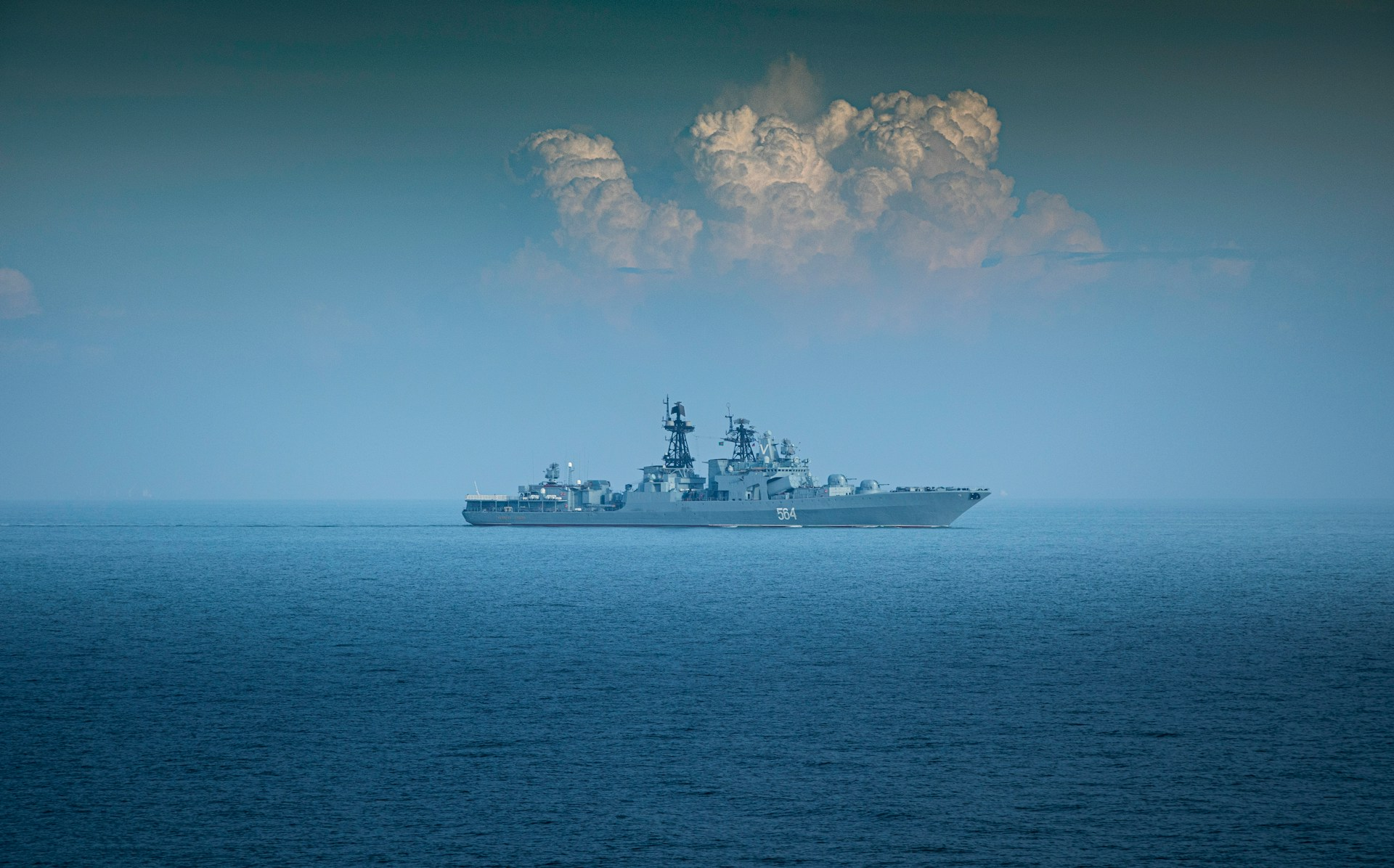
Japan has commissioned JS Nagara, the tenth Mogami-class frigate, giving the Japan Maritime Self-Defense Force another lean-crewed surface combatant from one of the Indo-Pacific’s most closely watched naval production lines.
Nagara, pennant number FFM-10, was built by Mitsubishi Heavy Industries at Nagasaki and inducted into Patrol and Defense Squadron 2 at Kure Naval Base. The ship was laid down in July 2023, launched in December 2024, and entered service on 29 June 2026. It forms part of a 12-ship Mogami-class programme that will be followed by a larger upgraded New FFM design.
The Mogami class combines a compact frigate hull with automation, stealth shaping, integrated ship-handling systems, anti-surface missiles, SeaRAM, sonar, radar, electro-optical sensors, and growth for uncrewed mine countermeasure systems. From the seventh vessel onward, ships have entered service with a 16-cell Mk 41 vertical launching system fitted from the outset, giving later units a more complete weapons baseline at commissioning.
Nagara’s arrival reinforces the value of production rhythm. Warship programmes often lose momentum through first-of-class learning, shifting requirements, integration delays, and funding gaps. The Mogami line has produced a steady sequence of ships, giving MHI and its suppliers practical repetition across hull fabrication, outfitting, systems installation, harbour trials, sea trials, acceptance, and support planning.
Automation sits at the centre of the class’s appeal. The Mogami-class crew is around 90 personnel, far below many conventional destroyer and frigate complements. Integrated ship handling, digital bridge systems, machinery monitoring, and a concentrated combat information architecture all contribute to that reduction. For navies facing recruitment pressure, automation is no longer a design flourish; it is becoming a fleet sustainability requirement.
Reduced crewing changes the production burden. A lean-crew frigate needs reliable diagnostics, intuitive interfaces, maintainable machinery spaces, and systems that do not rely on surplus manpower to work around poor design. Sensors, propulsion, electrical distribution, combat systems, and software must be built around lower operator load. The factory has to deliver a ship that is supportable in daily operations, not merely capable during acceptance trials.
The VLS fit also changes the baseline. Vertical launch integration affects structure, cabling, cooling, combat-system interfaces, weapons certification, and safety arrangements. Installing the system from the outset reduces part of the retrofit burden carried by earlier ships and gives the JMSDF a more capable platform at entry into service. It also provides useful data for future New FFM construction and export variants.
Mogami’s export profile has grown alongside domestic deliveries. Australia’s selection of the upgraded Mogami design for its general-purpose frigate programme gave Japan its most important modern naval export opening, while New Zealand has shortlisted the upgraded Mogami alongside the UK Type 31. Japan’s next batch of upgraded Mogami frigates and the selection of Rolls-Royce MT30 turbines for Australia’s future ships show how the design is moving from domestic fleet renewal into a broader industrial proposition.
Export customers study domestic production closely. A ship that looks capable in a brochure must also show yard tempo, supplier resilience, through-life support, and upgrade discipline. Each additional JMSDF commissioning gives Japan more operational evidence, more construction learning, and a stronger basis for presenting Mogami-derived designs as repeatable products rather than bespoke national ships.
The class also reflects Japan’s demographic reality. A shrinking recruitment pool makes high-manpower ships harder to sustain. The Mogami answer is to embed automation into the hull, bridge, machinery, and combat spaces from the start. Other navies are watching because similar manpower constraints are appearing across Europe and the Indo-Pacific.
The transition to the New FFM will be the next industrial test. Adding displacement, sensors, weapons capacity, or export-specific systems can disturb a production line if configuration control is weak. MHI’s task will be to carry the lessons from the baseline Mogami into the upgraded design without losing the output rhythm that has made the class commercially interesting.
Nagara’s commissioning strengthens Japan’s position as a serious frigate manufacturer at a time when many allied shipbuilding programmes are strained by labour, cost, and integration pressure. The ship adds another data point behind a model built around automation, lean crewing, and repeatable construction. In a market short of credible frigate options that can be delivered at pace, those qualities are becoming as important as raw weapons fit.