IN Brief:
- Japan has advanced the New FFM programme with a fresh three-ship production package for Mitsubishi Heavy Industries.
- The upgraded Mogami design expands weapons and mission capacity while building on an established frigate production base.
- The order keeps pressure on shipyard throughput, systems integration, and long-lead naval supply chains.
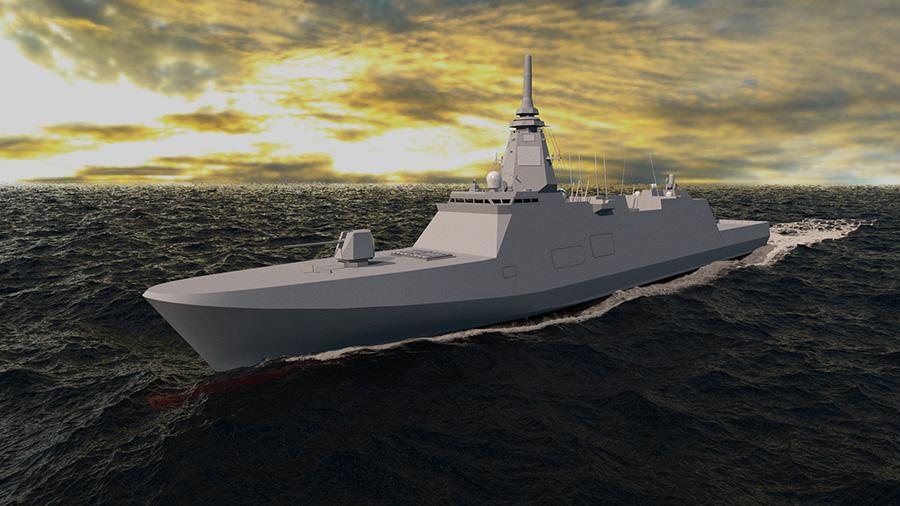
Japan has advanced its New FFM frigate programme with a further three-ship order for Mitsubishi Heavy Industries, extending the shift from the original Mogami class to a larger and more heavily armed surface-combatant design. The award keeps production moving on one of the most important naval recapitalisation programmes in the Indo-Pacific, while giving MHI another repeat production step on a class designed for higher output than older frigate cycles.
The New FFM builds on the baseline Mogami concept but adds growth in weapons, mission capacity, and overall fleet utility. For naval manufacturers, the significance lies in continuity as much as capability. A repeat order of this kind supports yard loading, steadier supplier scheduling, and the kind of production learning that only comes once a design begins to move beyond first-of-class execution.
Japan’s wider shipbuilding effort has increasingly centred on pace, availability, and the ability to field credible escort numbers without accepting the drag of older build models. That gives the programme weight beyond the ships themselves. It is also a test of whether a modern frigate line can sustain repeatable output while integrating a larger weapons and sensor burden.
Shipyard tempo and integration discipline
Once a surface-combatant class enters serial production, pressure shifts quickly from design maturity to execution. Hull fabrication, outfitting, combat-system installation, harbour trials, and acceptance testing all need to move in tighter sequence if the yard is to maintain schedule. On a modern frigate, that means balancing steelwork and propulsion with radars, launch systems, software integration, and the electrical architecture that supports them.
For Mitsubishi Heavy Industries and its partners, repeat procurement improves the conditions for that kind of tempo. Lessons from earlier hulls can be carried into the next batch, reducing rework and smoothing the handover between fabrication, systems installation, and final testing.
What the order means for production
The new batch reinforces Japan’s ability to turn an evolved warship design into a scalable build line rather than a slow-run class. That matters domestically because naval output now sits much closer to deterrence planning, and it matters industrially because the programme’s credibility depends on delivery rhythm as much as technical specification.
For the wider defence manufacturing base, the message is straightforward. A repeat order keeps long-lead equipment flowing, sustains skilled shipyard work, and strengthens the industrial backbone behind one of the region’s most closely watched frigate programmes.