IN Brief:
- Fincantieri’s US subsidiary has received a $30 million contract for early work on the first four LSMs.
- The award covers long-lead materials, engineering, and production-readiness activity ahead of construction.
- It turns a future programme into live industrial work, with supplier scheduling and shipyard preparation now moving into focus.
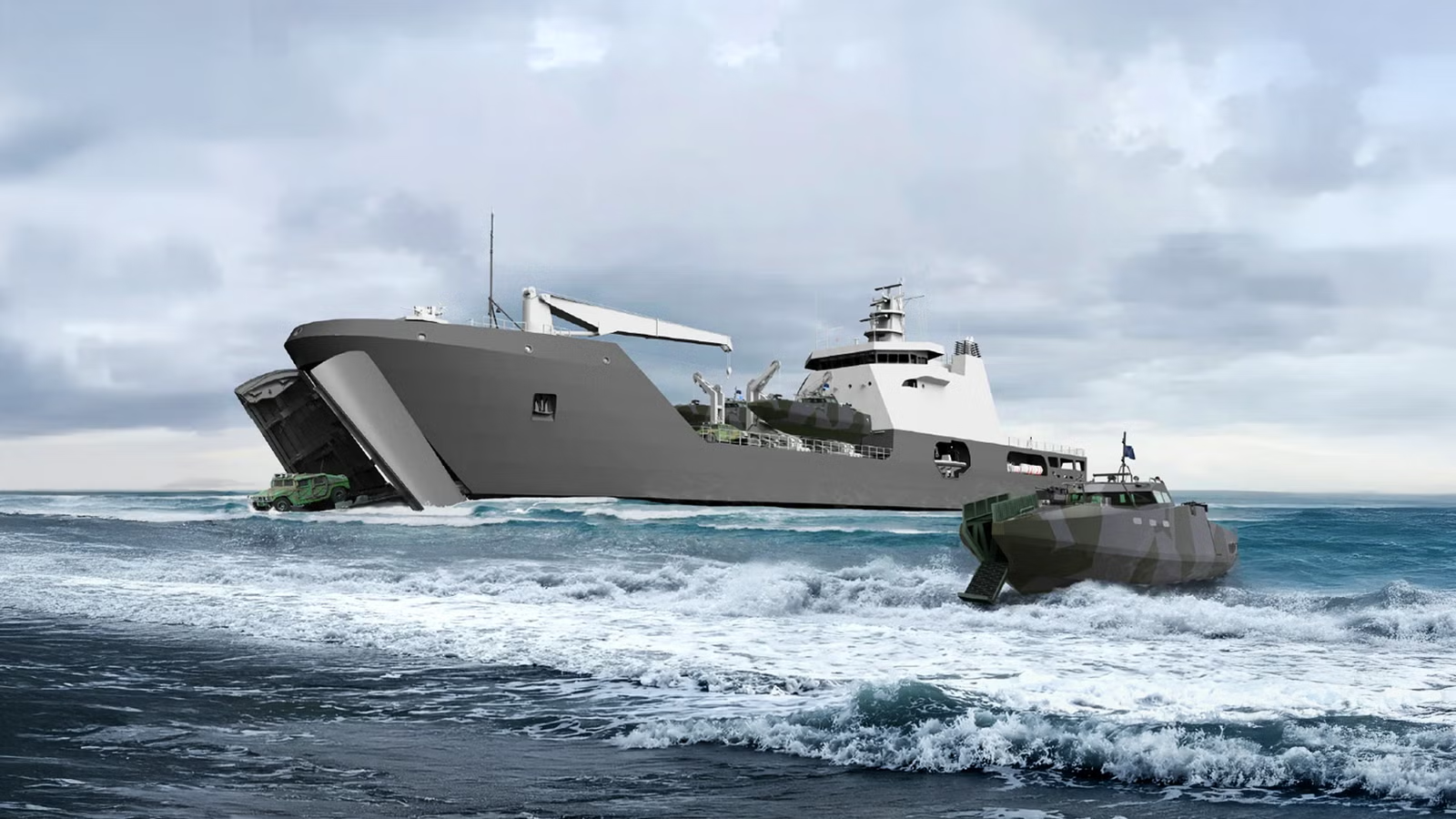
Fincantieri has received the first funded contract on the US Navy’s Medium Landing Ship programme, with its US subsidiary awarded $30 million for materials procurement and engineering work on the first four vessels. The package does not yet cover full construction, but it marks the first concrete industrial step on a programme designed to support distributed maritime operations and littoral manoeuvre.
That distinction matters. Early awards of this kind are where shipbuilding programmes begin to leave concept phase and enter the harder discipline of yard execution. Long-lead materials must be ordered, engineering matured, production readiness assessed, and supplier interfaces tightened before a shipyard can move confidently into steel cutting and block assembly.
Fincantieri has indicated that the work now under contract could enable construction to start as early as the fourth quarter of 2026. For the wider US naval industry, that makes this more than an announcement of intent. It activates the industrial chain ahead of the main build phase.
Readiness work before steel is cut
The Medium Landing Ship programme is expected to run to up to 35 ships, which immediately raises the question of cadence. If the class is to become a real operational enabler, the industrial model has to support repeated, disciplined output rather than an extended sequence of bespoke builds. That is why readiness work matters. It sets the baseline for material flow, design stability, and early identification of production bottlenecks.
Fincantieri has also pointed to a more production-focused management approach on the programme. In practice, that places even greater importance on supplier timing, engineering maturity, and yard coordination before full-rate construction begins.
Why the first contract matters
For US naval manufacturing, the early contract is valuable because it gives designers, procurement teams, yard planners, and suppliers funded reason to move. That tends to improve schedule realism and gives the shipbuilder a better chance of entering construction with fewer surprises embedded in the first-of-class workflow.
The ship itself is a capability story. The contract behind it is a production story, and that is usually where programmes either settle into rhythm or start losing time.