IN Brief:
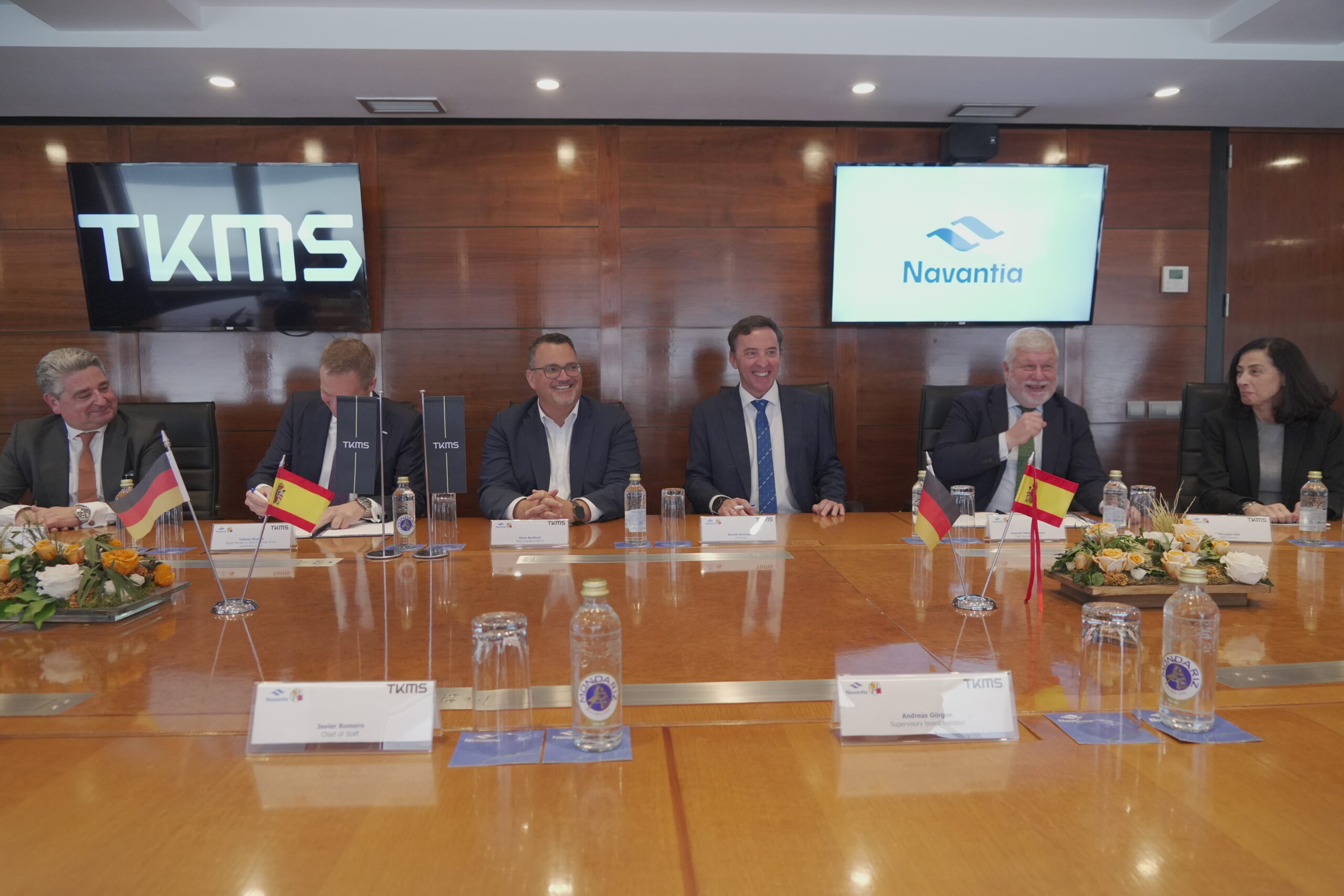
- TKMS and Navantia have signed an MoU to explore naval cooperation, including potential production of TKMS designs in Spain.
- The deal is aimed at easing shipyard bottlenecks as European demand for naval platforms continues to rise.
- Capacity sharing is now becoming a strategic industrial tool rather than a side issue in naval procurement.
TKMS and Navantia have signed a memorandum of understanding to explore closer cooperation in naval shipbuilding, with the most important detail being the possibility of producing TKMS designs, particularly submarines, at Navantia shipyards in Spain. That takes the agreement beyond a routine partnership announcement and into the more urgent question of how Europe intends to build enough naval capacity to meet rising demand.
The industrial logic is straightforward. Submarine and advanced surface-ship programmes are increasing at the same time as yard capacity, specialist labour, and delivery slots remain under pressure. That leaves naval manufacturers balancing programme ambition against the slower reality of infrastructure, workforce development, and long-lead component availability.
In that environment, cross-border cooperation becomes less of a diplomatic add-on and more of a practical industrial tool. Shipyards cannot be expanded overnight, and submarine construction in particular depends on specialised facilities, disciplined workflow management, and teams with experience in pressure-hull structures, integration, and test regimes.
The TKMS–Navantia agreement therefore lands in a market where capacity itself has become strategically important. Naval customers still want sovereign control, but they also need credible delivery. Partnerships that spread design authority and execution across allied yards are increasingly part of how that balance is managed.
Yard capacity is now a programme constraint
Submarine manufacturing does not scale easily. Pressure-resistant structures, acoustic requirements, combat-system integration, propulsion alignment, and certification all create bottlenecks that are hard to compress once a programme is under way. Even with a mature design, production can still slow if the yard lacks the right sequencing, equipment, or skilled labour.
That is why cooperation of this kind matters. A shared approach to design and production can help absorb workload and improve flexibility, but only if the partners can maintain interface discipline and configuration control. Without that, more capacity on paper does not translate into faster delivery in practice.
Support obligations extend beyond launch
The industrial significance also runs beyond the initial build phase. Naval customers increasingly expect through-life support, modernisation planning, and long-term service capacity to be embedded in the shipyard offer from the beginning. That means any future TKMS–Navantia arrangement would need to support not only hull construction, but maintenance, refit, and upgrade obligations over decades.
If the cooperation develops into a deeper production route, it may offer a more realistic model for Europe’s naval expansion than waiting for each national yard to solve capacity pressure alone. In today’s market, the harder advantage is no longer simply having a design. It is being able to build and support it on time.