IN Brief:
- India has begun fielding locally produced Prahar 7.62 mm light machine guns, with further deliveries due in 2026.
- The programme links technology transfer with domestic assembly, process control, and higher local industrial participation.
- Small-arms localisation now depends on repeatable throughput, supplier discipline, and sustained quality under volume production.
India’s Prahar light machine gun programme is moving into a more serious manufacturing phase, as the Indian Army begins taking delivery of weapons built domestically under a wider production plan that extends beyond an initial batch. The platform is based on the Negev 7.62, but the industrial significance now lies in how far India can convert licensed production into dependable domestic output.
The first locally produced batch has already entered delivery, with further volumes expected through 2026. That takes the programme beyond a symbolic handover and into the more demanding phase of serial manufacture, where machining consistency, barrel quality, feed reliability, and endurance performance become the real measures of progress.
For India, that is a familiar industrial test. Small-arms localisation has often advanced quickly at the contract stage, then encountered friction when throughput, inspection, and repeatability came under pressure. A 7.62 mm light machine gun is a relatively compact system, but there is little tolerance for variation when sustained firing, heat build-up, and battlefield handling all expose production weaknesses very quickly.
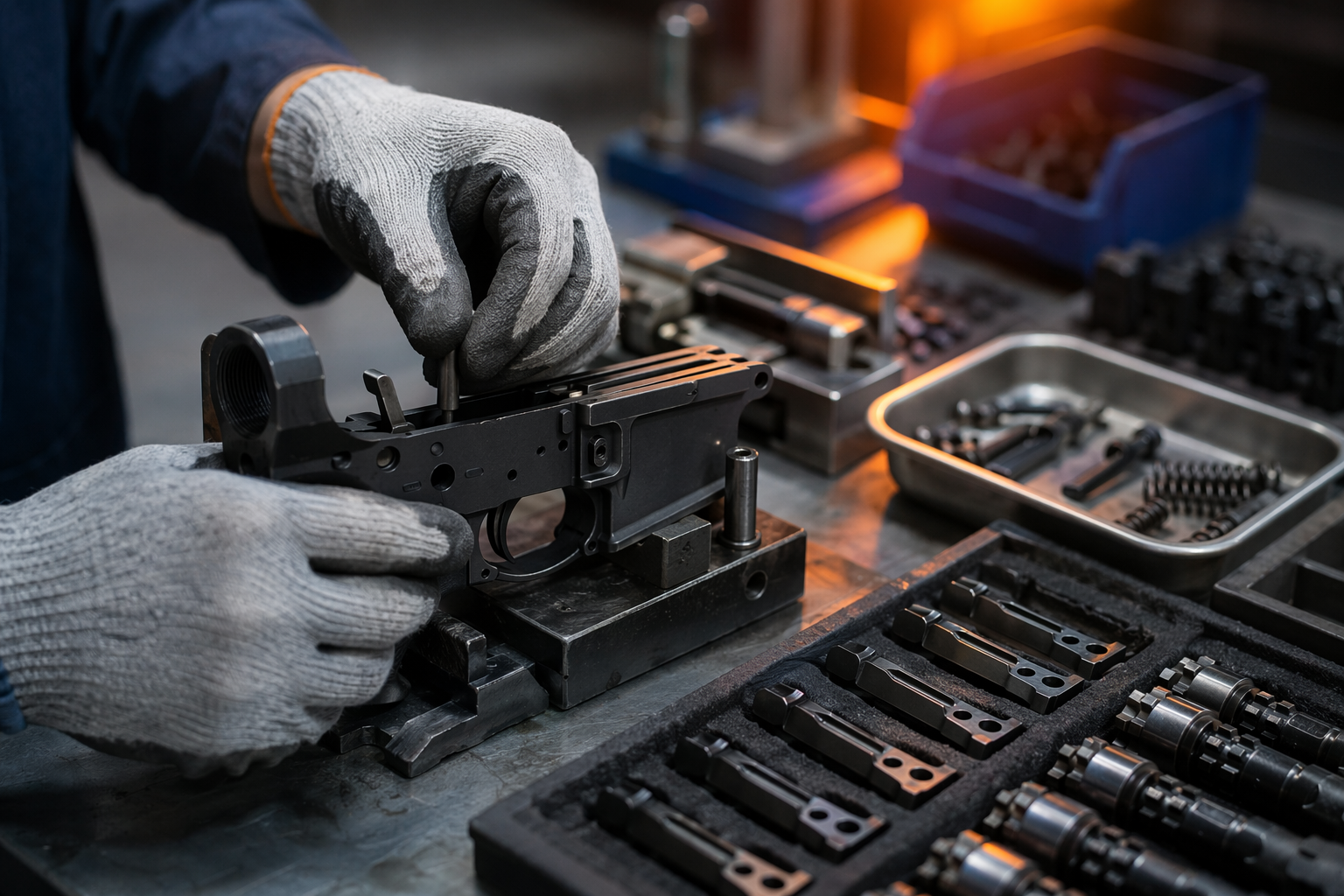
That is why the next phase matters more than the first delivery photo. Once a line begins to move at volume, every stage has to hold together — forgings, machining, heat treatment, surface finishing, gauging, proofing, and final inspection. If even one link slips, the effect is felt in yield, rework, and delivery tempo.
Scaling a small-arms line
As the programme expands, the workload shifts away from assembly alone and into the less visible disciplines that define weapons manufacturing quality. Critical parts need process control, dimensional discipline, and batch traceability, while supply partners must be able to deliver consistent inputs without introducing instability into the line.
That also places pressure on localisation. Increasing domestic content is politically attractive, but it can unsettle a programme if supplier capability rises more slowly than target percentages. The more successful approach is usually staged industrial absorption, where local content grows in line with proven process stability and inspection confidence.
Output now matters as much as origin
The Prahar programme will be judged not simply on whether the weapon is built in India, but on whether it can be produced at a rate the customer can trust and supported through its service life. Spare parts availability, repairability, armourer support, and the consistency of later production lots all matter once an infantry weapon moves into wider service.
If the line can hold that standard, Prahar becomes more than a single Army order. It becomes a practical reference point for how India’s private defence manufacturing base handles technology transfer, localises critical sub-systems, and builds a durable small-arms production capability under volume conditions.