IN Brief:
- Abu Dhabi Ship Building has detailed a relocation plan with a five-to-seven-year horizon and a proposed dry dock for vessels approximately 400–500 metres long.
- Its current Mussafah facility is constrained by a shallow access channel, limiting vessel construction to around 80 metres.
- Production commitments for the UAE, Angola and Kuwait are occupying the existing yard, while the location and investment arrangements for its replacement remain undisclosed.
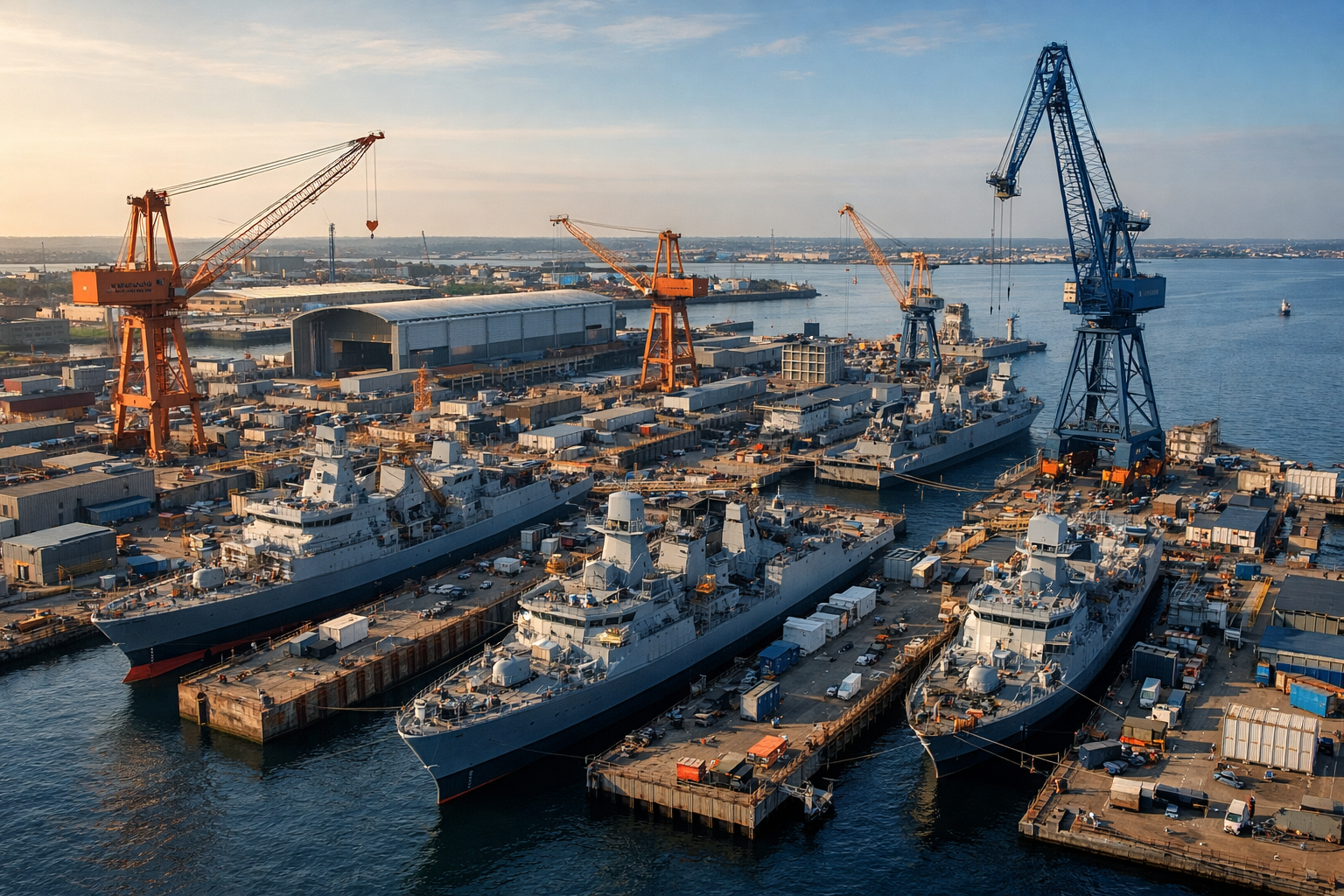
Abu Dhabi Ship Building (ADSB) has outlined plans for a replacement shipyard capable of dry-docking vessels approximately 400–500 metres long, substantially increasing the size of ships the company could construct and repair. Senior executives have identified a prospective relocation site and expect the move to take place within five to seven years, although the final location and investment arrangements remain undisclosed.
The expanded plans were detailed during a media visit to ADSB’s Mussafah facility in mid-November 2026. The company had already disclosed its intention to develop a larger shipyard in February, but the latest information establishes a more specific timeline, planned dry-docking capacity and progress in selecting a location.
ADSB currently operates from an industrial site in Mussafah, Abu Dhabi, where a shallow and narrow access channel limits the size of vessels able to enter and leave the shipyard. The company places its present construction capability at approximately 80 metres in vessel length, restricting the types of naval and commercial ships it can handle.
Increasing the capacity of fabrication workshops or adding further building berths would not independently overcome that restriction. A completed vessel must still be able to pass through the channel, with sufficient depth and manoeuvring space for its draught, beam and operating conditions. The proposed relocation is intended to provide access to deeper water and remove a limitation that cannot be addressed through production equipment alone.
Khaled Al Zaabi, president of Platforms and Systems at ADSB shareholder EDGE, described relocation plans as approved at company level and said a new shipyard was intended within five to seven years. He also indicated that the preferred location had been identified, although final arrangements were still being completed and more than one site remained a possibility.
The proposed dry-docking capability would allow ADSB to work on vessels considerably larger than its existing naval construction portfolio. Equipment approximately 400–500 metres long would create opportunities in commercial maintenance, repair and overhaul, particularly for large merchant ships that cannot access the present facility.
Dry-docking a vessel requires facilities capable of accommodating its dimensions and displacement while providing controlled access to the underwater hull and machinery. The dock arrangement must account for water depth, pumping, vessel support and the equipment needed to carry out repairs. Those requirements differ substantially from the infrastructure used to launch or recover smaller patrol vessels.
Commercial ship repair could introduce a broader range of operating requirements. Large vessels need facilities for hull inspection, machinery servicing, coating work and replacement of major components, often within limited periods away from service. A shipyard competing for that work requires reliable dock availability, specialist contractors and the ability to coordinate several repair activities simultaneously.
The larger facility would also permit ADSB to pursue naval construction programmes beyond its current vessel size limit. Building larger hulls would require additional production space, lifting equipment and engineering capacity, alongside suitable arrangements for equipment installation and acceptance testing. The precise facilities proposed for the new site have not been published.
Existing naval commitments are already placing substantial demands on the Mussafah operation. ADSB has major programmes associated with the United Arab Emirates, Angola and Kuwait, requiring overlapping fabrication, assembly, outfitting and systems integration work. Executives described available production space as increasingly constrained by the volume of contracted activity.
The UAE programme includes four Falaj 3-class vessels under a contract signed in 2021. Based on a design developed by Singapore’s ST Engineering, the approximately 63-metre ships combine patrol and combat capabilities within a compact platform. Construction has progressed across the class, with further fabrication and delivery activity scheduled under the existing programme.
Angola’s programme covers three BR71 MK II Combattante corvettes, using a design developed by French shipbuilder CMN. The industrial work is distributed between France and Abu Dhabi: CMN constructed the first vessel, while ADSB has undertaken construction of the second. The arrangement includes technology transfer, allowing the companies to divide production responsibilities across different facilities.
ADSB’s Kuwaiti programme involves eight Al Dorra-class missile boats, with additional requirements for ammunition and support. Its scale has contributed to the company’s decision to distribute some construction work internationally rather than undertake every stage at Mussafah.
ST Engineering is manufacturing three hulls in Singapore for the Kuwaiti programme, with the vessels intended to move to Abu Dhabi for outfitting and systems integration. The arrangement spreads fabrication work across separate facilities while retaining ADSB’s responsibilities for subsequent equipment installation and delivery.
Such distributed construction requires consistent technical documentation and control of manufacturing interfaces. A hull fabricated at one shipyard must meet the dimensions, structural requirements and equipment installation assumptions used by the facility undertaking outfitting. Inaccuracies or changes can create additional work when machinery, cables and mission equipment are installed.
Naval systems integration is also sensitive to the timing of component deliveries. Radar, communications, propulsion, electrical equipment and weapons may be supplied by different manufacturers, each with its own engineering and acceptance requirements. A vessel can occupy valuable shipyard space while awaiting specialist equipment or testing, affecting the sequence of work on other contracts.
Moving selected hull construction to Singapore therefore provides ADSB with a means of managing current demand, although it does not expand the maximum vessel size permitted by the Mussafah channel. The new shipyard is intended to address that physical restriction while potentially providing additional industrial capacity for future orders.
Maintenance, repair and overhaul already form a significant part of ADSB’s business. The company is undertaking a programme to refurbish 21 vessels for the Kuwait Coast Guard, involving extensive repair and replacement work. The project demonstrates an existing capability in vessel life extension that could expand into larger commercial and naval platforms if appropriate facilities become available.
The proposed facility would bring larger ship repair activities into a business currently focused on smaller naval vessels. Commercial maintenance requires equipment, scheduling and customer relationships that differ from new military construction, so the full industrial benefit will depend on the eventual site design and the operating capacity established.
ADSB is separately developing its portfolio of uncrewed maritime systems. The company has built a 17-metre vessel associated with the 170 Detector programme, with autonomy technology added through cooperation involving the UAE’s Technology Innovation Institute. That activity demonstrates a further product development direction, although no large uncrewed vessel production programme has been confirmed as part of the relocation plans.
The expansion timetable remains a planning objective. ADSB has not identified the definitive construction location, disclosed capital expenditure or awarded a contract to build the replacement yard. Further progress will depend on completing the site arrangements, defining the facility’s infrastructure and establishing an approved construction schedule.
The November details provide a more developed industrial plan than the company’s earlier intention to expand. A proposed 400–500-metre dry dock, deeper-water access and a five-to-seven-year relocation horizon establish the scale of its ambitions, while the unresolved site and financing arrangements remain the principal conditions before construction can begin.