IN Brief:
- Kratos plans to expand Spartan turbojet production to 3,000 engines next year.
- The company has begun long-lead material procurement and supply-chain investment to reduce delivery risk.
- The ramp highlights propulsion as a key bottleneck in affordable precision strike, loitering munitions, and autonomous systems.
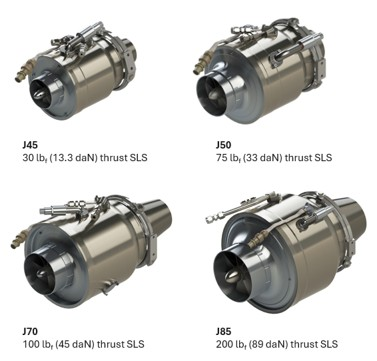
Kratos is expanding production of its Spartan turbojet engine family to 3,000 units next year, placing propulsion capacity at the centre of the affordable precision-strike and loitering-munition market.
The company is increasing manufacturing capacity to support growing demand across missile, loitering-munition, and autonomous-system programmes. It has also begun internally funded long-lead material procurement and supply-chain investment, aiming to shorten future delivery timelines and improve production readiness before customer demand reaches the line.
The Spartan engine family is designed, manufactured, and supported in the United States, with a domestic supply chain intended to reduce dependence on foreign propulsion sources. The engines cover small turbojet classes suited to applications where cost, thrust, reliability, and producibility have to sit in balance. That balance is becoming more important as Western militaries seek weapons that can be bought and expended in larger numbers.
Propulsion is often the quiet constraint in missile production. Airframes, seekers, warheads, and software attract attention, but a missile or loitering munition still needs an engine that can be produced reliably, stored, handled, and integrated at scale. If propulsion output lags, final weapon assembly cannot meet demand, regardless of how mature the rest of the system appears.
Kratos is positioning Spartan around that constraint. A target of 3,000 engines in a year is not large by automotive standards, but it is meaningful in a defence market where many propulsion systems have historically been built in relatively low volumes. Moving into higher-rate production changes the problem from engineering demonstration to manufacturing discipline. Suppliers must deliver materials, machined parts, castings, sensors, valves, fuel-system components, fasteners, and test equipment in rhythm. Quality processes must catch defects without slowing output to a crawl.
The market context is clear. Loitering munitions and lower-cost cruise-type weapons are being pulled into mainstream procurement by Ukraine, Red Sea operations, Middle East strike planning, and Indo-Pacific deterrence. Defence ministries want affordable mass, but affordable mass depends on industrial architecture. An inexpensive weapon that cannot be produced at scale is not inexpensive in strategic terms.
The European side of the same shift is visible in Toutatis loitering-munition production planning, where output could reach high monthly volumes from 2027. The propulsion requirement behind systems like those is unavoidable. As airframes become easier to produce through modular, automotive, or drone-derived methods, engines, seekers, warheads, and secure electronics can become the limiting factors.
The Kratos ramp also links to a broader US push to replenish missile inventories and expand precision-strike capacity. The company’s unmanned and missile-related portfolio gives it insight into demand from multiple platform classes, but the Spartan expansion is especially relevant because it targets a component market rather than a complete weapon. Component capacity can unlock multiple programmes at once when integration routes are available.
Domestic sourcing adds another layer. Western defence production has repeatedly run into long-lead components, fragile suppliers, export controls, and materials dependencies. A US-designed and US-manufactured engine line gives customers a cleaner sovereign-supply argument, especially for programmes where exportability, surge capacity, and operational assurance matter. It does not remove every dependency, but it reduces one sensitive one.
Lower-cost turbojets still carry technical trade-offs. They must deliver acceptable reliability, thrust, endurance, and storage behaviour without pushing weapon cost beyond the intended market. Engines for expendable systems do not need the same service life as aircraft engines, but they still need to work after storage, launch cleanly, survive vibration, and perform consistently enough for mission planning. Cheap propulsion with high failure rates is a false economy.
The factory will also need testing capacity. Every engine family requires acceptance regimes, instrumentation, run facilities, inspection, and traceability. As volumes increase, test bottlenecks can become as constraining as machining or assembly. Defence manufacturers that plan for throughput across the whole line, including test and documentation, will be better placed than those simply adding floor space.
For allied customers, the Spartan expansion shows that the affordable-effects supply chain is beginning to mature. Governments have spoken often about mass, but mass requires component producers willing to invest before every final requirement is nailed down. Kratos’ decision to fund long-lead material and supply-chain readiness points to confidence that propulsion demand will continue.
The next test is whether weapon programmes move quickly enough to absorb that capacity. Engine production can scale efficiently only when customers provide stable demand, clear forecasts, and timely integration decisions. Stop-start procurement would leave suppliers carrying risk and would weaken the capacity defence ministries say they need.
Affordable strike is no longer just a design philosophy. It is a manufacturing challenge built from engines, electronics, energetics, software, and test cells. Kratos’ Spartan ramp puts one of those foundations in view. The future of loitering munitions and lower-cost missiles will be decided by whether the propulsion line can keep up.